
aka How to stop your plants from rotting in winter and baking in July
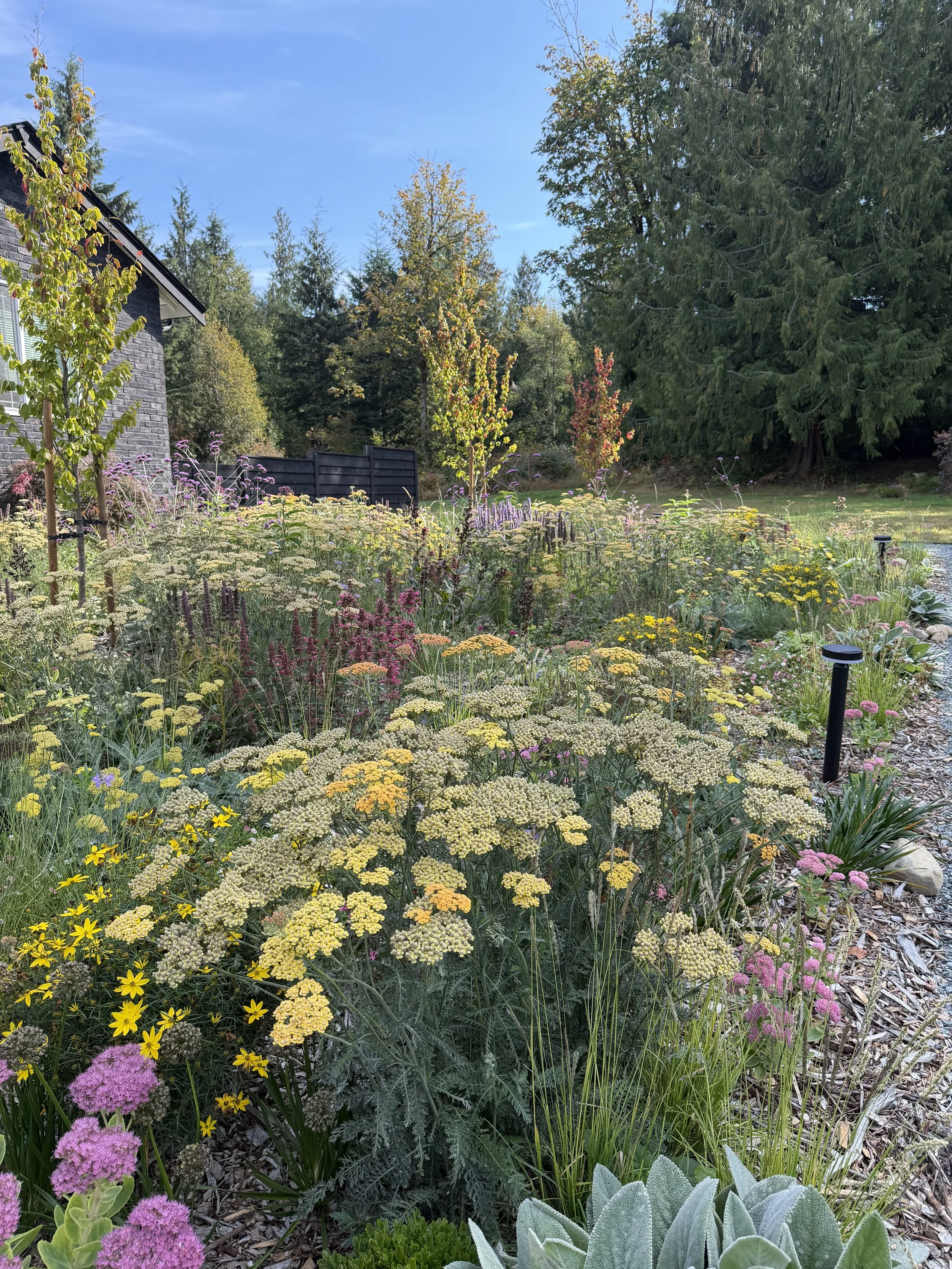
We’ve all bought into the story that because we live under a blanket of grey drizzle from October to May, we must be living in a lush, soggy temperate rainforest. And so, everyone treats their garden beds accordingly: we roll out thirsty turf, pile on tons of wet wood-bark mulch every single spring, and then spend July and August in sheer panic as our water bills skyrocket and everything crisps into sad, brown shredded wheat.
Here is the plot twist: climatologically, Seattle and the Eastside share a cool-summer Mediterranean climate (Csb) with coastal Portugal—specifically the seaside city of Porto.
Yes, really. We endure months of wet, cold winters, followed by eight to twelve solid weeks where rain completely vanishes and the ground turns to concrete.
And if you’re planting like you live in a British bog, your garden is going to fight you every single year. The solution isn’t another round of bark mulch or running the sprinklers for two hours every dawn. It’s shifting to an engineered gravel matrix—held together with raw, gorgeous Corten steel—and planting smart from the roots up.
The bark mulch trap (and why we use 5 inches of gravel instead)
Most people hear "gravel garden" and picture a barren, scorching desert cactus bed or a sad strip between two driveways. That’s not what we’re doing here.
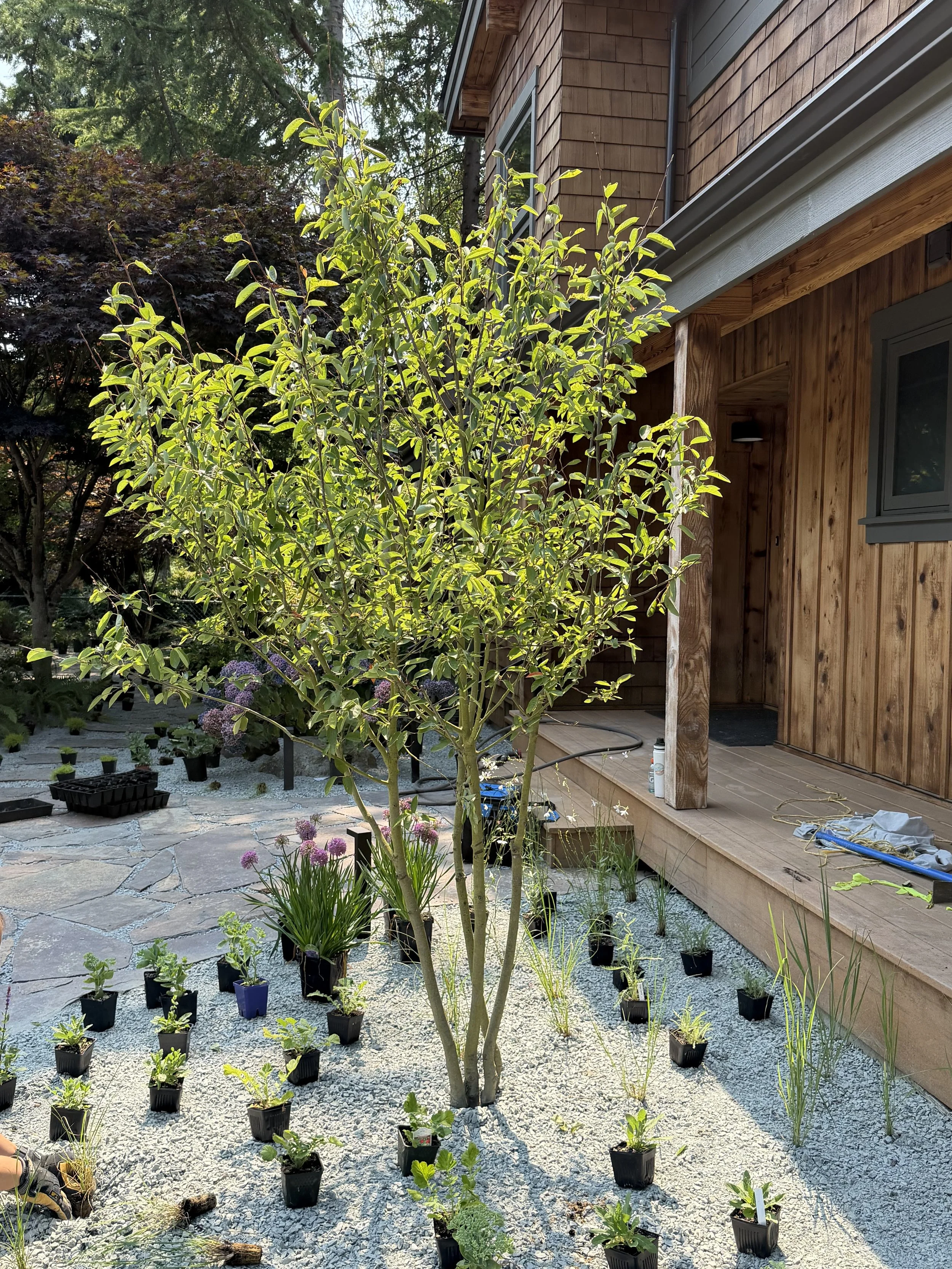
In the gardens I design, gravel isn’t a decorative top-dressing—it’s the functional growing medium. We lay down a generous five-inch layer of clean, washed gravel directly over the native soil, held neatly in place with thick Corten steel edging.
Why Corten? Beyond the fact that the rich, oxidized orange patina looks insanely chic against cool stone and green foliage, it gives you crisp, permanent lines that keep your stone where it belongs.
And why on earth would we dump five inches of stone where you want to grow flowers? Because it solves both sides of our wild climate split:
Winter rot protection: The #1 killer of gorgeous sun-loving perennials in our region isn’t the cold—it’s crown rot. When plants sit in wet, soggy bark all winter, their necks turn to mush. Five inches of gravel allows torrents of winter rain to drain straight past the plant’s crown in seconds, keeping them high, dry, and happy.
Summer moisture lock: In July, that gravel reflects searing heat off the surface while trapping subterranean moisture deep in the subsoil. It acts like a lid on a pot, drastically cutting down how much water you need to pump into the ground.
No weed seeds: Windblown weed seeds land on five inches of sharp, barren stone with zero organic matter. They can't root. No weed fabric, no chemicals, no spending your Saturday on your hands and knees.
Why I plant tiny 4-inch pots (and why 5-gallon pots are a waste)
There is a huge temptation when designing a garden to run out and buy massive, mature five-gallon nursery pots for instant gratification.
Don't do it.
Those pampered, oversized plants have spent their entire lives root-bound in rich potting soil on automatic drip irrigation. Drop them into native soil under five inches of gravel, and they go into complete shock. Their roots are lazy; they circle around in their comfy nursery peat and refuse to venture out into the real world.
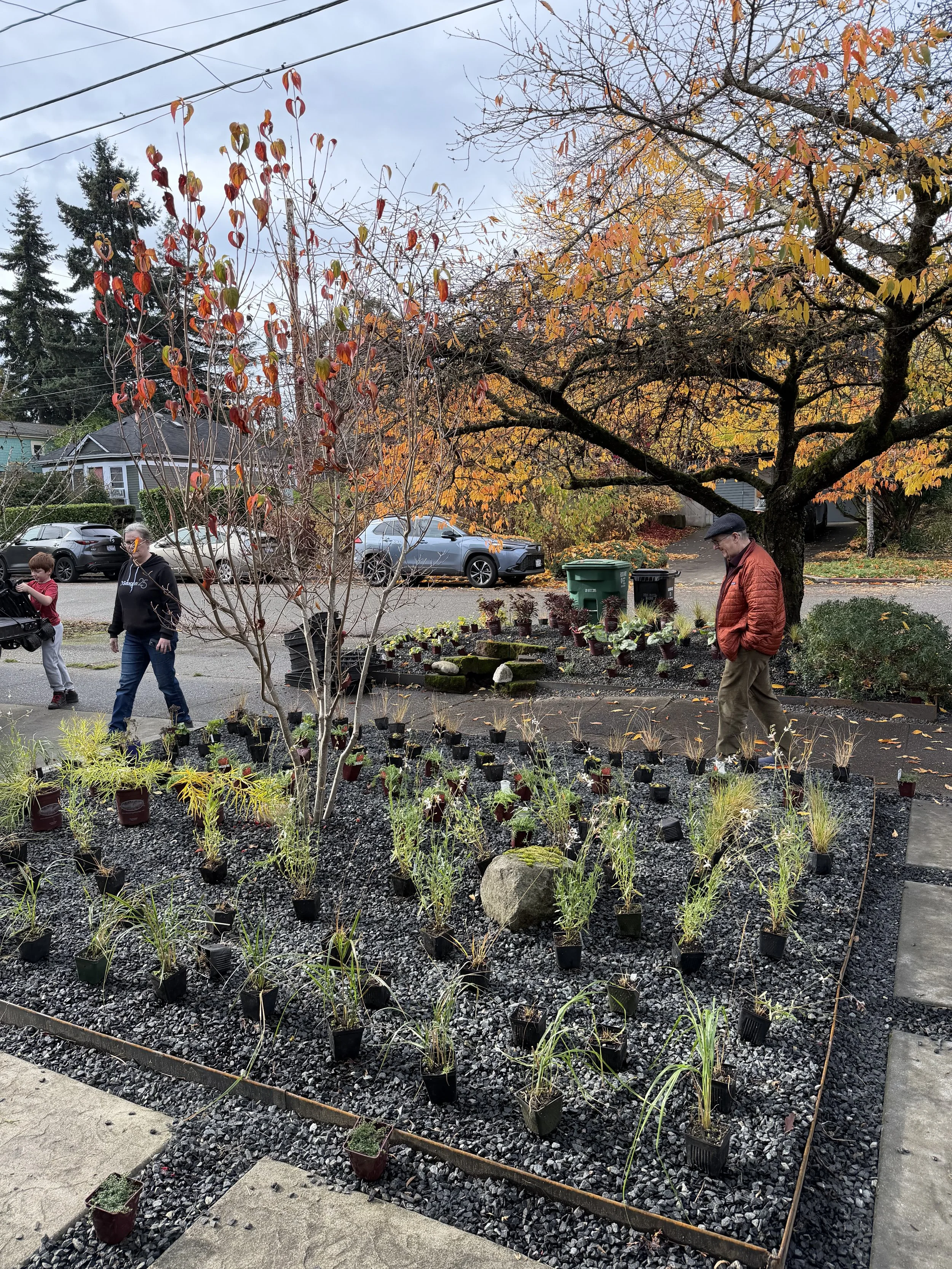
In my projects, I almost exclusively use small, vigorous 4-inch pots:
Roots that actually work: A young, 4-inch plant knows it has to work for a living. You plant it into the soil beneath the five inches of gravel, and it immediately drives taproots deep into our native glacial till to find subterranean water reserves.
They outgrow the big ones: Within a single season, a root-primed 4-inch perennial in gravel will completely out-root, out-bloom, and out-muscle a coddled 5-gallon transplant that’s busy sulking.
Plant them tight: We plant them densely into an interlocking matrix. Underground, their root networks weave together; above ground, they knit into a lush, living green canopy that shades the gravel, keeps the soil cool, and looks like an absolute dream.
The plant palette: texture, movement, and zero summer tantrums
So what actually thrives in this setup without needing life support during August? Here are the workhorse plants I rely on across my designs:
The grasses (movement & bones)
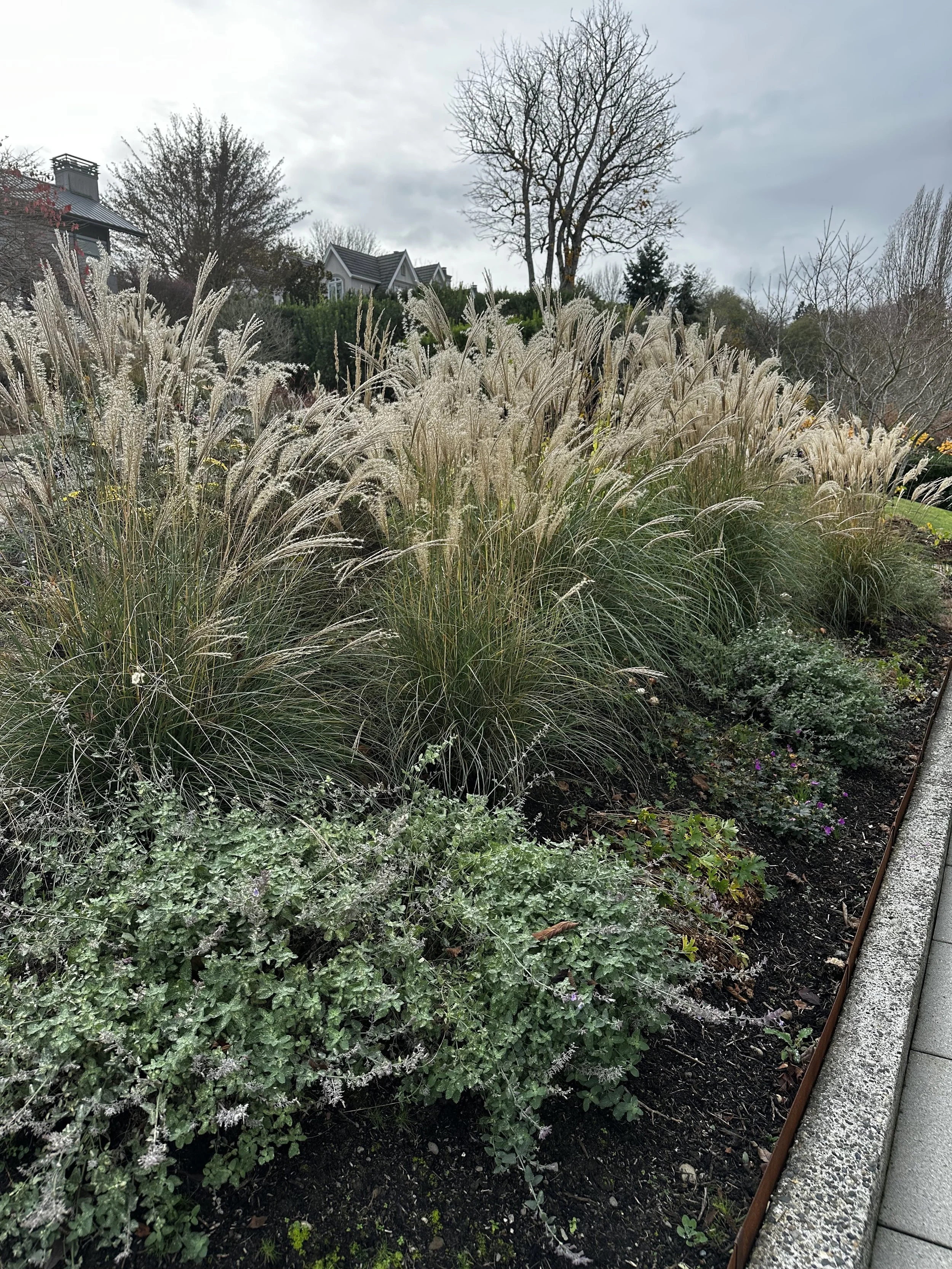
Grasses are the heartbeat of a gravel garden. They catch every lake breeze, filter late-afternoon light, and look just as striking in December as they do in July:
Calamagrostis x acutiflora ‘Karl Foerster’: Upright, formal spires that stand like architectural columns right through winter storms.
Pennisetum alopecuroides ‘Little Bunny’: Adorable, fine-textured mounds that soften gravel edges and spill over pathways.
Deschampsia cespitosa (Tufted Hair Grass): A gorgeous native grass that puts up clouds of golden, mist-like seed heads in midsummer.
Miscanthus sinensis ‘Adagio’: A refined, compact grass with coppery-bronze plumes that glow in late autumn.
Stipa gigantea (Golden Oats): Massive, transparent 6-foot wands of golden oats that float in the air without blocking your view.
The spring wakeup
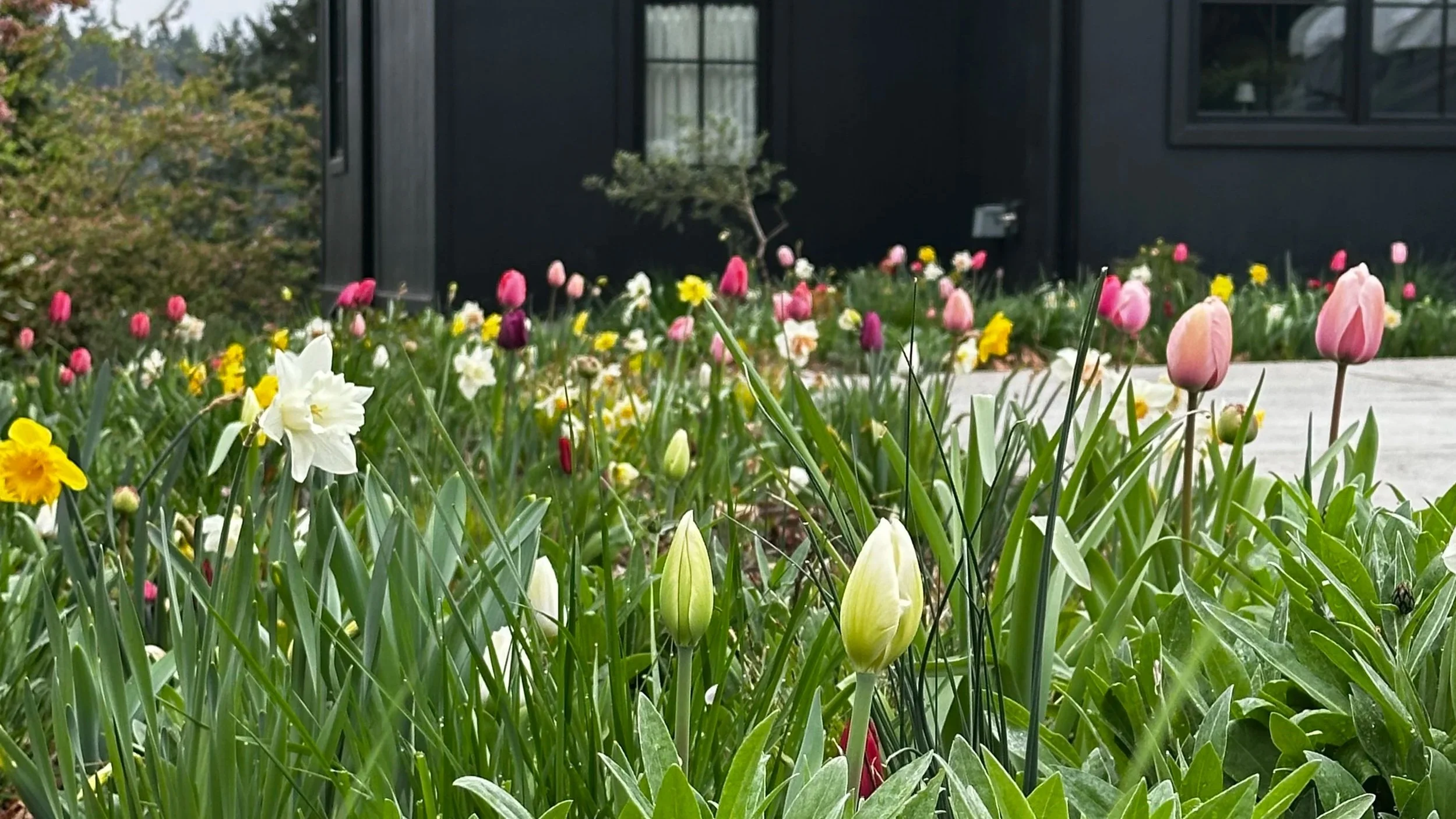
When early rains taper off, we want saturated color and bulletproof, drought-proof foliage:
Nepeta ‘Walker’s Low’: Aromatic, grey-green clouds covered in soft violet blooms that bees go wild for.
Stachys byzantina ‘Big Ears’ (Lamb's Ear): Massive, velvety silver leaves. Utterly impervious to drought and so tactile you can't help but touch it.
Salvia nemorosa ‘Caradonna’: Intense, near-black vertical stems with deep indigo flowers that cut through softer grasses.
Geranium x cantabrigiense ‘Karmina’: A tough, evergreen-leaning pink groundcover that weaves tightly around the gravel edges to choke out any rogue weeds.
Midsummer heat lovers
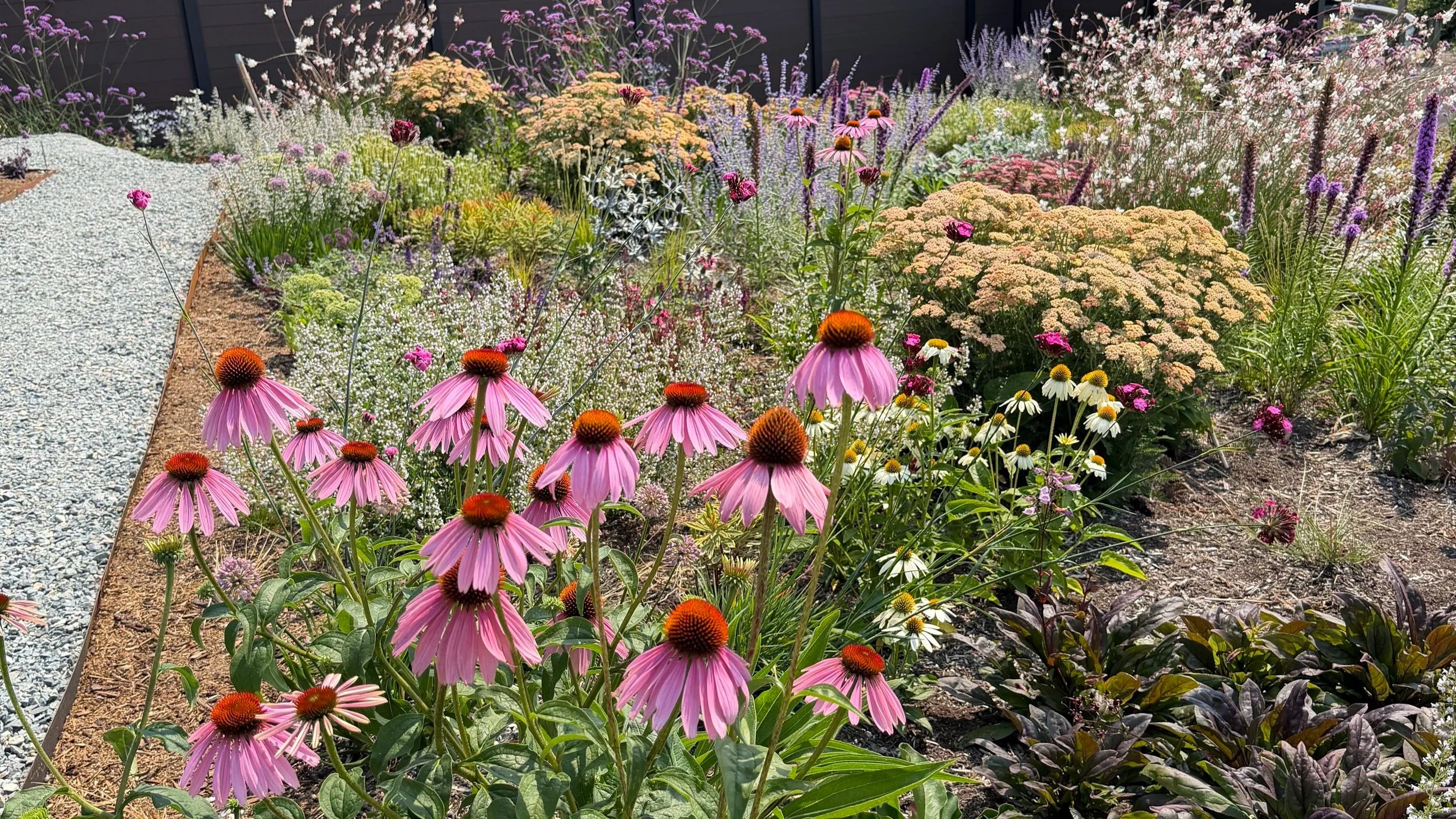
When the July drought sets in and conventional lawns go brown, this group hits its stride:
Achillea ‘Terracotta’ (Yarrow): Flat, architectural landing pads that shift from burnt peach to rich antique bronze.
Coreopsis verticillata ‘Zagreb’: Feathery, thread-leaf foliage bursting with cheerful, glowing yellow blossoms.
Agastache ‘Blue Fortune’: Licorice-scented purple bottle-brush spikes that hummingbirds will fight each other over.
Geum ‘Totally Tangerine’: Energetic, wiry sprays of warm peach-orange that float continuously above tidy green rosettes.
Late summer through frost
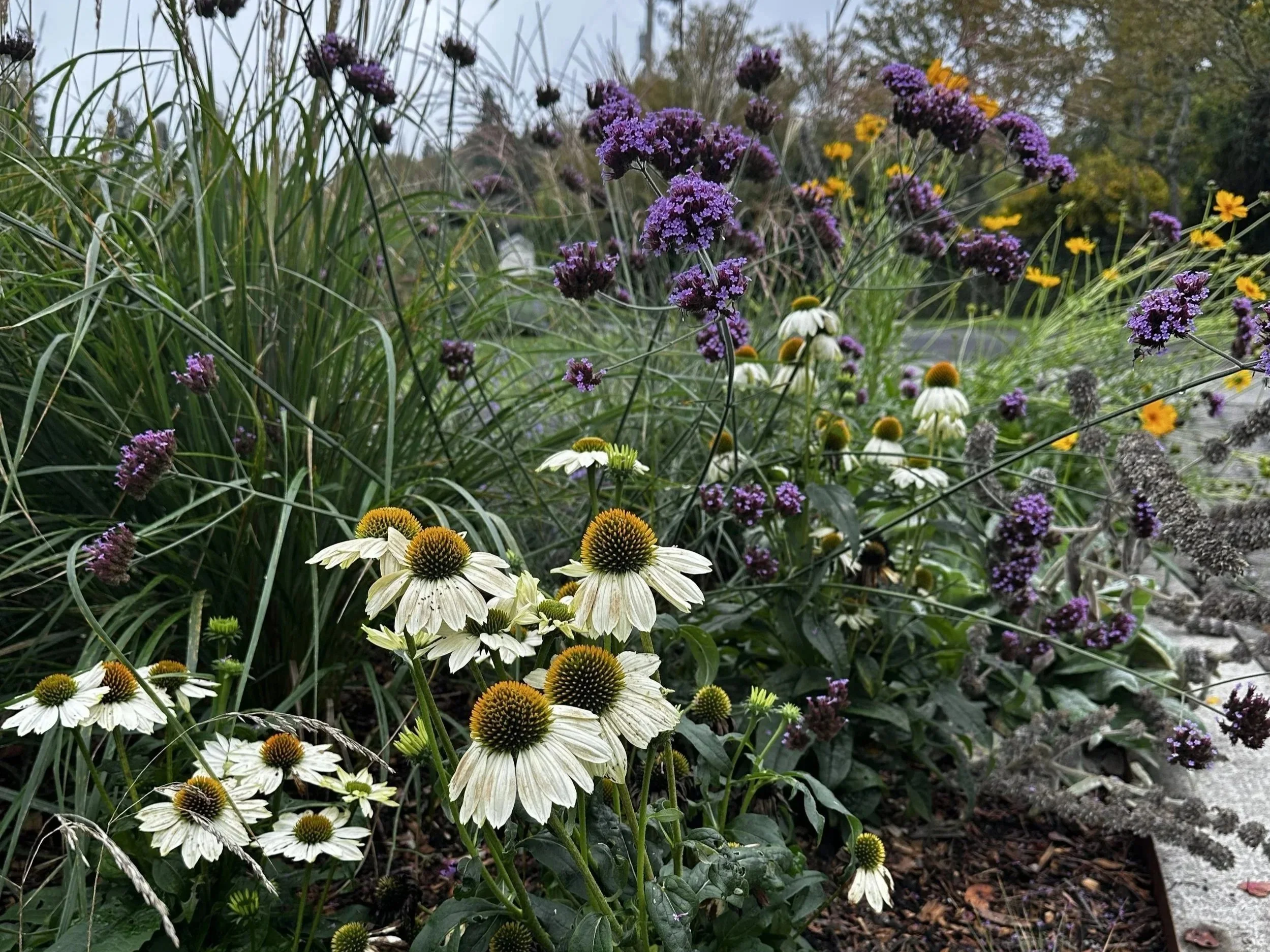
Instead of fading in late August, this matrix reaches its dramatic grand finale:
Perovskia atriplicifolia ‘Little Spire’ (Russian Sage): Chalky silver stems with haze-like purple-blue wands that revel in the hot gravel.
Verbena bonariensis: Slender, see-through stems that dance through the grasses with vivid purple florets right at eye level.
Hylotelephium ‘Purple Emperor’: Fleshy, moody plum-black foliage topped with deep ruby flower heads that dry into gorgeous winter silhouettes.
Gaura lindheimeri ‘Whirling Butterflies’: Airy stems of pink-blushed white flowers that look like a swarm of butterflies hovering on the breeze.
Anemone x hybrida ‘Honorine Jobert’: Pure, luminous white petals with cheerful yellow centers that brighten shady gravel edges well into October.
The take-home here: you don't have to choose between having an insanely lush, high-impact garden and spending your summer tethered to a hose.
Embrace our inner Portugal. Ditch the wet bark, lock in five inches of gravel with some sharp Corten steel, get your plant roots deep into the ground, and let the garden take care of itself.
