
🌱 The Ultimate Guide to Fall Bulb Planting
How to Layer, Protect, and Design a Garden That Blooms From March to July
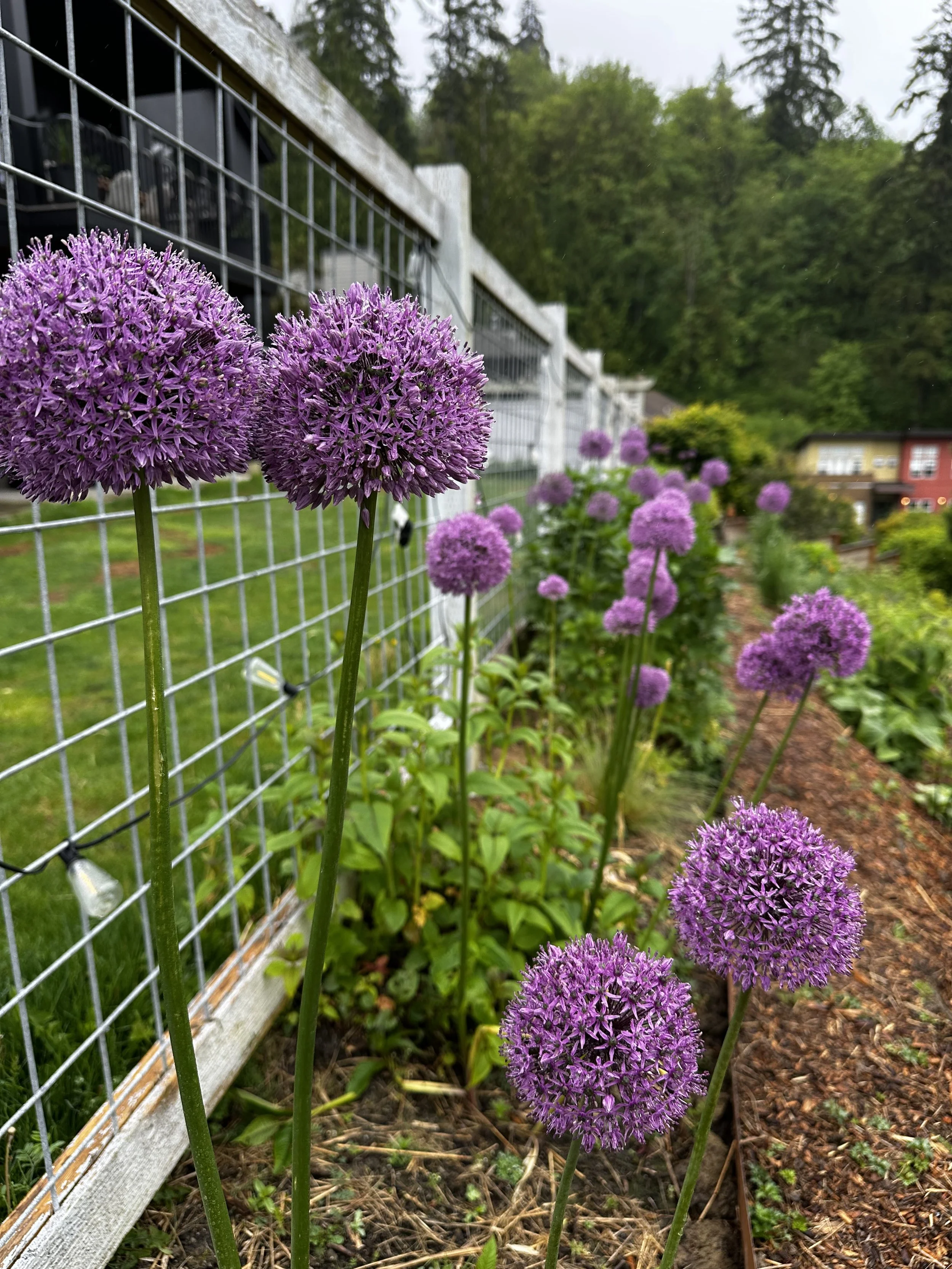
Allium Globemaster
If you’ve followed me on Instagram for even a minute, you already know:
I’m a bulb girl.
Bulbs are the secret to early-season color, seamless transitions into summer, and gardens that feel alive from March through July.
Every fall, I’m planting thousands—literally thousands—of bulbs across Seattle for clients who want naturalistic, Piet-Oudolf-style gardens that wake up early and glow all season long.
Below is everything I’ve shared across reels and captions, pulled together into one complete guide: my entire bulb philosophy, process, tips, tricks, and design rules.
Let’s dig in.
(Grab a bucket… you’ll need it 😉)
🌷 Why Bulbs Matter More Than You Think
When your garden is sleeping in March, bulbs are the only thing blooming.
And that early-season color? It wakes up the entire landscape.
They:
Push through cold soil when nothing else is ready
Feed pollinators in the hungriest months
Bridge the gap between winter interest and spring growth
Give you drama, color, movement, and magic for very little work
A garden without bulbs is a garden missing its heartbeat.
🌼 My Top Tulip Tips (The Viral Ones)

These came straight from your favorite reel—organized here for quick reference:
1. Plant tulips late.
November–December is ideal in the PNW.
Why? Planting too early = fungus, rot, split tips.
Plant when Costco is selling them… then wait 6–8 weeks.
2. Hide the foliage.
Plant tulips inside your borders, not at the front.
Let grasses and perennials cover the fading foliage so you don’t have to stare at yellowing leaves for six weeks.
3. Choose a dominant color (60% rule).
Pick one color family, then layer textures and varieties within that palette.
This is how European gardens look so intentional.
4. Plant tulips + daffodils + alliums together.
Mix tulips and daffs in a bucket, toss across your beds, plant where they land.
Layer alliums in after.
This replicates the naturalistic look you see in Lurie Garden + High Line.
5. Protect your tulips.
Surround them with alliums (onion scent = critter repellent) and daffodils (texture they avoid).
Add rose stem clippings around the planting holes if squirrels are extra spicy.
🌼 Daffodils: The Underrated Heroes of March

Daffodils are the first true color in the garden.
They come back every year, multiply, and are deer + bunny resistant.
My must-grow varieties:
St. Patrick’s Day — chartreuse tones that glow in late winter
Replete — romantic double salmon-pink petals
Dutch Master — classic golden trumpets
Plant them deep. Plant a lot. Plant them everywhere.
🧅 Alliums: The Sculptural Stars of May & June
If you want a naturalistic garden, you need alliums. Full stop.
Here’s how I use them in designs:
Allium ‘Mount Everest’
Tall white globes — perfect along a path or rising above spring borders.
Allium ‘Purple Rain’
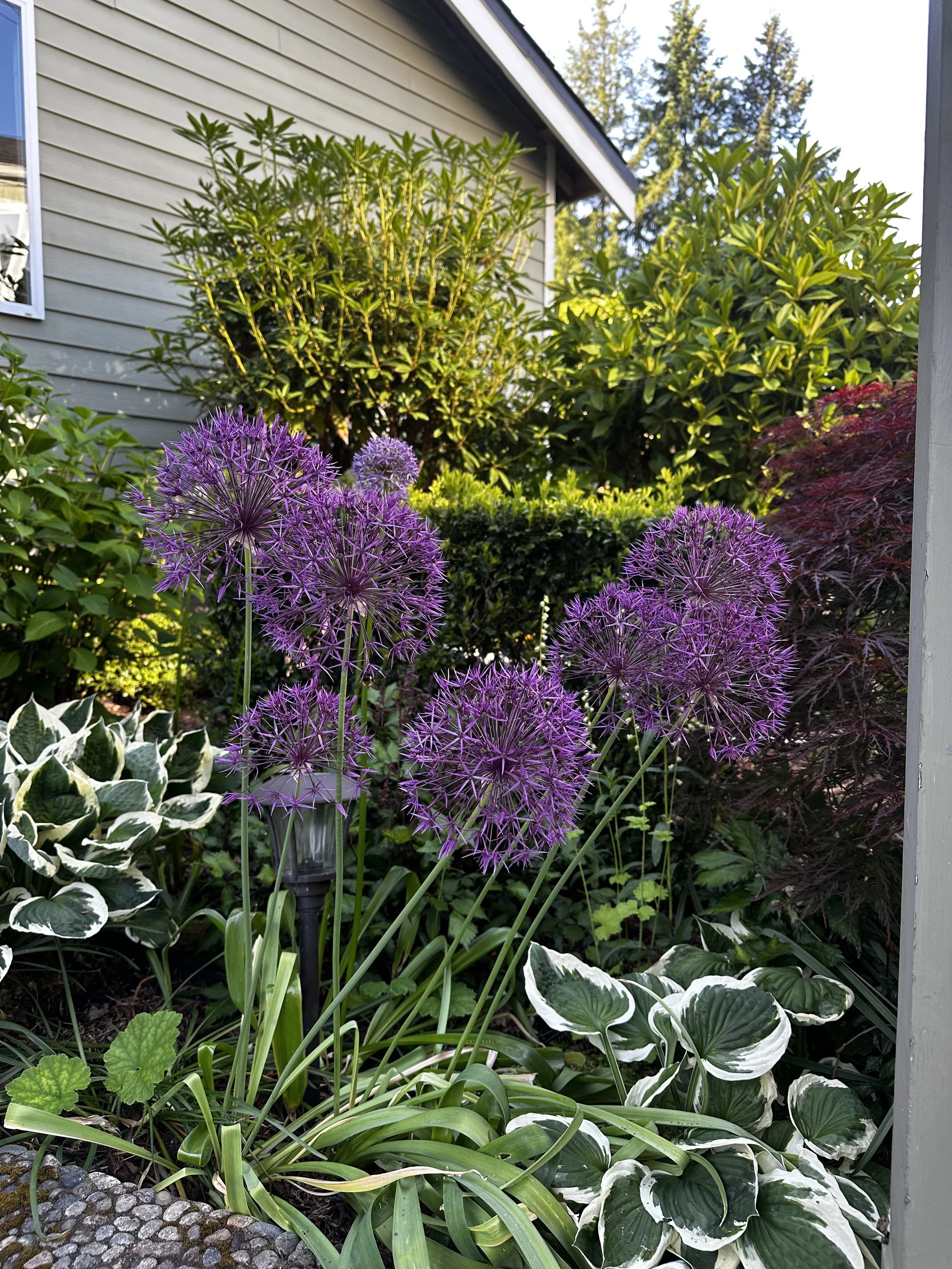
Mass plant these in groupings for color washes through the borders.
They float like purple fireworks.
Allium ‘Schubertii’
The statement allium.
Use in pots, in front garden beds, or as a sculptural focal point.
Allium ‘Drumstick’
Scatter them everywhere.
Let them pop up in surprising places among perennials and grasses.
Alliums are also:
Critter resistant
Drought tolerant
Incredible dried seed heads for summer interest
🪺 Protecting Your Bulbs From Critters
Every year we go to battle:
Crows. Squirrels. Rabbits. And the occasional very motivated raccoon.
My protection plan:
Lay netting over newly planted beds
Use temporary scarecrows for the first 10–14 days
Cover beds with leaves (nature's blanket)
Plant alliums + daffs around vulnerable tulips
Add rose stem cuttings as a natural perimeter
Once your bulbs are rooted and settled, you can remove the netting and relax.
🌱 My Exact Bulb-Planting Process
(How I install thousands of bulbs efficiently for clients)
1. Start with design zones.
Spring color should feel like it’s moving through the garden—never randomly placed.
2. Mix bulbs in buckets.
This prevents patterns and gives a natural scatter that feels effortless.
3. Toss the mix across the beds.
Where they land is where they go.
This is how you avoid stiff, overly planned designs.
4. Plant shallow → plant deep.
The rule of thumb is to plant each bulb 3x it’s size. Some daffodils, tulips and alliums are smaller and some are larger- so you want to plant them based on their size. I dig trenches and holes, placing the larger bulbs deeper and in the center and then the rest on the size. I try to avoid having the bulbs touch- then I usually fill the hole with new potting soil. This also helps your overall garden bed to be less compact- allowing perennials and grass roots to grow larger and deeper roots.
5. Top-dress with compost and leaves.
Both feed the soil and protect the bulbs.
🌸 Why a LOT of Bulbs = Impact
A handful of tulips won’t change your garden.
But hundreds planted through your borders?
Game-changing.
This is how professional gardens feel magical:
Big groupings
Repeated colors
Repeated forms
Strong early-season movement
Bulbs nestled inside perennials and grasses, not lined up at the front
If you think you bought enough bulbs…
Double it. 😉
💡 Final Thoughts: Your Spring Starts Now

Fall bulb planting is the most rewarding “slow burn” garden task you can do.
You plant now, in the cold, in the rain…
And in March your garden thanks you with color, life, fragrance, and a sense of renewal nothing else can replicate.
Your spring garden starts today.
And if you need help designing, placing, or sourcing bulbs, you know where to find me.
Book a consultation:
https://www.shanellerabichev.com/consultation
