
The Evolution of a Pacific Northwest All-Season Garden
How a 5-Layer Planting Comes Together — and What to Expect After Installation

One of the most common questions I get as a Seattle-area garden designer is:
“How long until my garden actually looks finished — and is it really low maintenance?”
If you’ve ever seen a newly planted garden and thought this looks sparse, you’re not wrong. A naturalistic, all-season Pacific Northwest garden is designed to evolve, not perform instantly. When done correctly, it becomes richer, fuller, and more beautiful with every passing season.
Let’s break down how these gardens are built, how long they take to come together, and what “low maintenance” really means.
The 5 Layers of a True All-Season Garden
A successful Pacific Northwest garden isn’t about individual plants — it’s about layers working together year-round.
1. Bulbs (Late Winter → Spring)
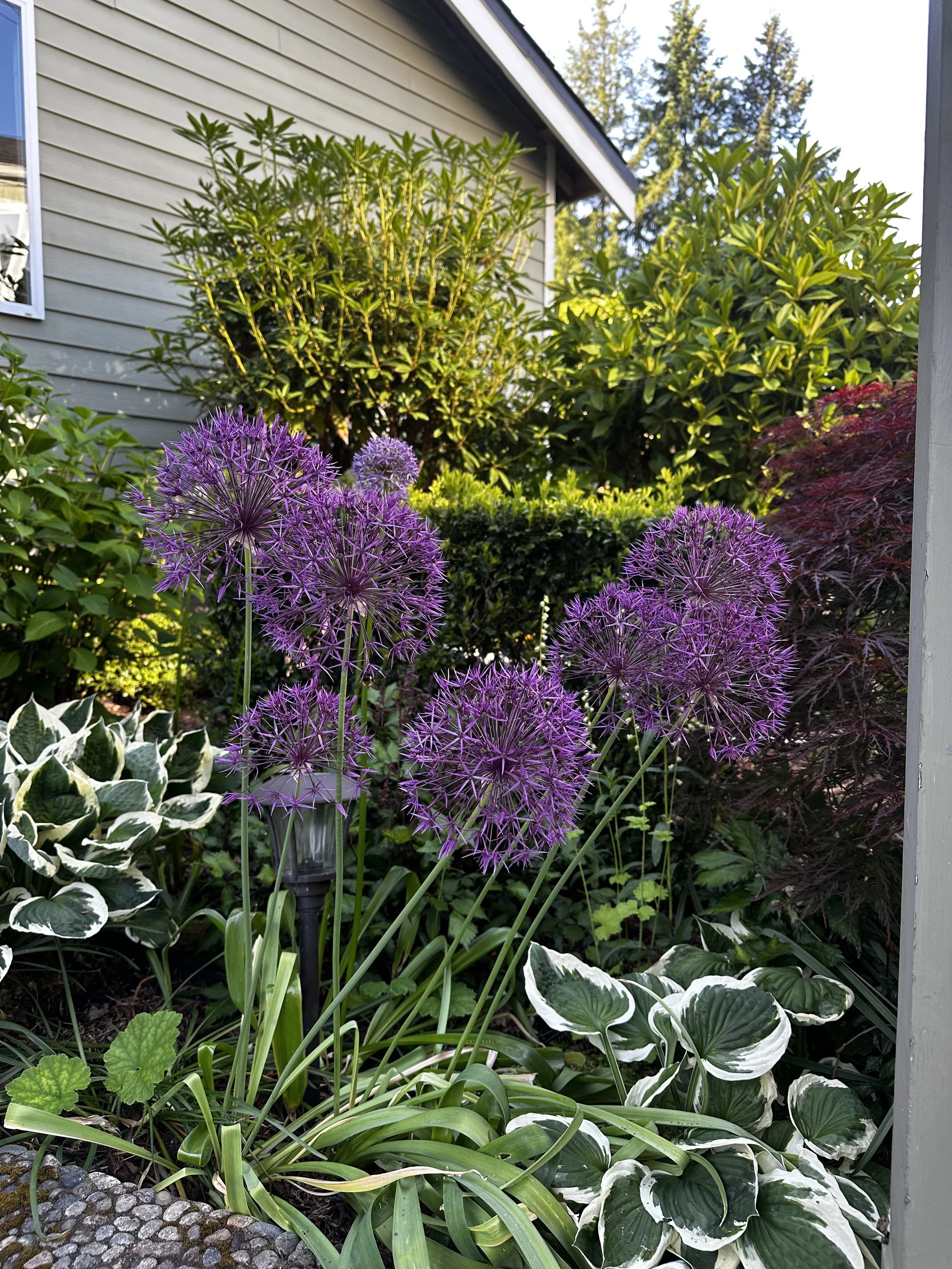
Bulbs are the first signal that the garden is waking up.
From my Starter Plant Package, this often includes:
Daffodils for reliable early color
Alliums for vertical structure and summer seed heads
These are planted after the main installation, usually in late fall, once the garden beds are established.
🌱 They naturalize over time, meaning year two and three are always better than year one.
2. Grasses (Structure All Year)
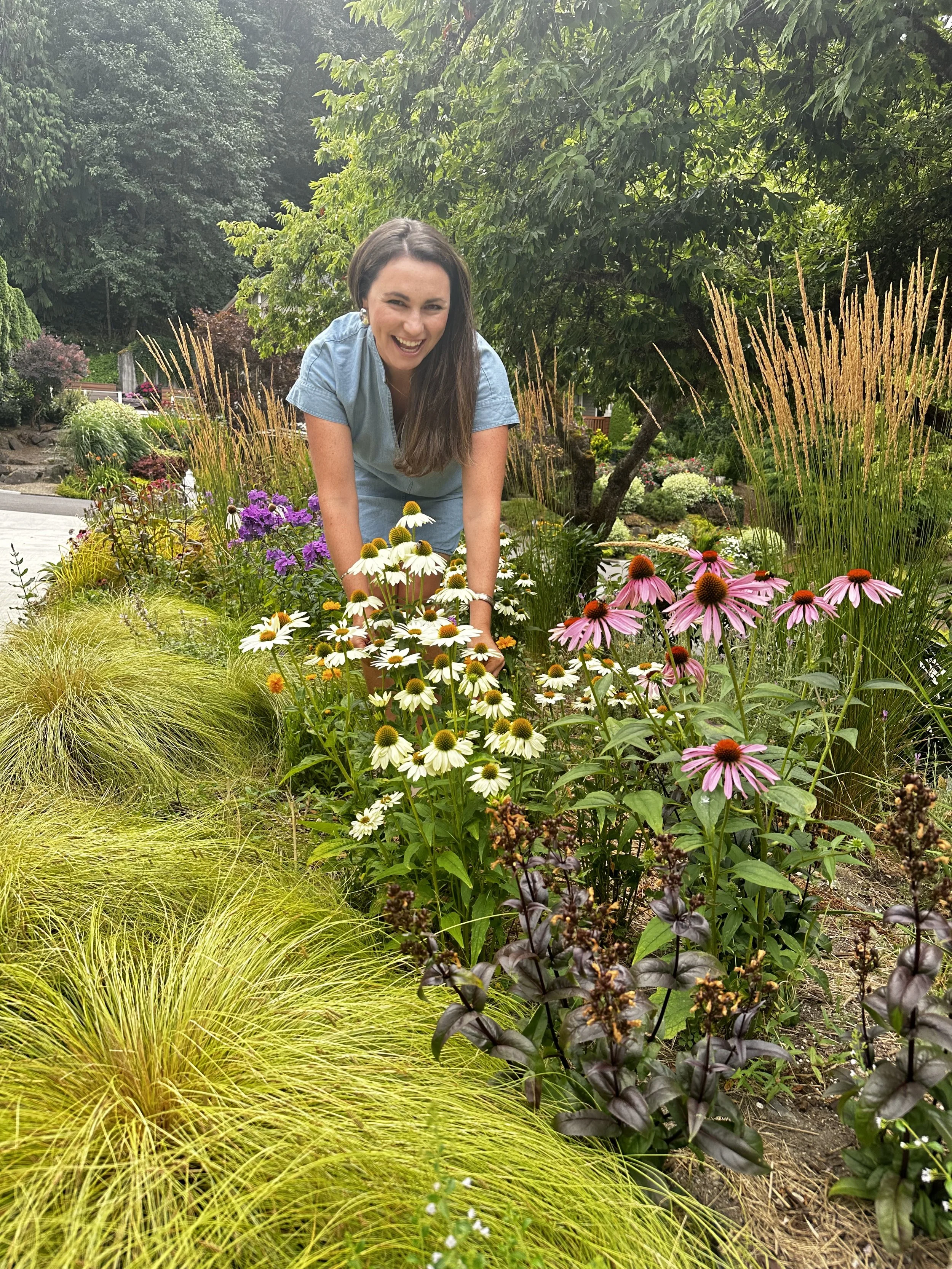
Grasses are the backbone of my designs — especially for our wet winters and dry summers.
From the Starter Package:
Feather reed grass (Karl Foerster)
Tufted hair grass
Grasses:
Hold the garden together in winter
Catch frost, rain, and low light beautifully
Provide movement and sound year-round
✂️ Maintenance: one annual cut-back in late winter.
3. Spring Bloomers
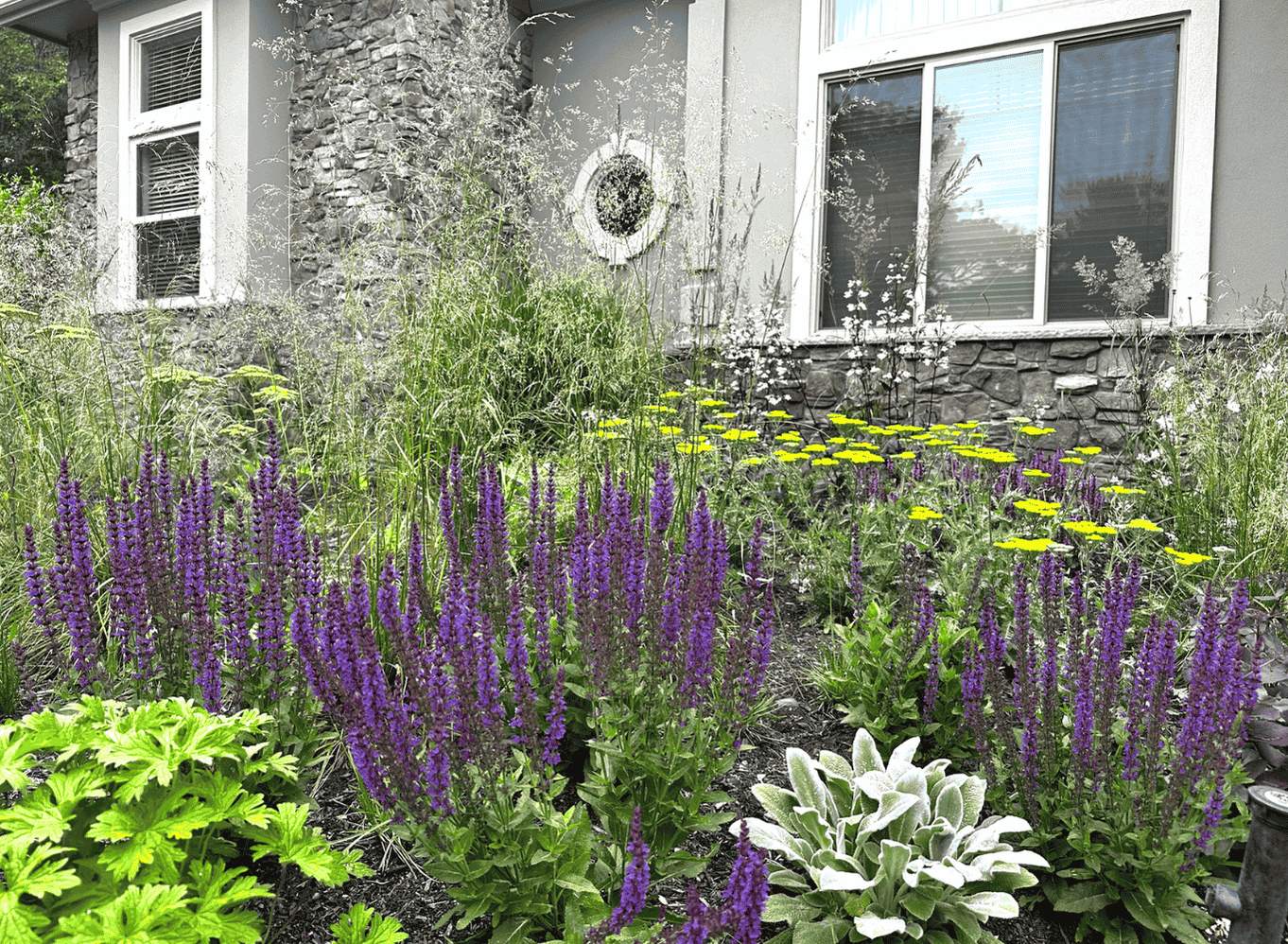
These bridge the gap between bulbs and summer perennials.
Think:
Soft mounding forms
Fresh greens and early texture
Pollinator support when little else is blooming
Spring plants ensure the garden never has a “dead zone” after bulbs fade.
4. Summer Bloomers
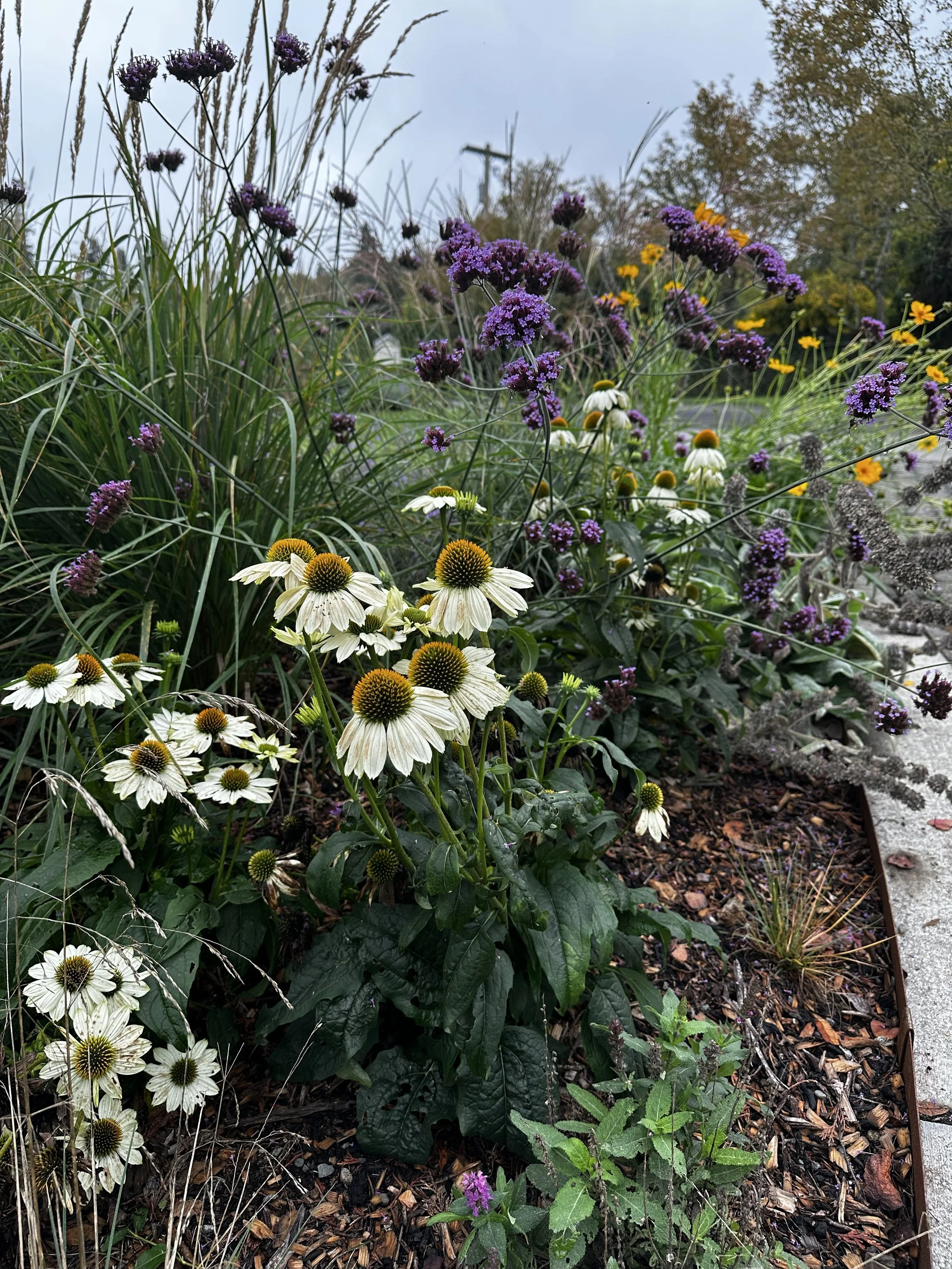
This is when the garden feels lush, layered, and immersive.
From the Starter Package, this may include:
Long-blooming perennials
Airy flowers that weave through grasses
Plants chosen for drought tolerance and longevity
By mid-summer of year one, most gardens already feel rewarding — but they’re still growing into themselves.
5. Late Summer & Fall Bloomers (The Secret Weapon)
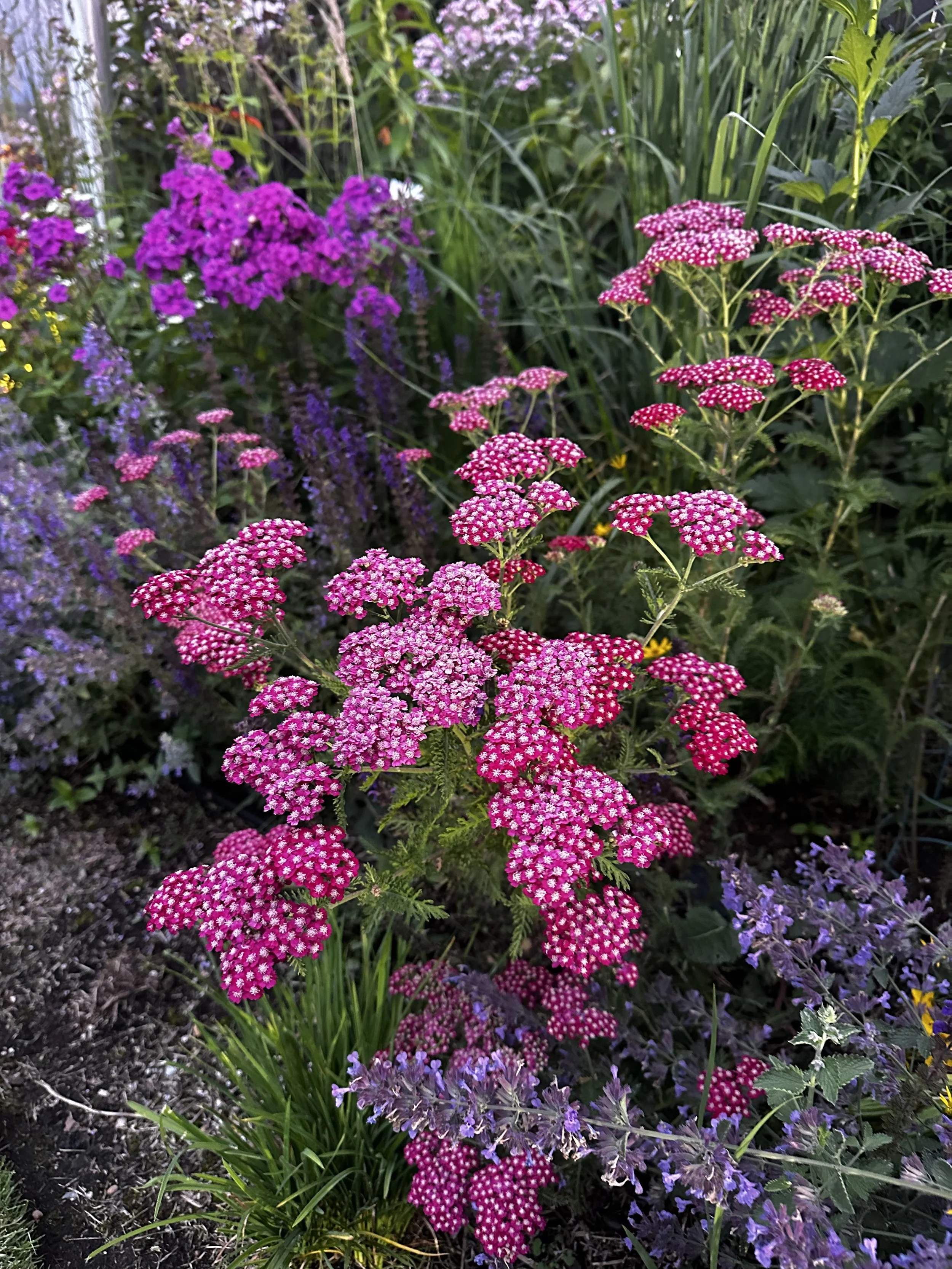
Late summer is where many gardens fail — and where mine shine.
These plants:
Carry color into September, October, and often November
Create seed heads that persist through winter
Look stunning in low autumn light and rain
This layer is often added in phases, once the main structure is established.
How Long Until It “Comes Together”?
Here’s the honest timeline I give every client:
🌱 Year 1: Establishment
The garden looks intentional, but airy
Roots are focused underground
Bulbs may not be visible yet
Regular watering and light weeding required
🌿 Year 2: Expansion
Plants begin touching and weaving
Fewer weeds as soil is shaded
Grasses bulk up
Spring and summer transitions feel seamless
🌾 Year 3: Maturity
The garden looks full, layered, and confident
Bulbs have naturalized
Maintenance drops significantly
Winter structure becomes a feature, not a problem
This is when people stop you on the sidewalk.
Is It Really “Maintenance Free”?
No garden is truly maintenance free — but low maintenance is absolutely real.
What you don’t get:
Weekly pruning
Constant deadheading
Seasonal replanting
What you do get:
One main cut-back window (late winter)
Occasional editing, not constant control
Plants selected specifically for the Pacific Northwest climate
Maintenance becomes rhythmic and predictable, not overwhelming.
Will It Look Beautiful All Year Long?
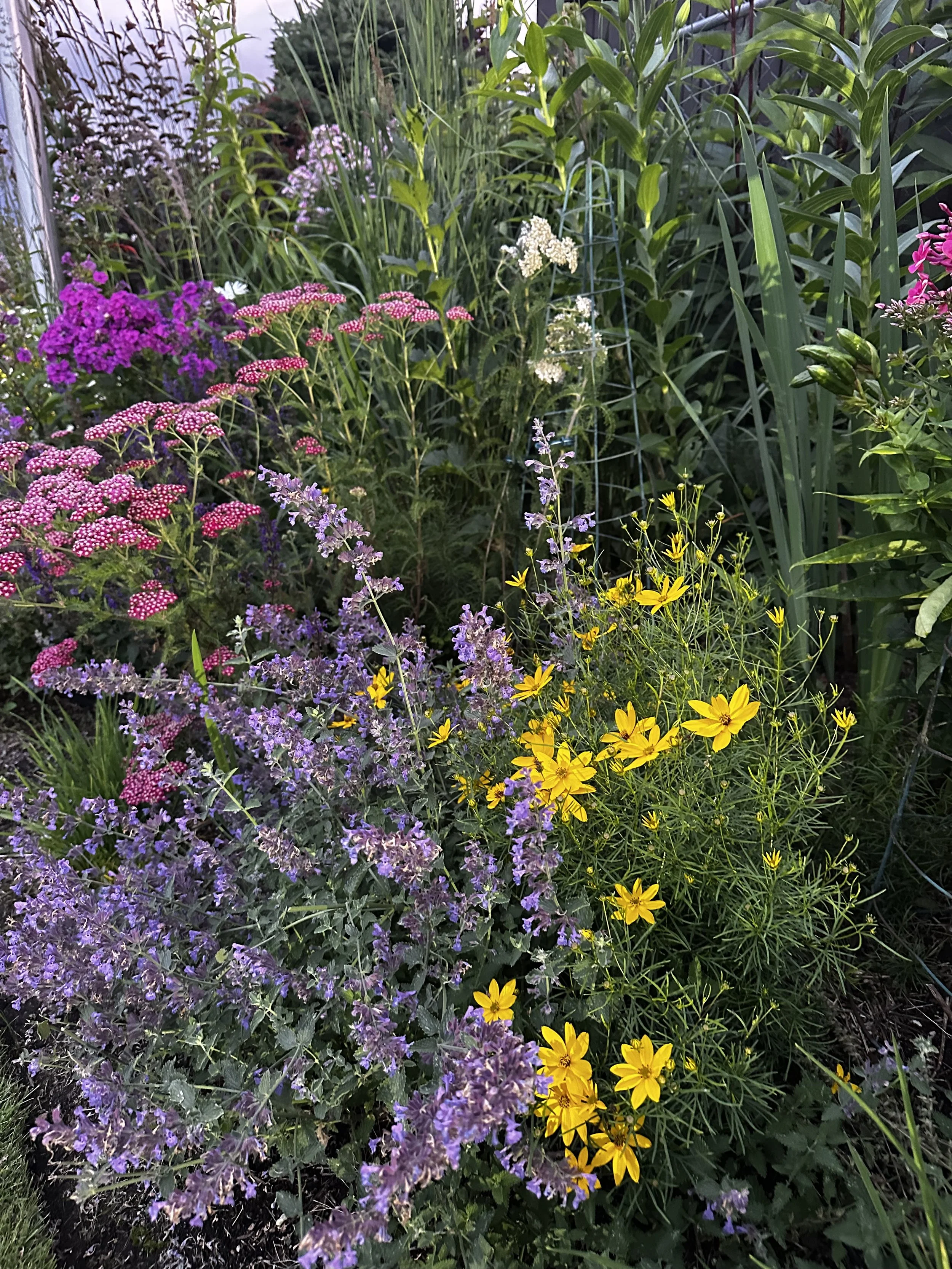
Yes — but beauty looks different in every season.
Winter: seed heads, grasses, structure, frost, rain movement
Early Spring: bulbs and fresh green growth
Late Spring: fullness and texture
Summer: bloom, movement, pollinators
Fall: warm tones, seed heads, golden light
This is not a garden designed for one perfect moment — it’s designed for 365 days of interest.
How My Gardens Are Designed (And Why It Works)
Every garden I design starts the same way:
1. Consultation
We talk through:
Sun, soil, and drainage
How you want to feel in the space
Maintenance comfort level
Budget and phasing
2. Design
A clear plan focused on:
Structure first
Long-term plant performance
Seasonal layering
3. Demo & Prep the Pallet
This is the unglamorous but critical part:
Removing what doesn’t work
Improving soil
Setting the foundation for success
4. Installation
Core plants and grasses go in first
Spacing allows for growth
The garden is intentionally not “overstuffed”
5. Seasonal Add-Ons
Late fall bulb planting
Containers for winter and shoulder seasons
Additional late-summer layers as the garden matures
This phased approach ensures the garden evolves beautifully — without overwhelming the plants or the homeowner.
Final Thought
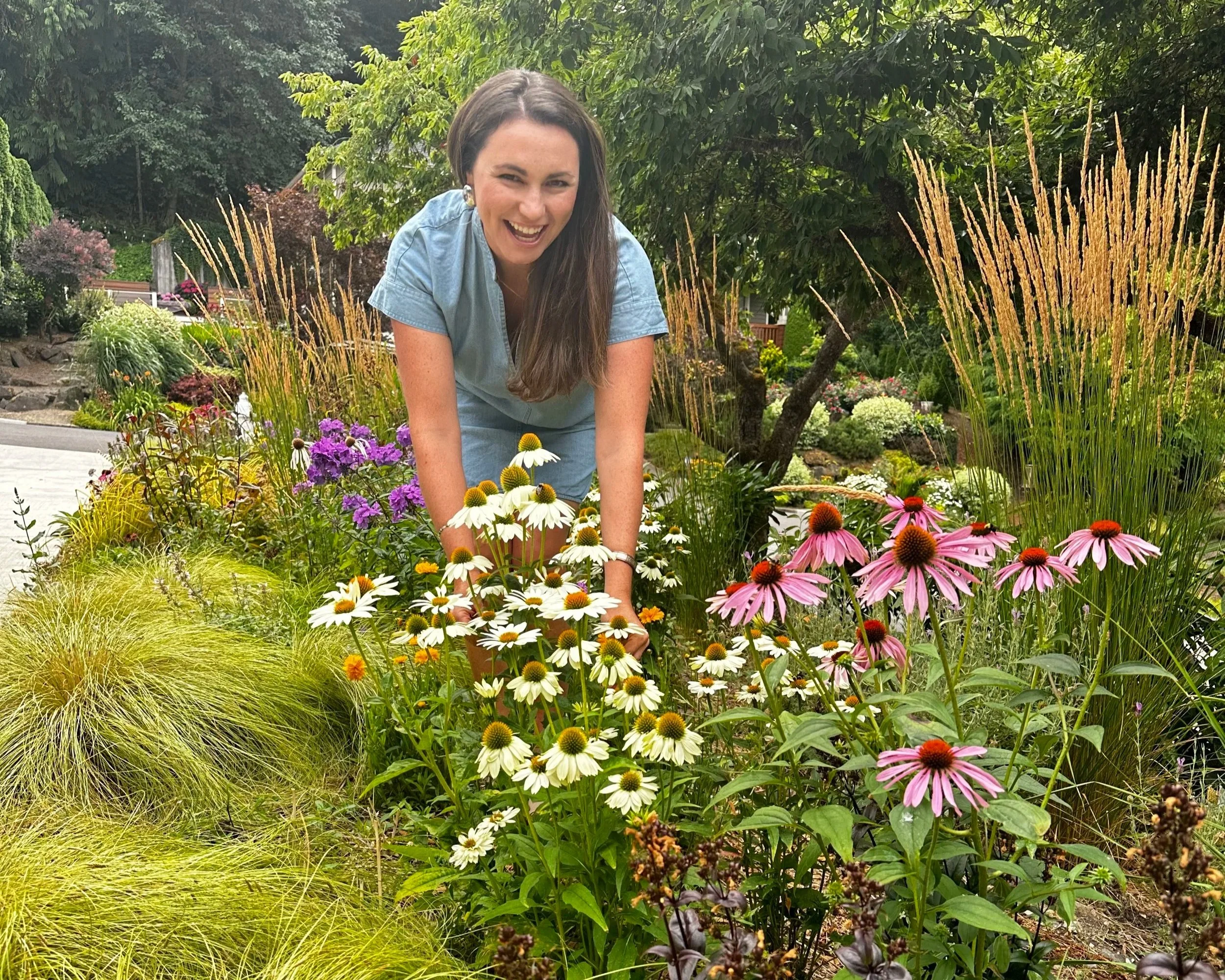
A Pacific Northwest all-season garden is not about instant gratification. It’s about trusting the process.
When designed thoughtfully and installed correctly, these gardens:
Get better every year
Require less work over time
Look beautiful in every season — not just summer
And the best part?
Every single garden I’ve designed started as a simple consultation.
If you’re ready to build a garden that grows with you, you’re starting in exactly the right place.
👉 Explore more Pacific Northwest gardens I’ve designed at
www.shanellerabichev.com
