Let’s be honest about gardening in the Pacific Northwest: our climate is weird, and most residential yards are built completely wrong for it.
We get months of dark, cold, soaking rain where heavy clay soil turns into a sponge—followed immediately by three months of intense summer sun where it basically doesn’t rain at all. If you plant a yard the traditional way (a couple of lonely shrubs floating in bark mulch next to a thirsty lawn), you end up with the exact same headache every year: half your plants rot out by February, and the other half fry in August unless you run your irrigation system nonstop.
When I’m designing a custom garden in Seattle, Bellevue, Kirkland, or Mercer Island, I don’t try to fight that swing. I build the whole site around it—starting with what’s happening in the soil, anchoring the yard with mature specimen trees, and weaving a dense perennial matrix underneath.
First: Fix the Ground Before You Buy a Single Plant
Most homeowners think a great garden starts at the nursery. It doesn’t. It starts with drainage and clean architectural lines.
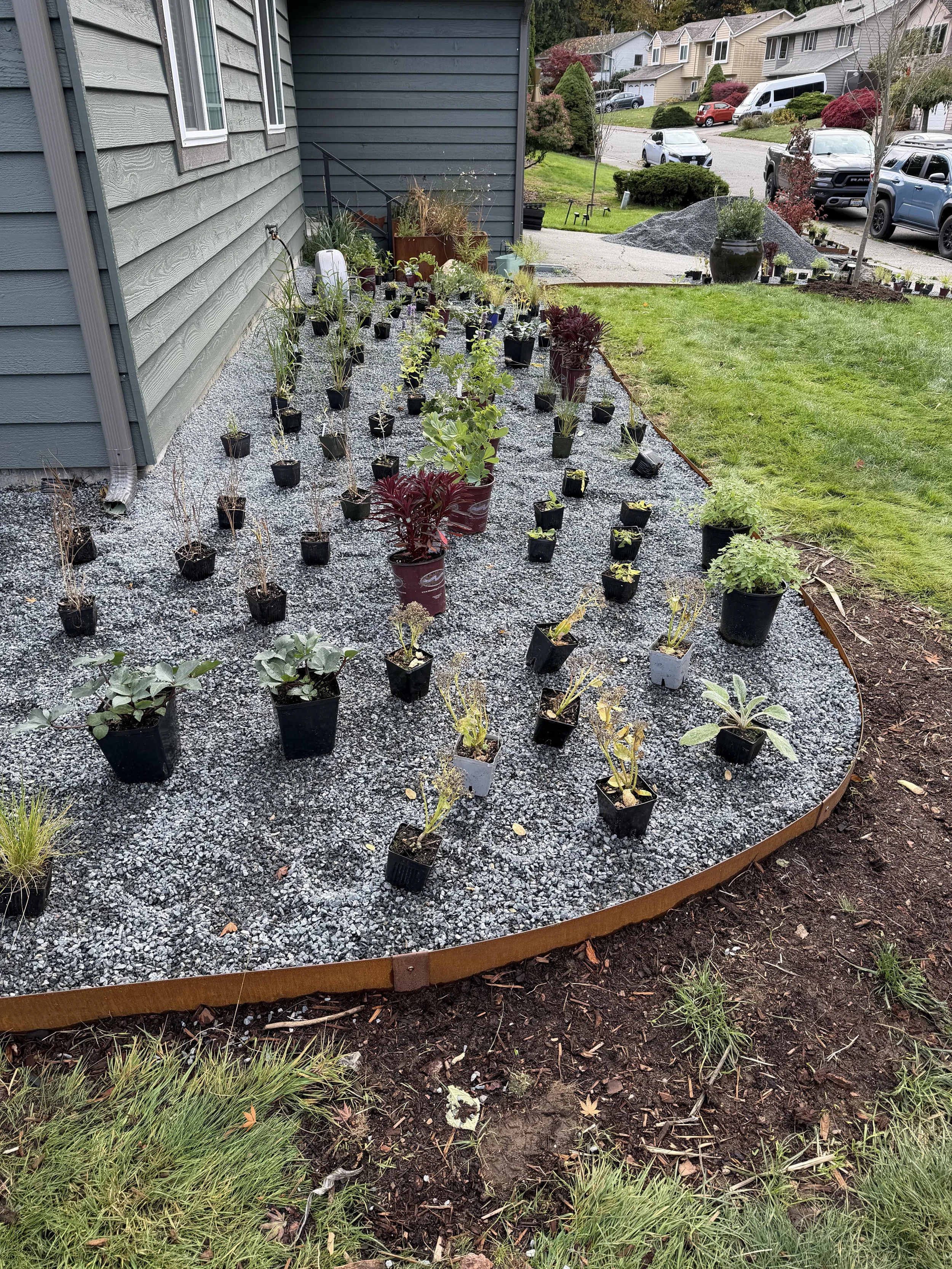
On a recent full-scope midcentury renovation in Bellevue (covering roughly 2,100 square feet of beds and pathways), we stripped out 4 inches of compacted turf and tired soil before placing a single plant. Instead of dumping dyed bark mulch on top—which turns into soggy mush in January and washes down sloped driveways—we used a 4-inch layer of crushed basalt gravel (3/8-inch clean basalt on flat beds and paths, and 5/8-inch minus gravel on steeper slopes so it locks in place) framed by heavy-gauge 8-inch Cor-Ten weathering steel edging.
Why? Because basalt gravel acts like a mineral blanket. Winter rain drains straight through it so perennial roots never sit in cold water, summer moisture stays locked in the soil underneath, and weeds barely stand a chance.
4 Specimen Trees That Actually Anchor a PNW Yard
Once the ground is right, you need vertical structure. A lot of yards feel flat because everything is ankle-to-waist high. Bringing in a 7- to 8-foot multi-stem specimen tree (or a 2-inch caliper tree from a specialty local grower) gives your property instant privacy, shade, and presence on day one.
These four trees handle our wet-winter, dry-summer rhythm without constant babying:
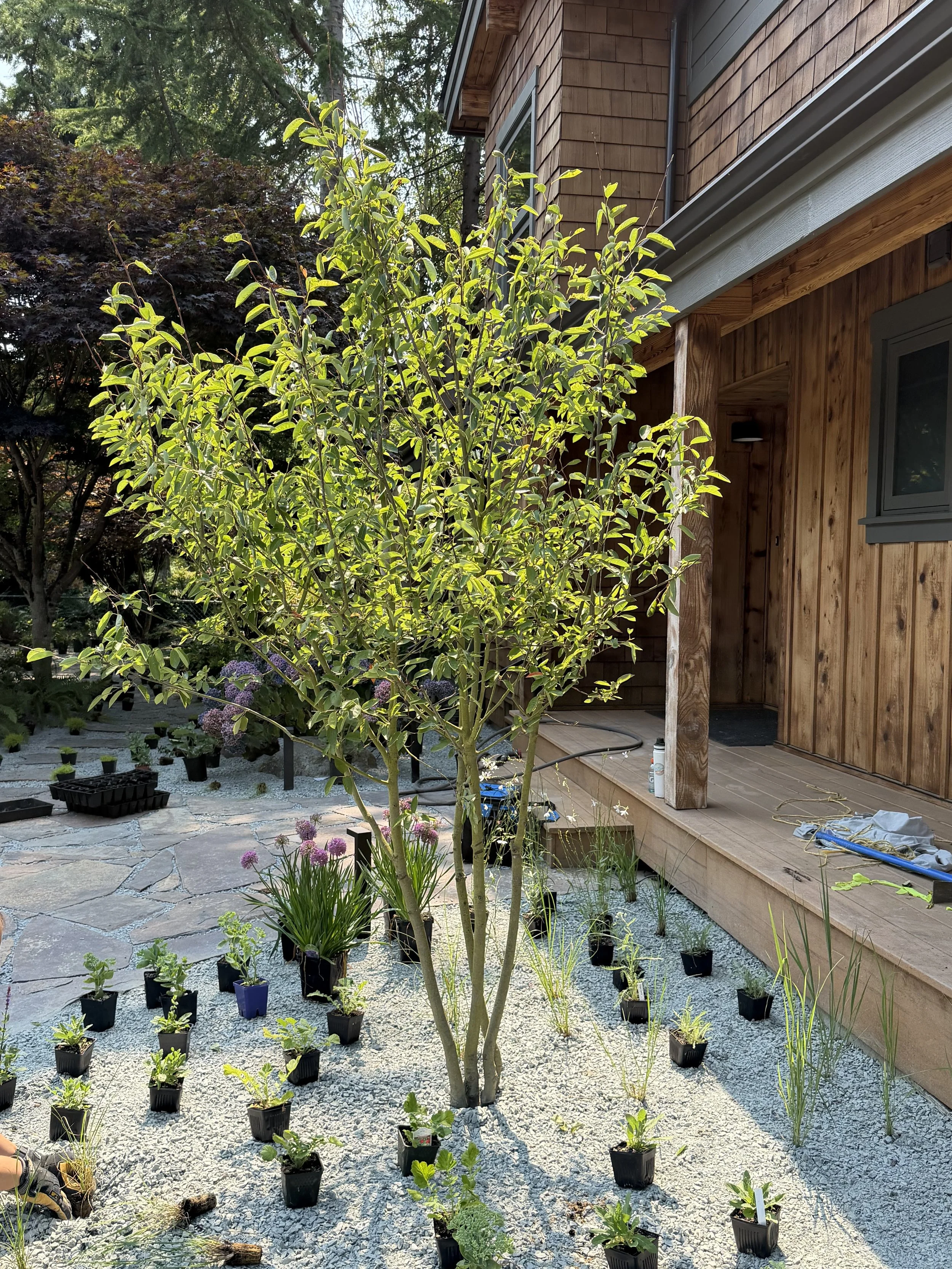
Multi-Stem Serviceberry (Amelanchier): If I could only put one small tree in a Seattle gravel garden, it’s usually this one. It’s native to the Northwest, bursts into airy white blooms in spring, feeds the birds in summer, and turns fiery orange-red in fall. Even in January, its sculptural multi-stem bark looks incredible rising out of crushed stone.
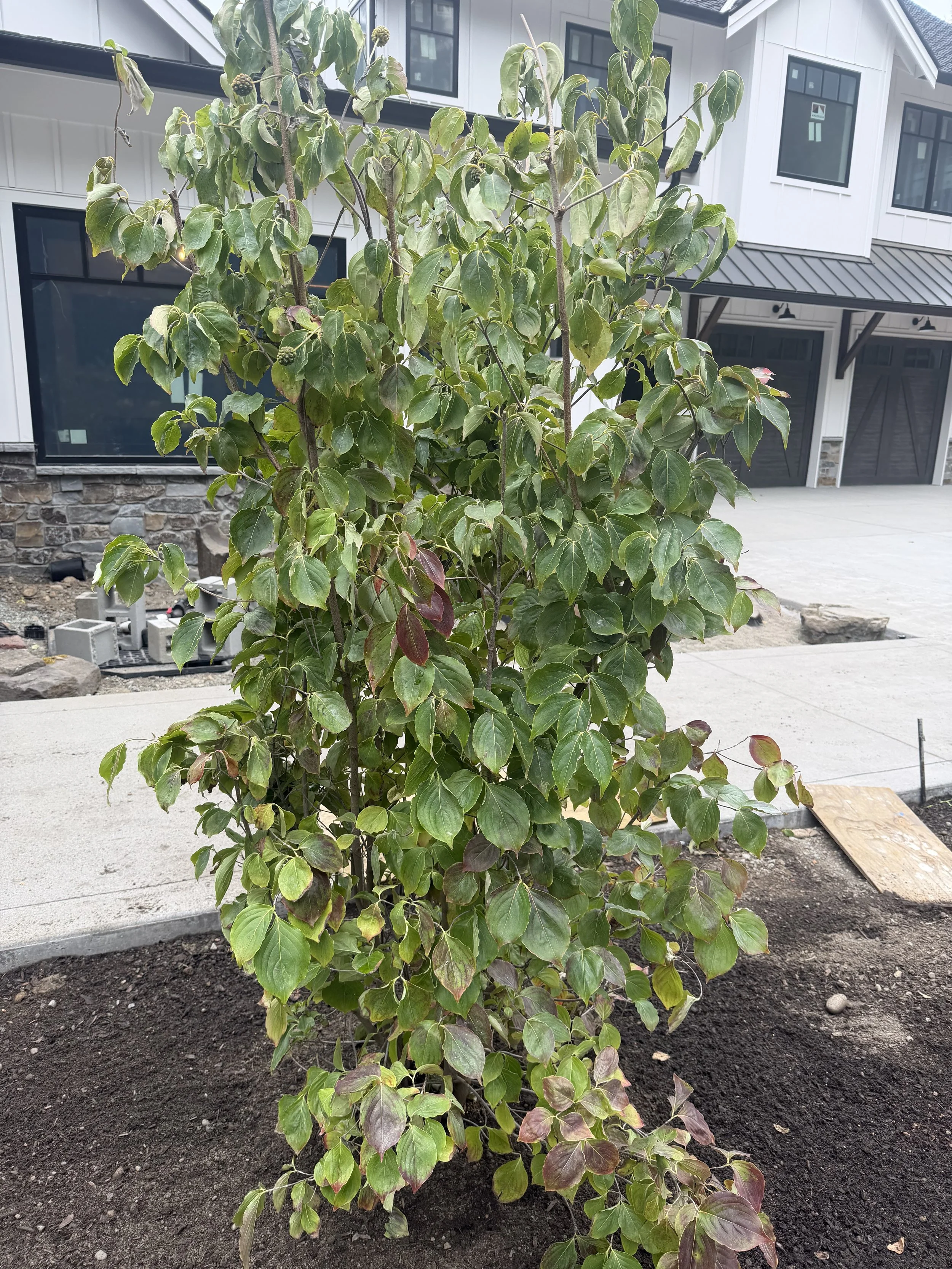
Chinese Kousa Dogwood (Cornus kousa): Way tougher and more sun-tolerant than our native woodland dogwoods. An 8-foot multi-stem Kousa gives you layered horizontal branches, starry white summer bracts, and mottled bark that holds the garden together all winter.
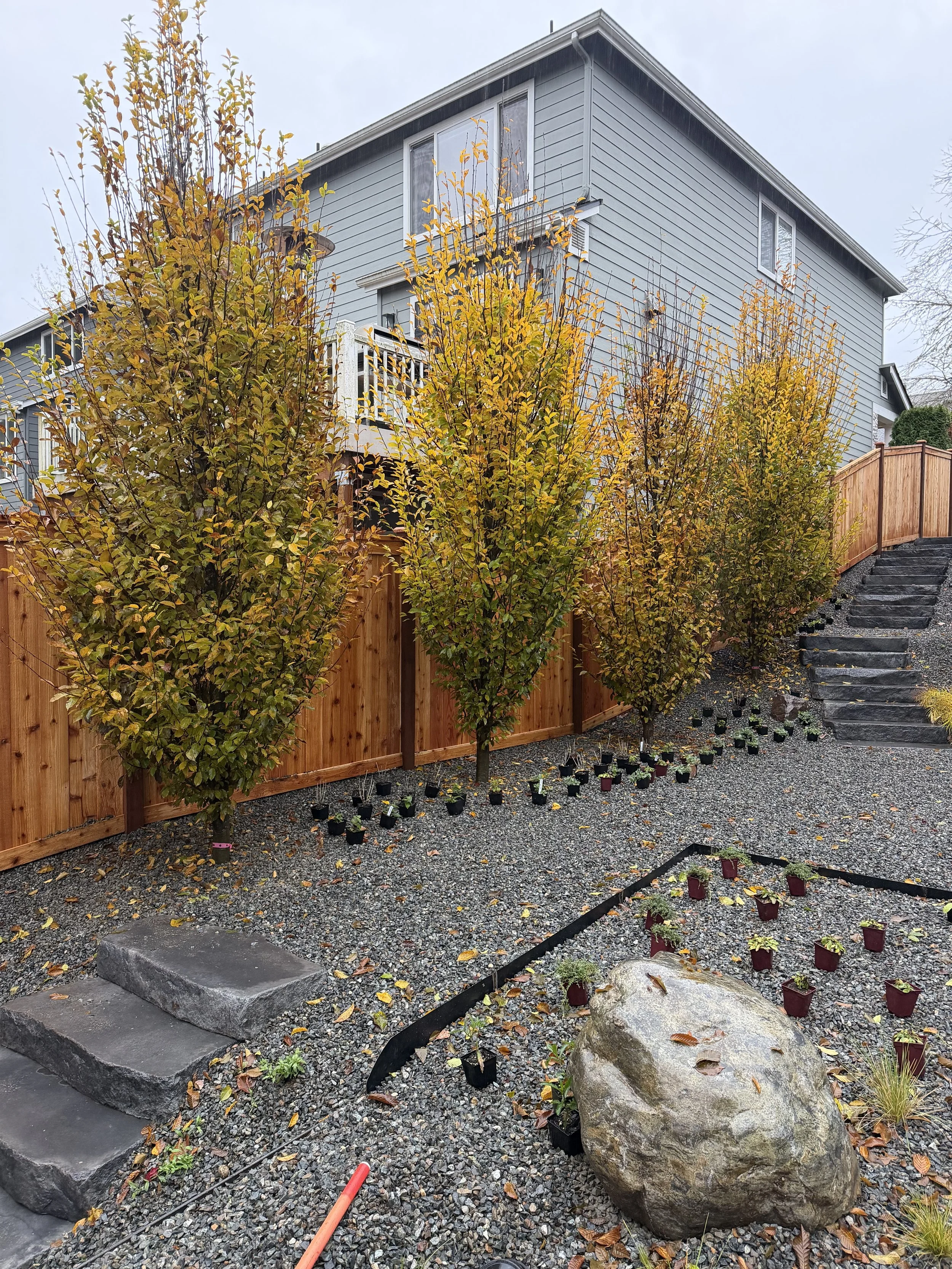
Columnar Hornbeam (Carpinus betulus 'Fastigiata'): When Eastside clients want real privacy along a fence line without sacrificing half their yard, fastigiate hornbeams are my go-to. They grow in a tight, tailored column, handle wet winters and August heat once established, and turn warm gold in the fall.
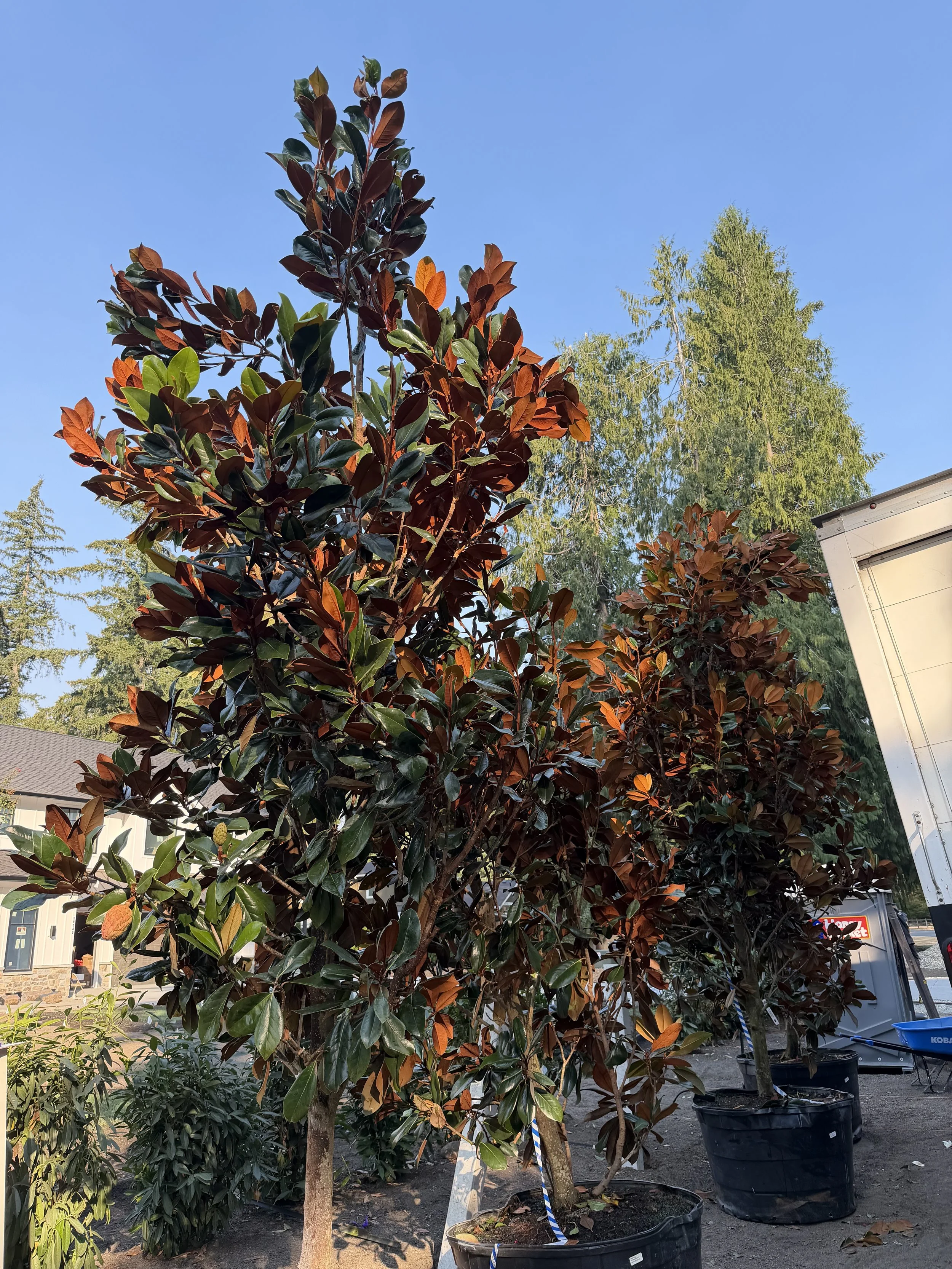
Evergreen Southern Magnolia (Magnolia grandiflora): If you want year-round screening that feels architectural instead of like a bulky wall of arborvitae, mature Southern Magnolias are hard to beat. Their glossy dark green leaves have rich copper-bronze undersides that catch low winter light and look amazing next to cedar fencing and Cor-Ten steel.
The Understory Matrix: Perennials & Grasses That Thrive on Neglect
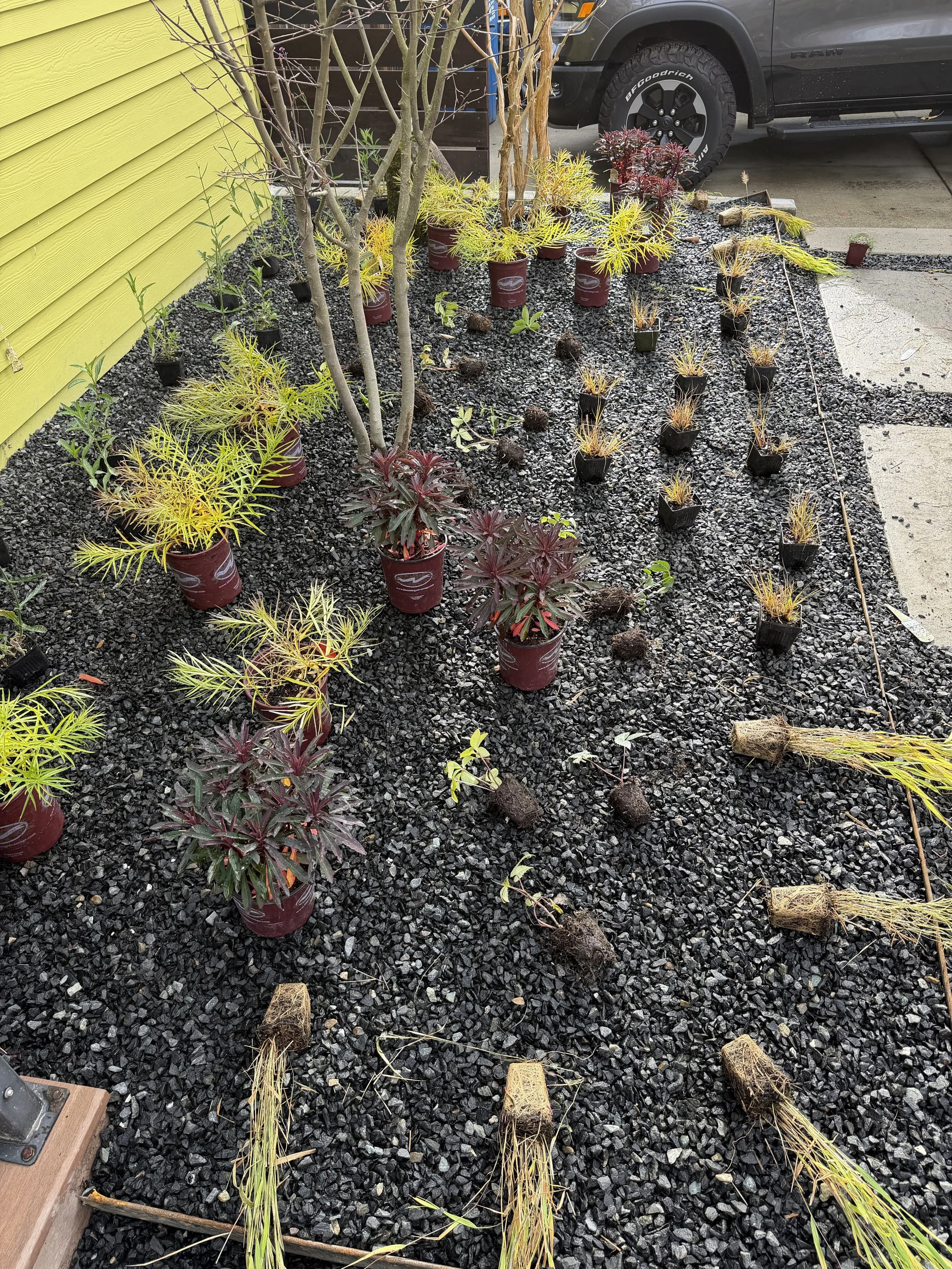
Underneath those trees, we skip the spaced-out shrub look completely. Instead, we plant perennials and ornamental grasses at tight 18-inch staggered spacing—often 200 to over 1,000 plants on a single project—so their roots dive deep and their foliage knits into a living carpet:
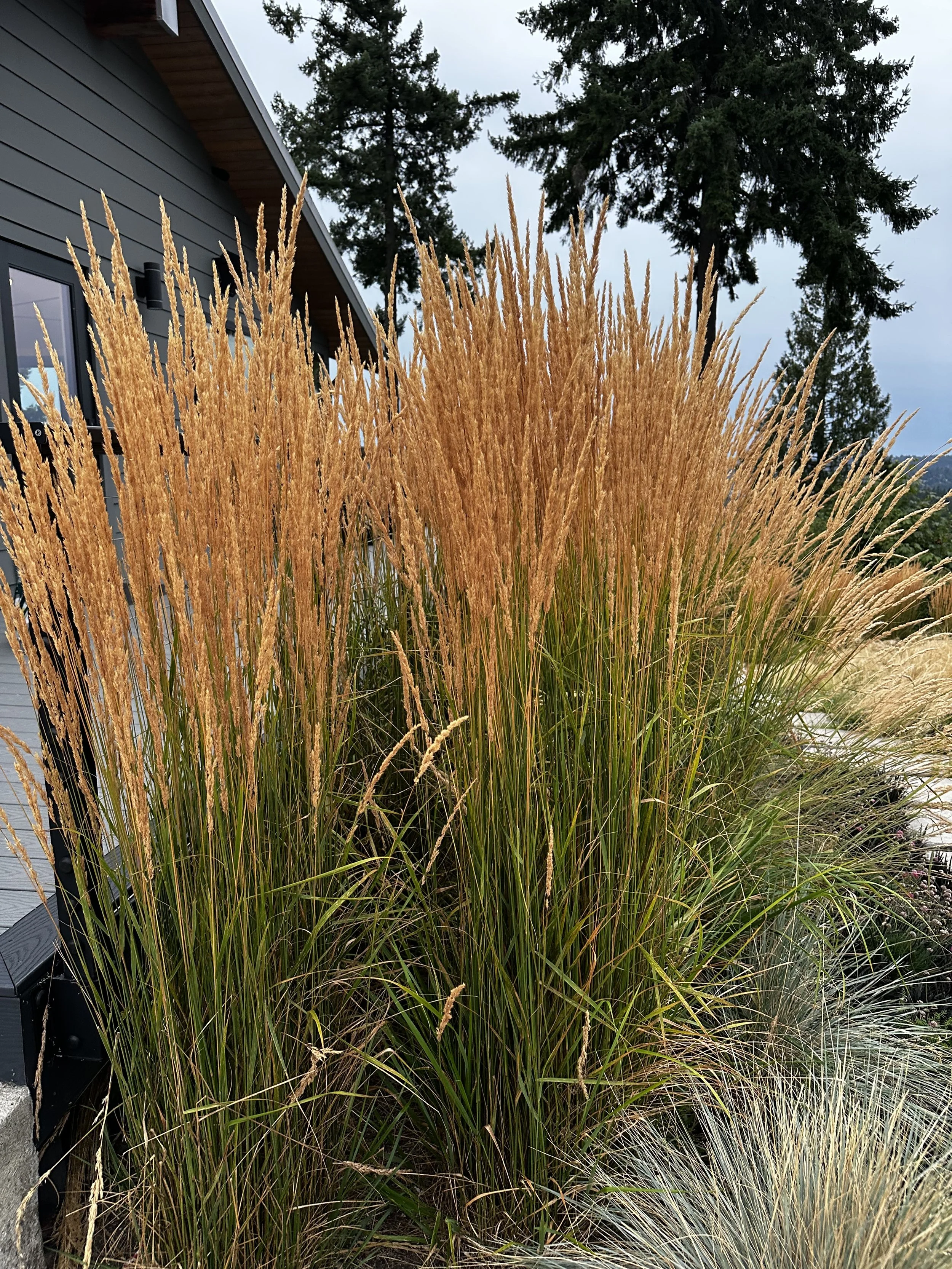
Grasses that don’t flop in winter rain: Calamagrostis 'Karl Foerster' (strict golden plumes that stand straight through January storms), Sesleria caerulea (compact blue-green tufts that handle sun or light shade), and Panicum 'Northwind' or 'Shenandoah' for late-season movement.
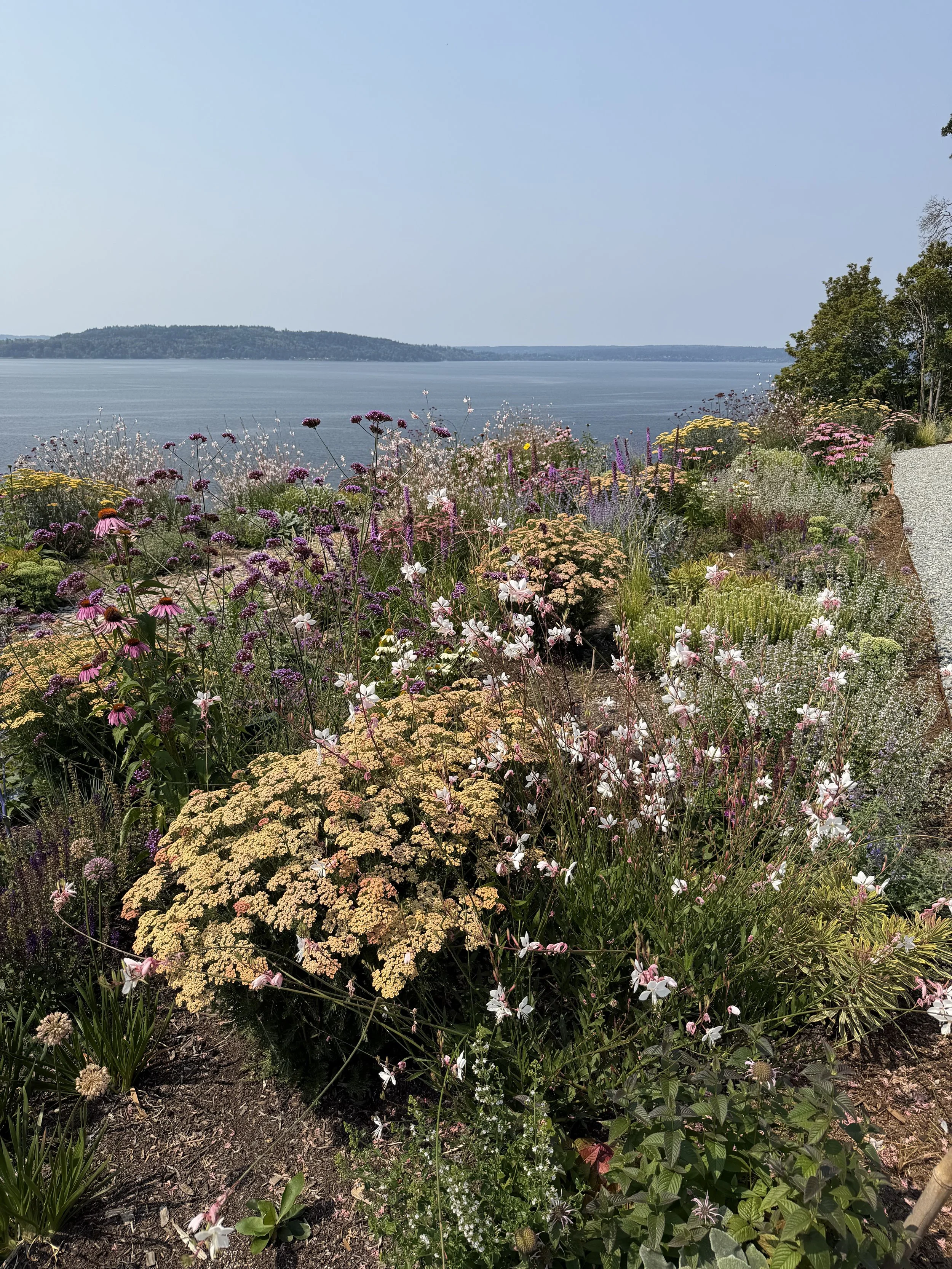
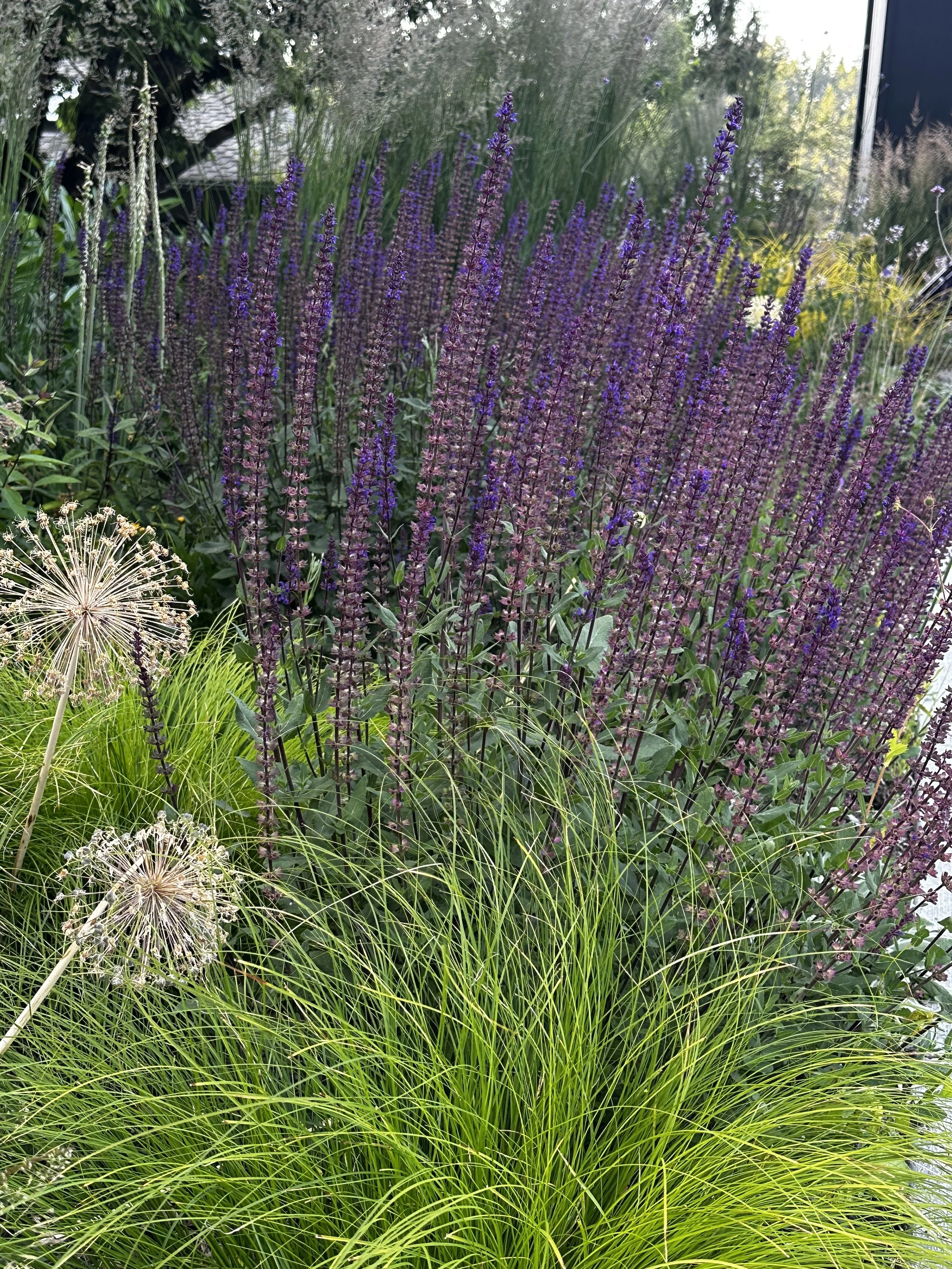
Sun lovers for lean gravel beds: Salvia 'Caradonna' and 'Midnight Rose', Achillea 'Terra Cotta' and 'Moonshine', Stachys 'Helen von Stein' (velvety silver leaves that soften steel edging), and Sedum 'Autumn Joy' + Echinacea 'White Swan' for sculptural winter seed heads.
Shade performers for tree canopies: Native Deer Fern (Blechnum spicant), Western Maidenhair Fern (Adiantum aleuticum), and Fall Windflower (Anemone 'Robustissima') for crisp autumn blooms in darker corners.
Planning Your 2027 Garden?
If your yard currently feels like a battle against mud, moss, and summer water bills, we can build something that actually works with our climate—and looks intentional 365 days a year.
I limit my studio calendar to 3 to 4 custom projects per month so every site audit, nursery order, and on-site plant placement gets my personal attention. Site Planning & Curated Border Packages start at $7,500, and Full-Scope Design, Procurement & Installation Oversight starts at $25,000. Because wholesale specimen trees get claimed early and spring/late-summer installation slots book 60 to 90 days out, now is the time to get on the calendar for 2027.
👉 Book a design consultation here and tell me a bit about your property and goals.