8 Reasons Most Seattle Gardens Fail After Year One (and how to design one that actually gets better with time)
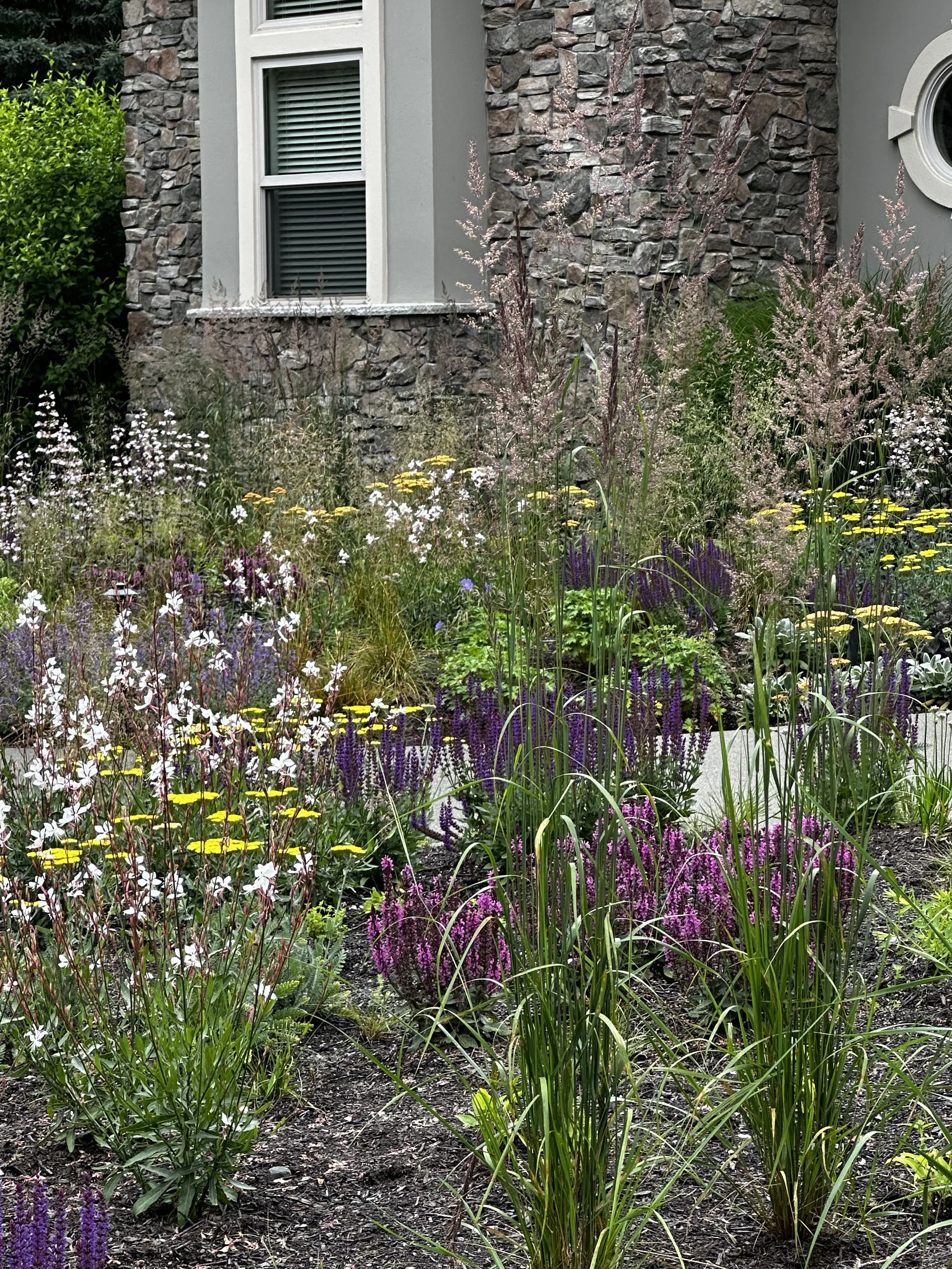
In the Seattle region, gardens don’t usually fail because of our climate — they fail because they’re designed like shopping lists instead of systems. Below are the eight most common mistakes I see in Pacific Northwest gardens after year one, along with what to do instead and plants that actually work here.
1. Buying Plants With No Plan
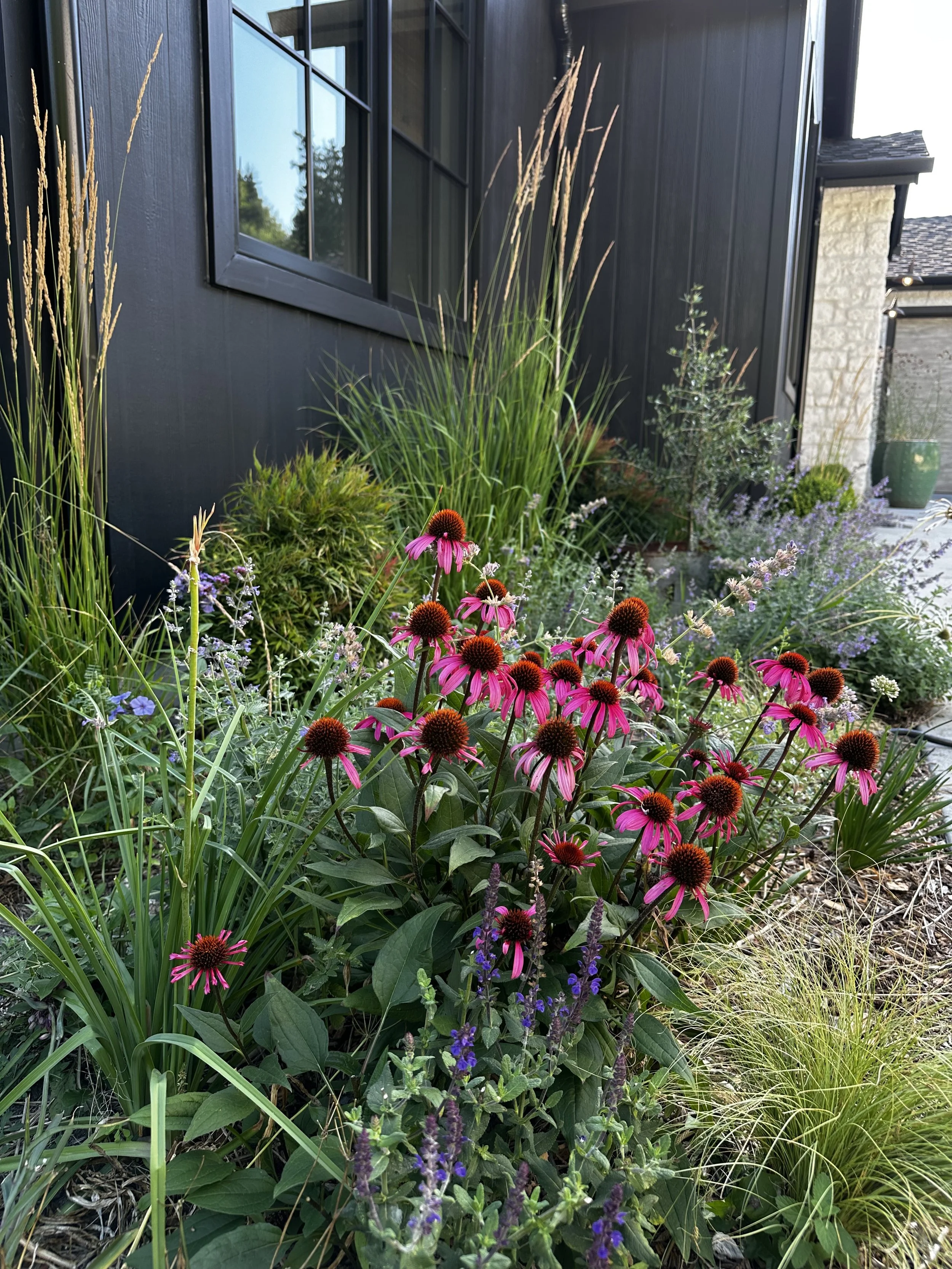
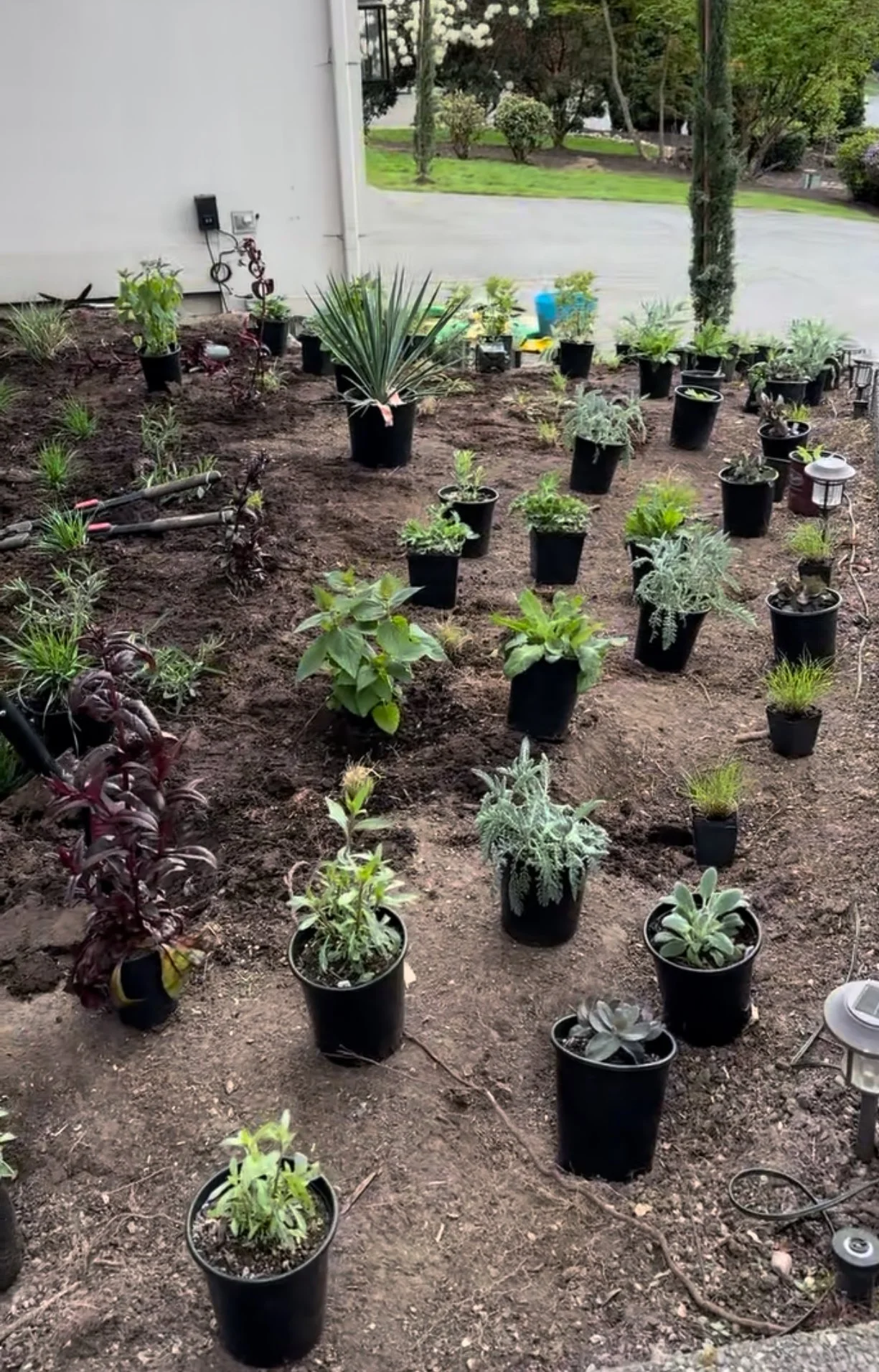
Walking into a nursery without a layout, spacing plan, or seasonal strategy almost guarantees disappointment. Plants that look good in pots rarely look good together long-term. In Seattle, growth is vigorous — things fill in fast, compete aggressively, and collapse just as quickly when poorly paired.
What to do instead:
Design in layers: structure plants first (grasses, shrubs, repeat perennials), then seasonal interest. Think in drifts, not singles.
Seattle-proven anchors:
Calamagrostis ‘Karl Foerster’
Pennisetum ‘Hameln’
Geranium macrorrhizum
Helleborus (for winter structure)
2. Exposed Ground Between Plants
Bare soil is an open invitation for weeds, erosion, and moisture loss — especially during Seattle’s wet winters and dry summers. Mulch helps, but it’s not a long-term solution.
What to do instead:
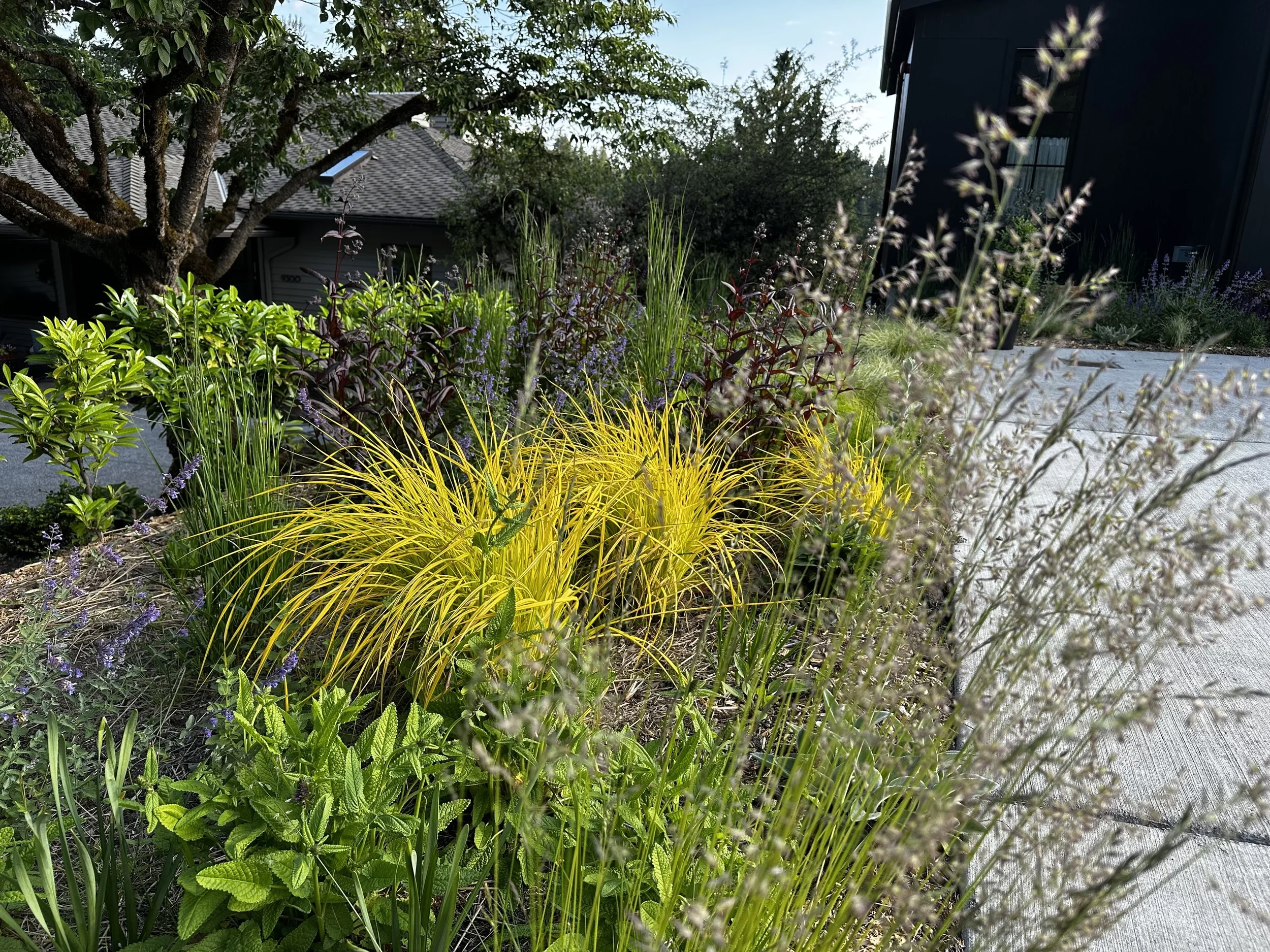
Plant densely from the start so roots knit together underground. Living groundcover is the real weed barrier.
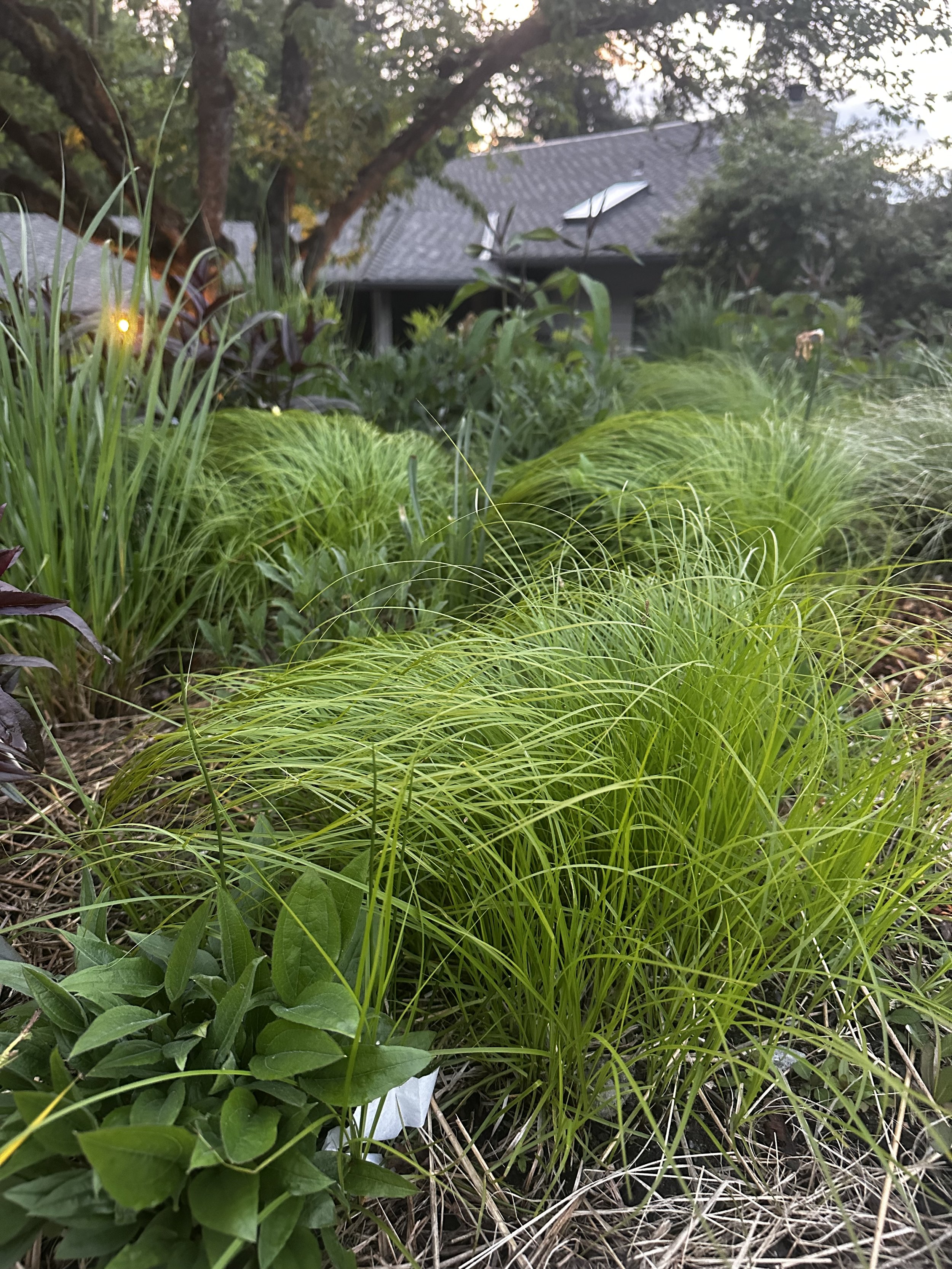
Reliable ground-covering plants:
Epimedium
Brunnera (shade)
Carex varieties
Hardy geraniums
3. Picking Plants Based on Bloom Color
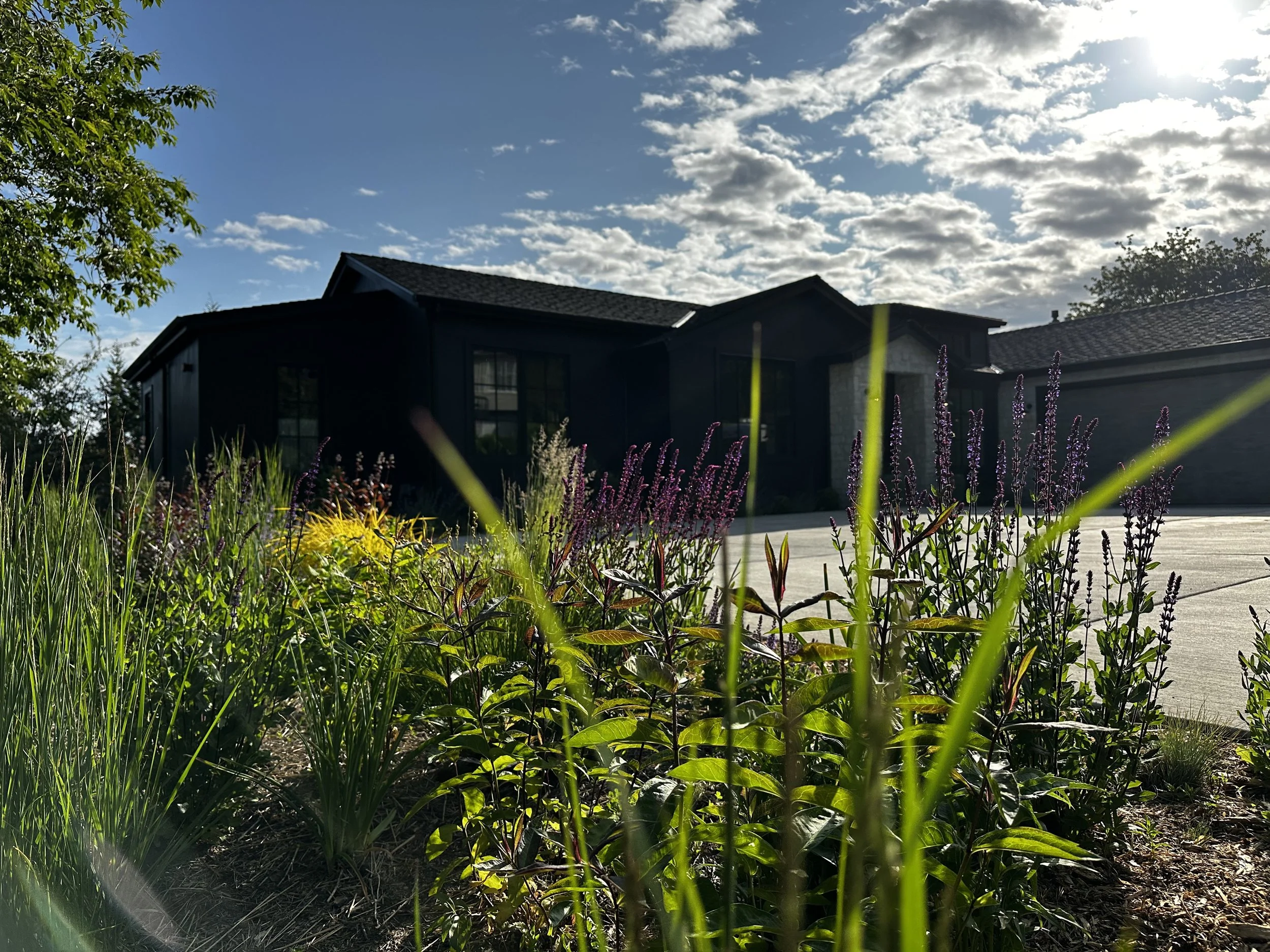
Color-first gardens peak briefly, then collapse into visual chaos or dormancy. Seattle gardens need structure first, flowers second.
What to do instead:
Design for form, texture, and seed heads. Flowers should be a bonus — not the backbone.
Structure-forward plants:
Echinacea (leave seed heads)
Sedum ‘Autumn Joy’
Alliums (spring structure + seed heads)
Ornamental grasses
4. Planting Sun Plants in Shade (and Vice Versa)
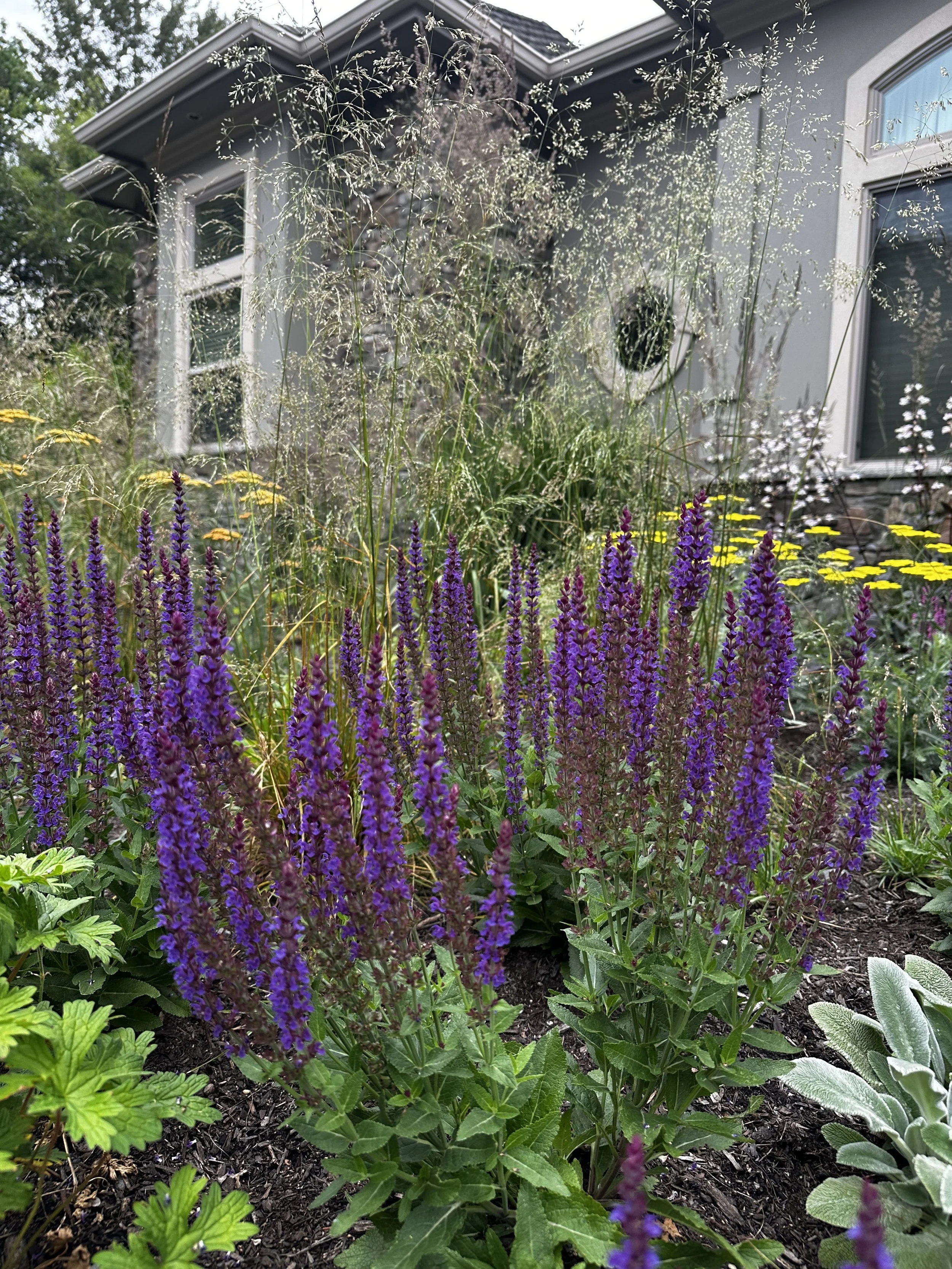
This is one of the fastest ways to kill plants quietly. In Seattle, “partial shade” can mean very different things depending on tree cover and season.
What to do instead:
Observe sun patterns across the year. Summer sun ≠ spring sun.
Correct matches:
Full sun: Lavender, Salvia, Echinacea
Part shade: Hellebores, Heuchera, Anemone
Shade: Solomon’s Seal, Epimedium, Brunnera
5. Cutting Grasses & Perennials Back in Fall
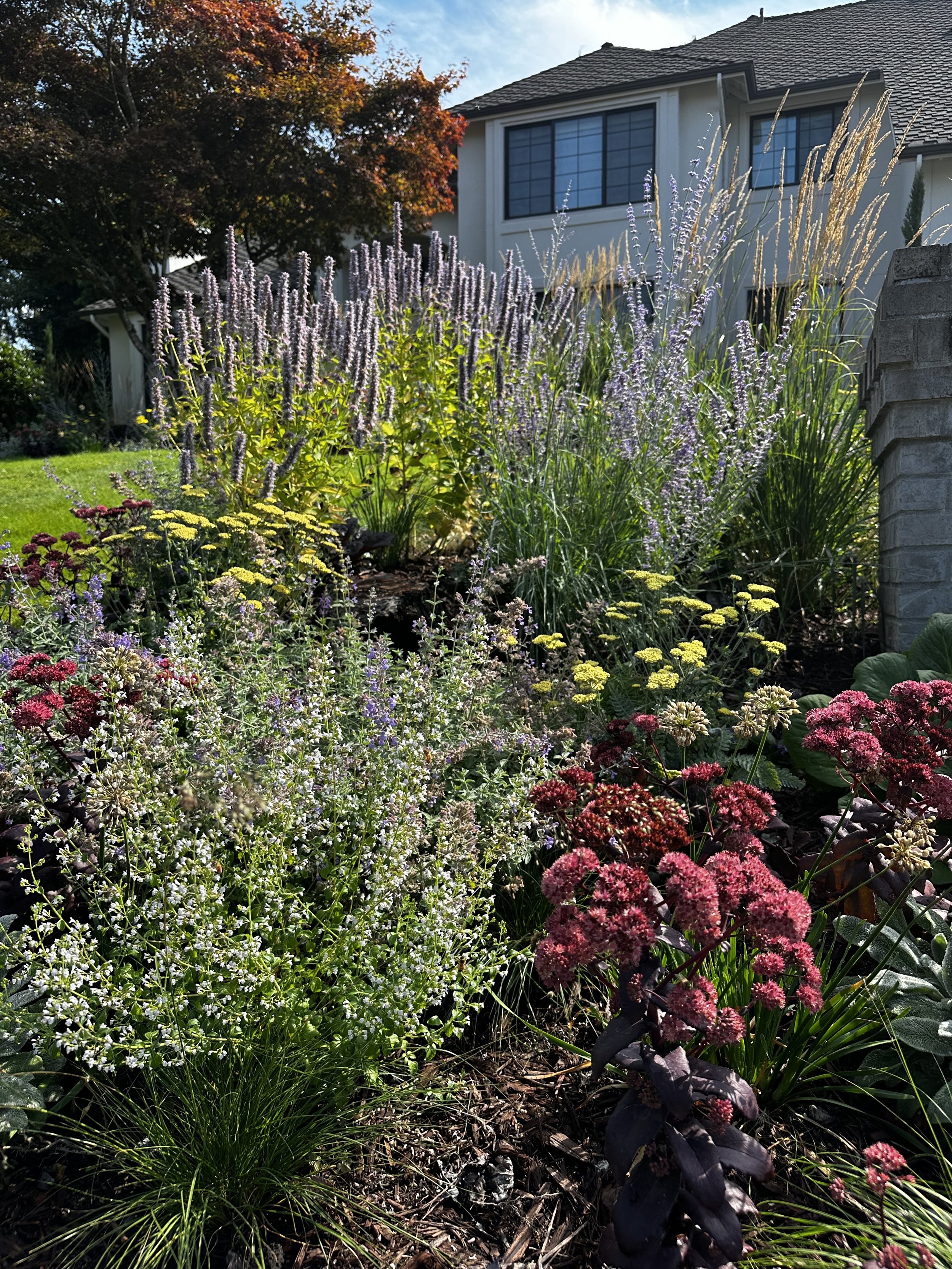
Fall cleanup removes insulation, structure, and winter interest — and exposes crowns to cold snaps and excess moisture.
What to do instead:
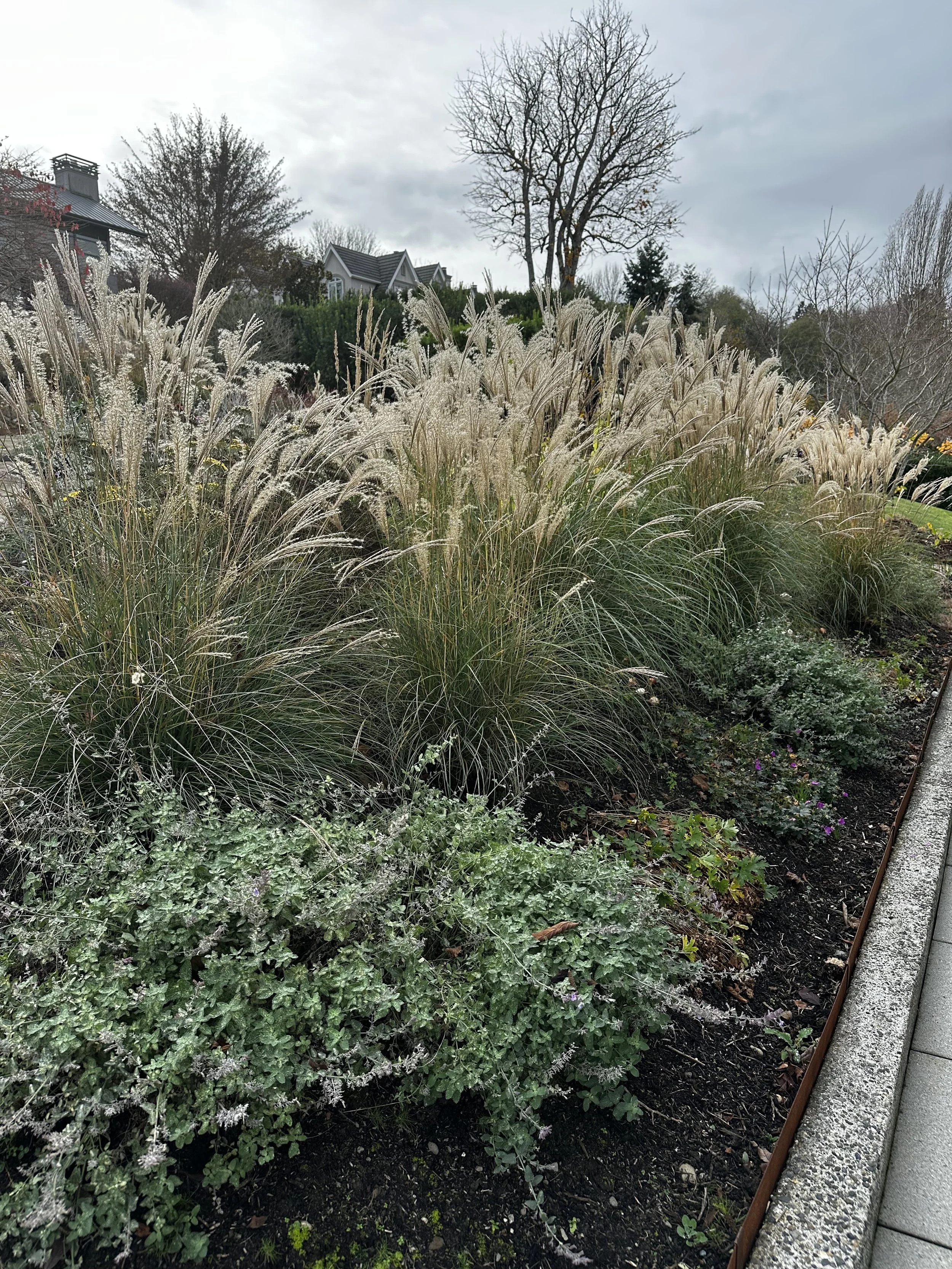
Leave everything standing through winter. Cut back in early spring when new growth emerges.
Plants that should stay standing:
Miscanthus
Panicum
Echinacea
Yarrow
Seattle winters reward restraint.
6. Buying One of Each “To See How They Do”
This creates visual noise and weak plant performance. Plants thrive in community — not isolation.
What to do instead:
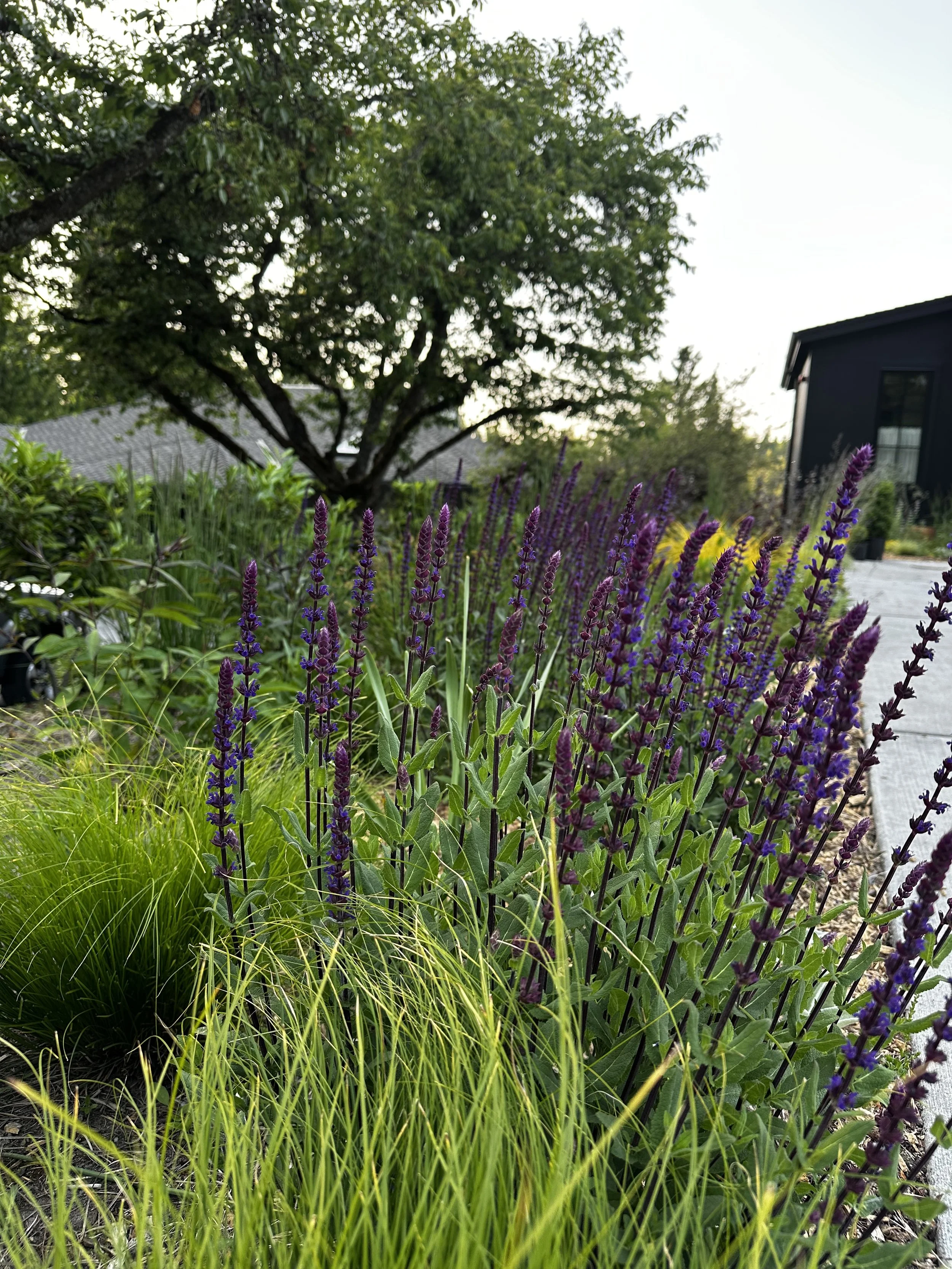
Buy in groups of 3, 5, or 7. Repetition creates cohesion and resilience.
Plants that look best in mass:
Yarrow
Nepeta
Geranium ‘Rozanne’
Salvia
7. Planting Blooming Plants Without Cutting Them Back
When you buy perennials that are already in bloom and plant them directly into the ground, the plant’s energy stays focused on flowering instead of root development. In the Seattle region, where establishing strong roots before summer drought or winter saturation is critical, this often leads to weak plants that stall, flop, or disappear by year two.
What to do instead:
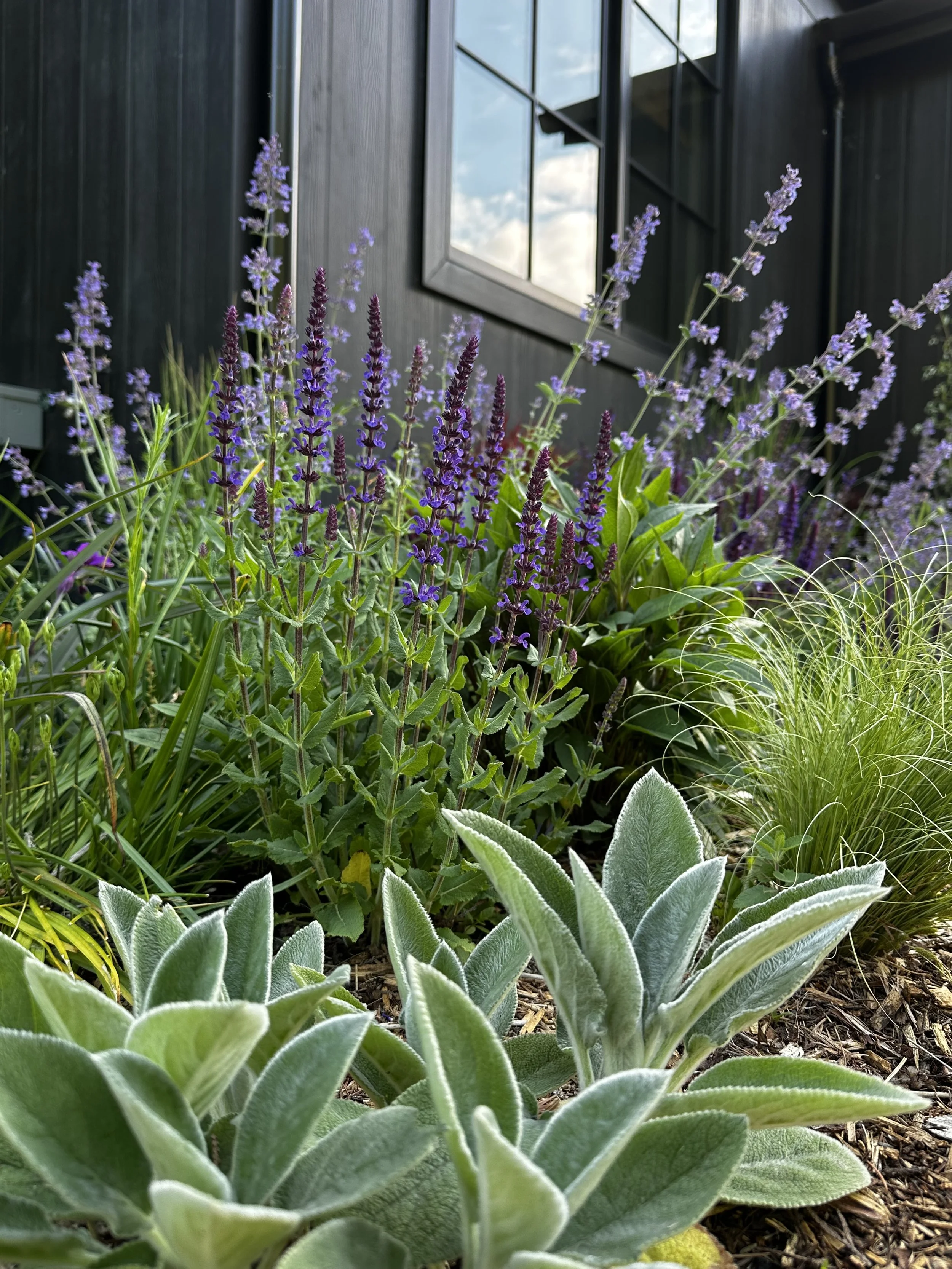
After planting, cut the blooms back immediately. This feels counterintuitive, but it signals the plant to redirect energy into root growth and establishment rather than seed production. A well-rooted plant will reward you with stronger growth and better flowering later in the season — and for years to come.
Plants that benefit most from this practice:
Salvia
Coreopsis
Nepeta
Roses
This single step dramatically improves plant survival, long-term performance, and overall garden resilience — especially in Pacific Northwest gardens where plants need to establish quickly to thrive.
8. Investing in Plants You’ve Never Seen Thrive Locally
Instagram plants aren’t always Seattle plants. If you haven’t seen it growing well in local gardens, it’s a gamble.
What to do instead:
Choose plants you’ve seen succeed in Pacific Northwest conditions — especially in public gardens and older neighborhoods.
Trustworthy Seattle staples:
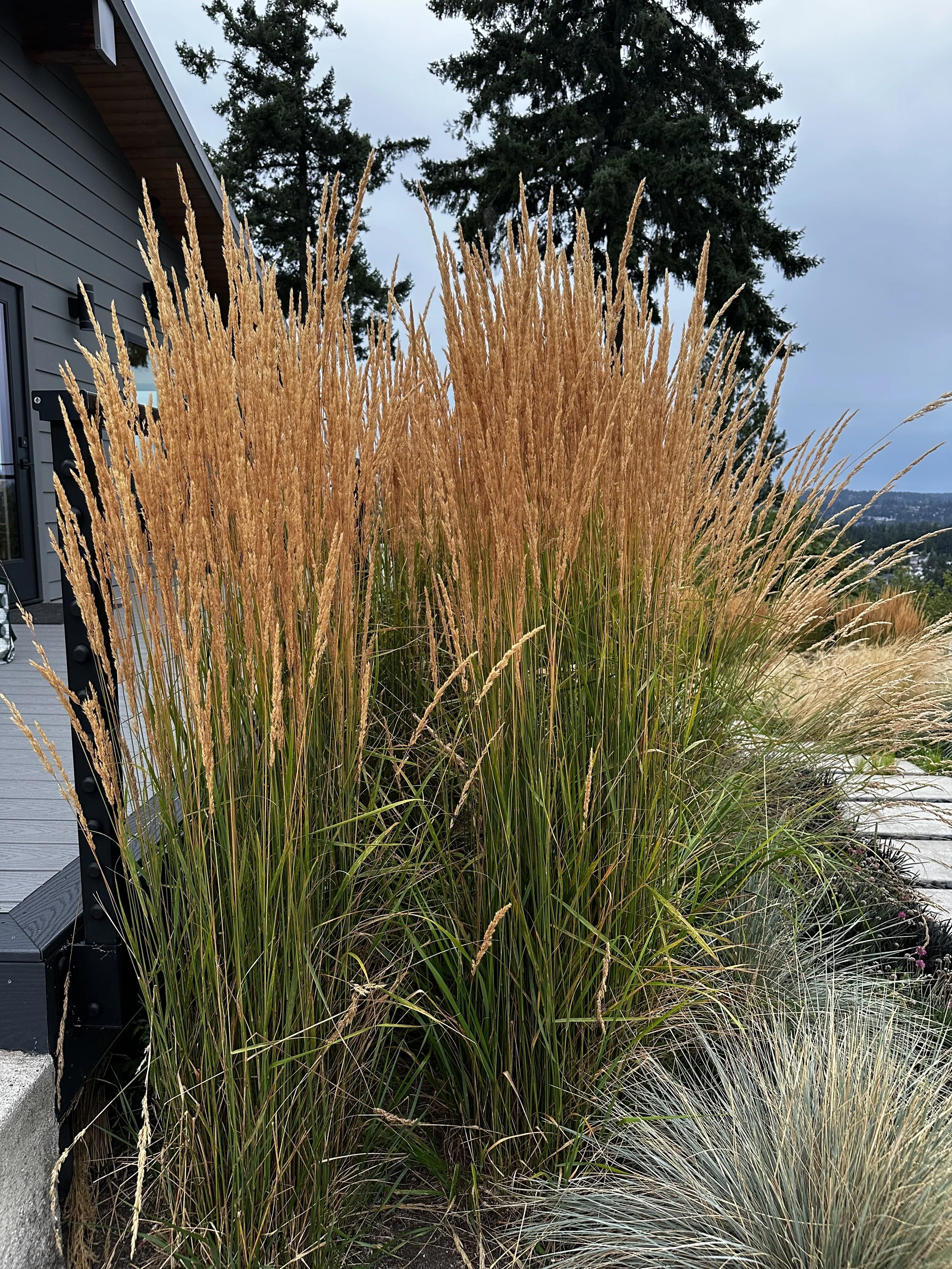
Karl Foerster
Agastache Blue Fortune
Joe Pye Weed
Alliums and Daffodils
Sedums
Yarrows
The Truth Most People Don’t Want to Hear
If you want one great garden, be prepared to buy nine plants.
Dense planting (roughly 7–9 plants per square foot, depending on size) is what creates weed suppression, resilience, and that lush, “effortless” look everyone wants.
Seattle gardens aren’t instant.
They’re systems — and when designed correctly, they improve every single year.