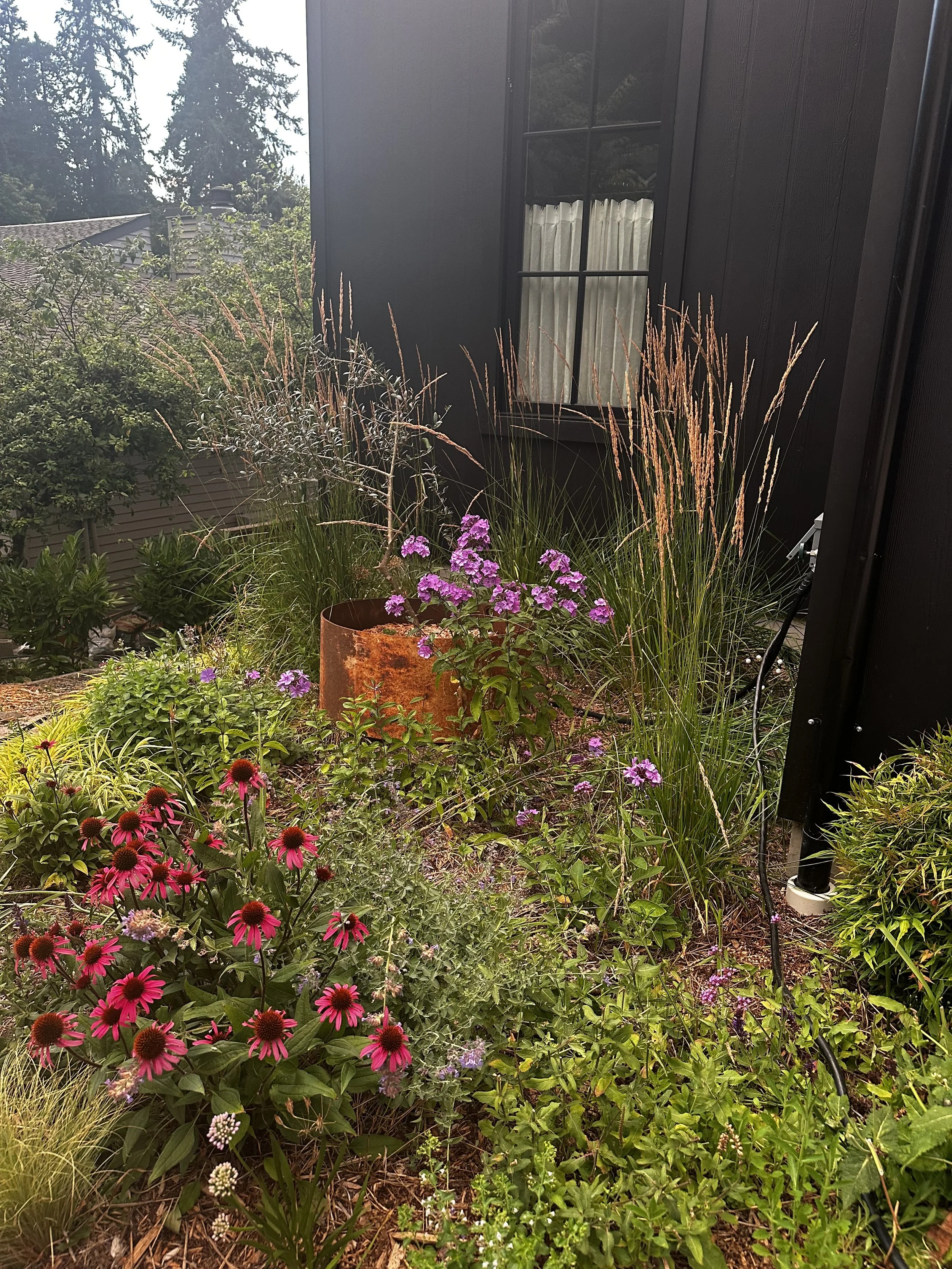
How I Convinced My Husband to Let Me Plant “All These Plants” (And Why He Loves It Now)
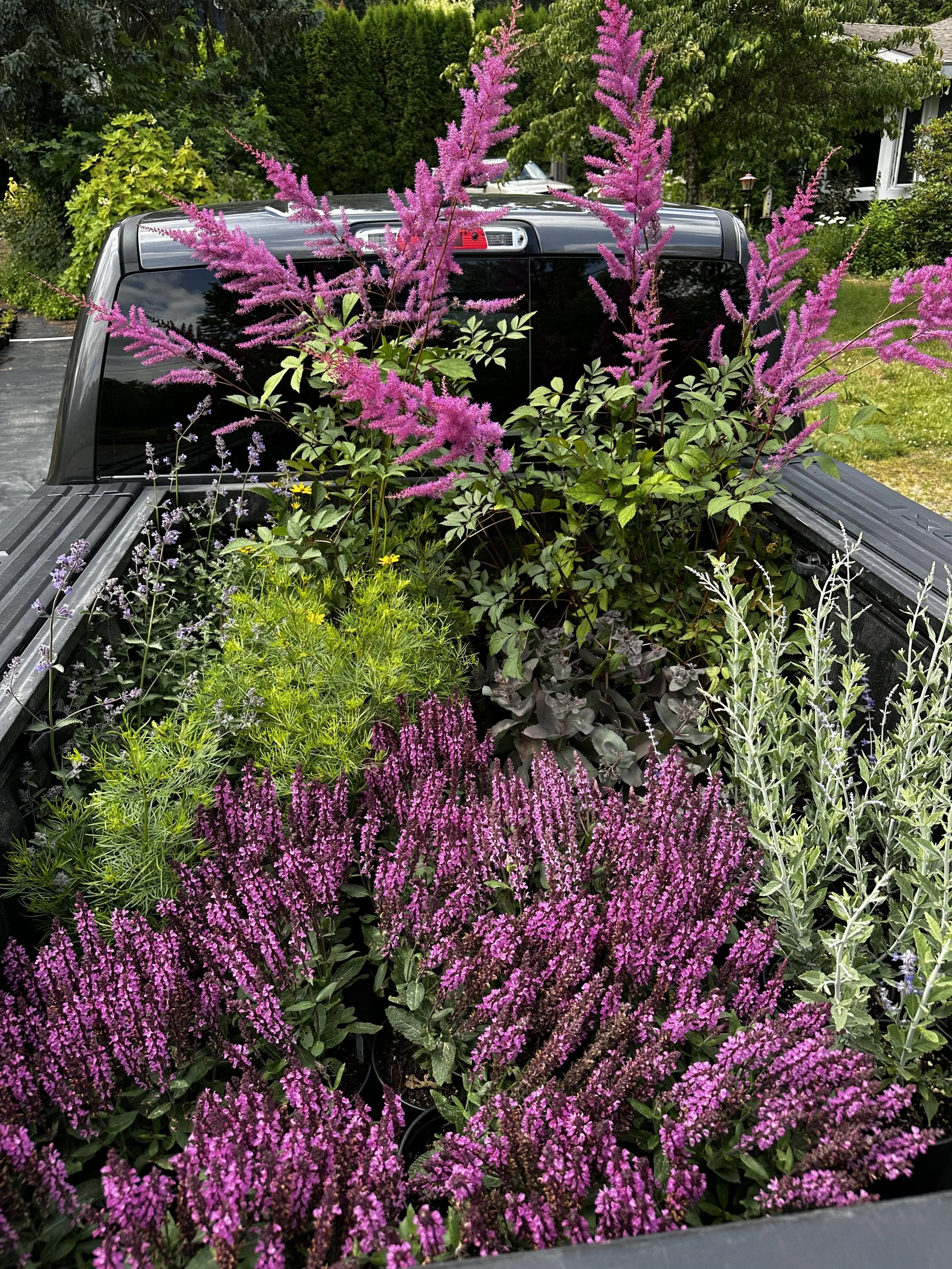
If you’ve ever tried to replace a chunk of lawn with a real garden, you already know the truth:
It’s not always the design that’s the hard part…
It’s getting your spouse on board. 😅
Because in their head, more plants usually equals:
more work
more money
more mess
more “what if it dies?” stress
But here’s the thing: a well-designed garden doesn’t create more work.
It replaces the work you’re already doing… with something better.
This is exactly how I convinced my husband to let me plant all the plants — and why he’s now fully converted.
1. Less Lawn = Less Mowing (And More Weekends Back)
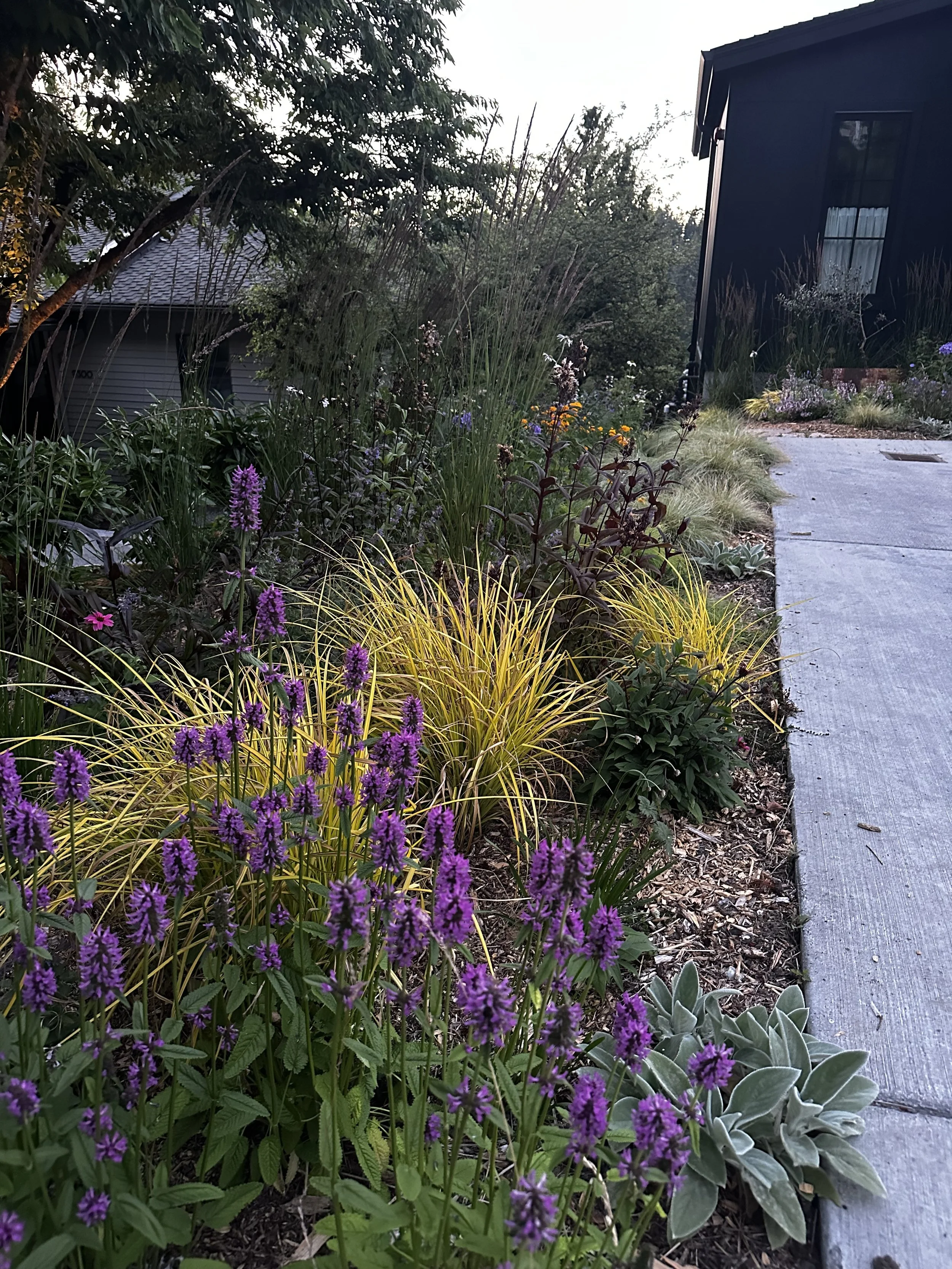
This was the easiest sell.
Lawn seems simple… until you realize how much time it takes over the course of a season:
mowing
edging
blowing clippings
dealing with dead spots
dealing with muddy spots
watering when it gets dry
When you reduce lawn, you reduce the weekly chores that come with it.
Instead of spending Saturday morning maintaining grass, you get that time back for actual life:
coffee, kids, travel, rest, hobbies, whatever.
And in Seattle? Our lawns don’t even stay perfect all year. So why fight it?
2. Grasses Look Fresh Without Reseeding or Fertilizing
One of the biggest misconceptions I hear is:
“If we remove lawn, won’t it look messy?”
Not if you replace it with the right plants.
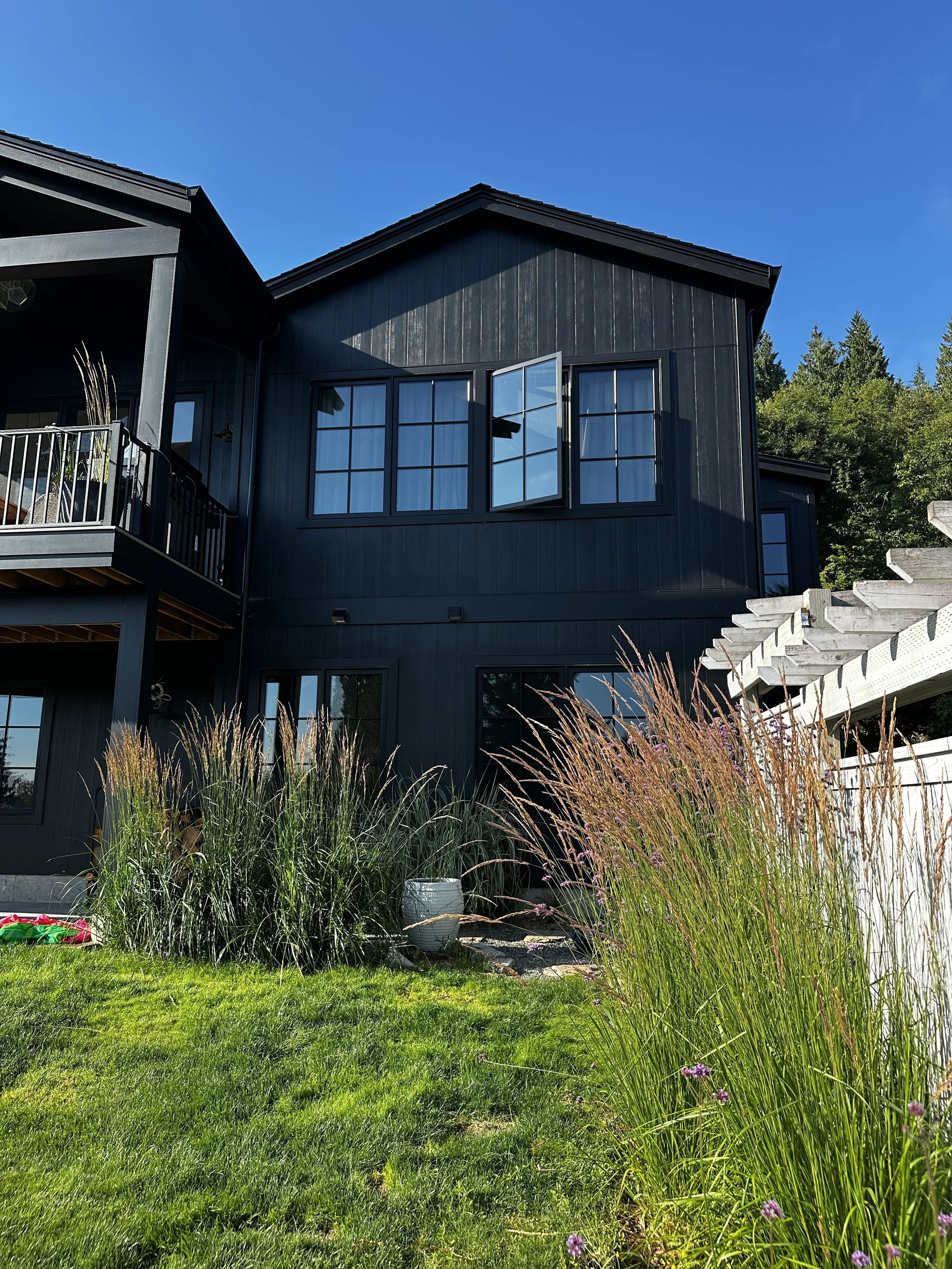
Ornamental grasses are one of my favorite “gateway plants” for lawn-lovers because they:
look clean and modern
soften harsh edges (especially around patios, fences, and driveways)
move beautifully in the wind
stay attractive for months
don’t require reseeding or fertilizing like lawn does
They give you that fresh green look, but without the constant lawn maintenance cycle.
They also make a garden feel intentional and designed — not like a random collection of plants.
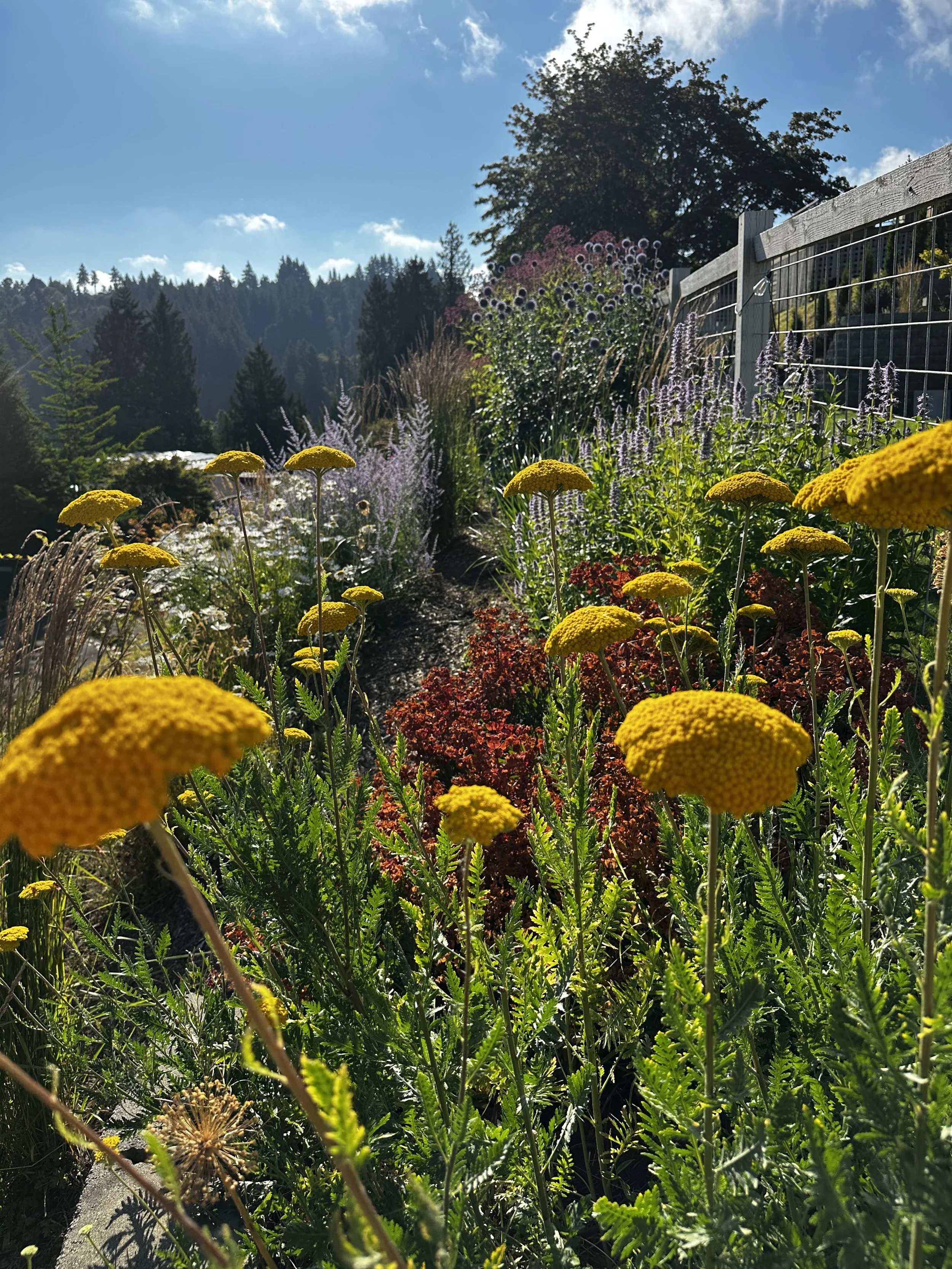
3. Lower Water Bills with Plants That Don’t Need Babying
This is the part that surprises most people:
A properly designed garden doesn’t need constant watering forever.
Yes — new plants need watering while they establish.
But once their roots settle in, you can build a landscape that thrives with minimal summer watering.
And that adds up fast:
less irrigation
fewer “panic watering” sessions
fewer burned-out lawn patches
fewer expensive fixes
The key is choosing plants that are actually suited for our region and our real-life maintenance levels.
Not plants that look good for two weeks… and then demand attention all summer.
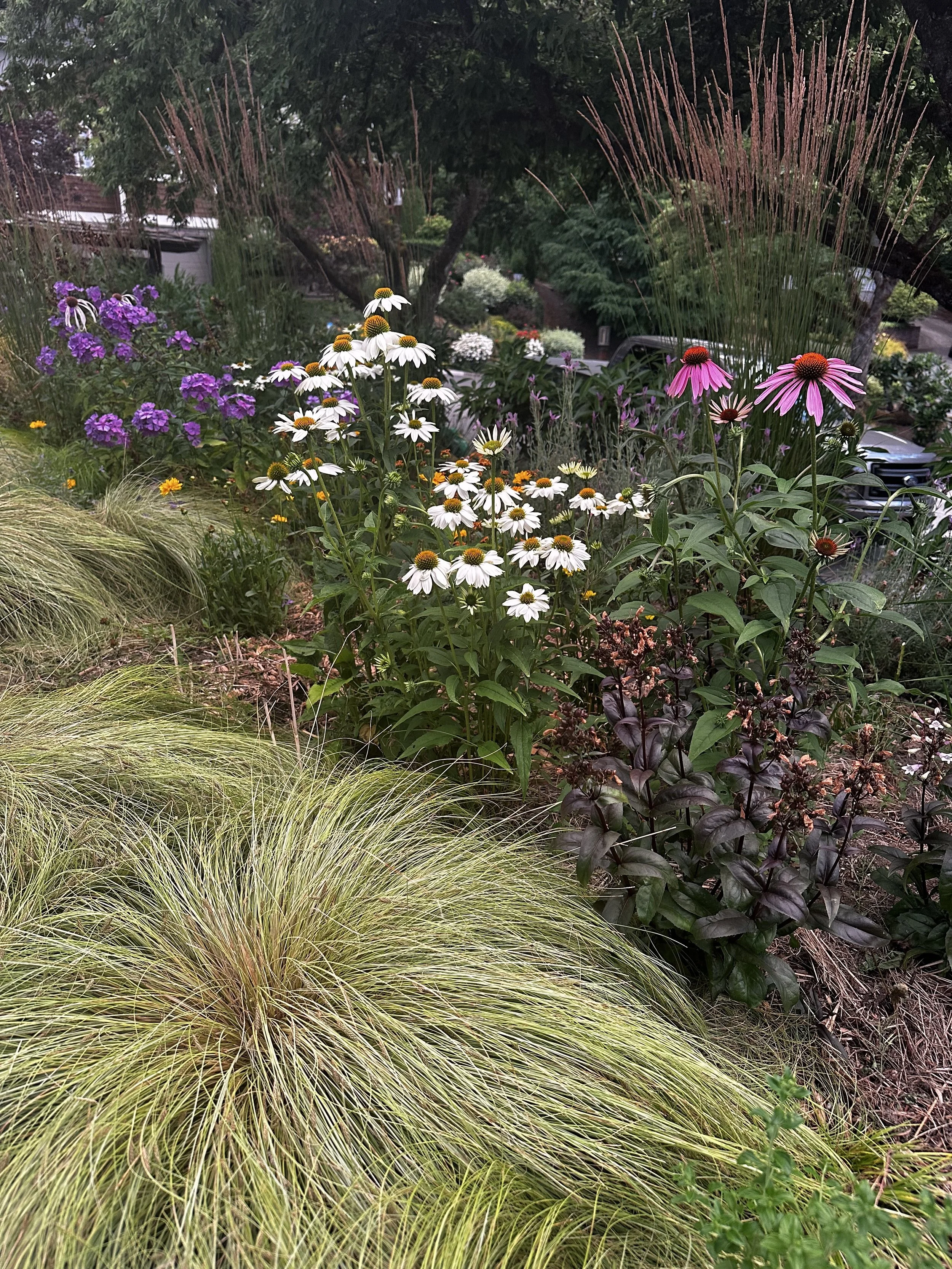
4. No More Heavy Bags of Mulch (Or Endless Raking)
This was the moment my husband really leaned in.
Because every spring, it’s the same story:
buying bags of mulch
hauling them from the car
lifting and dumping
spreading them everywhere
then watching them wash away or blow around
And don’t even get me started on the raking and cleanup after fall and winter storms.
A layered garden solves this in a smarter way.
When you plant densely and intentionally, your plants become the mulch.
They shade the soil, protect it, suppress weeds, and reduce bare ground — which means you don’t have to keep “covering up” your garden every year.
Less exposed soil = less mess.
5. Cleaner Driveway Because Plants Improve Drainage
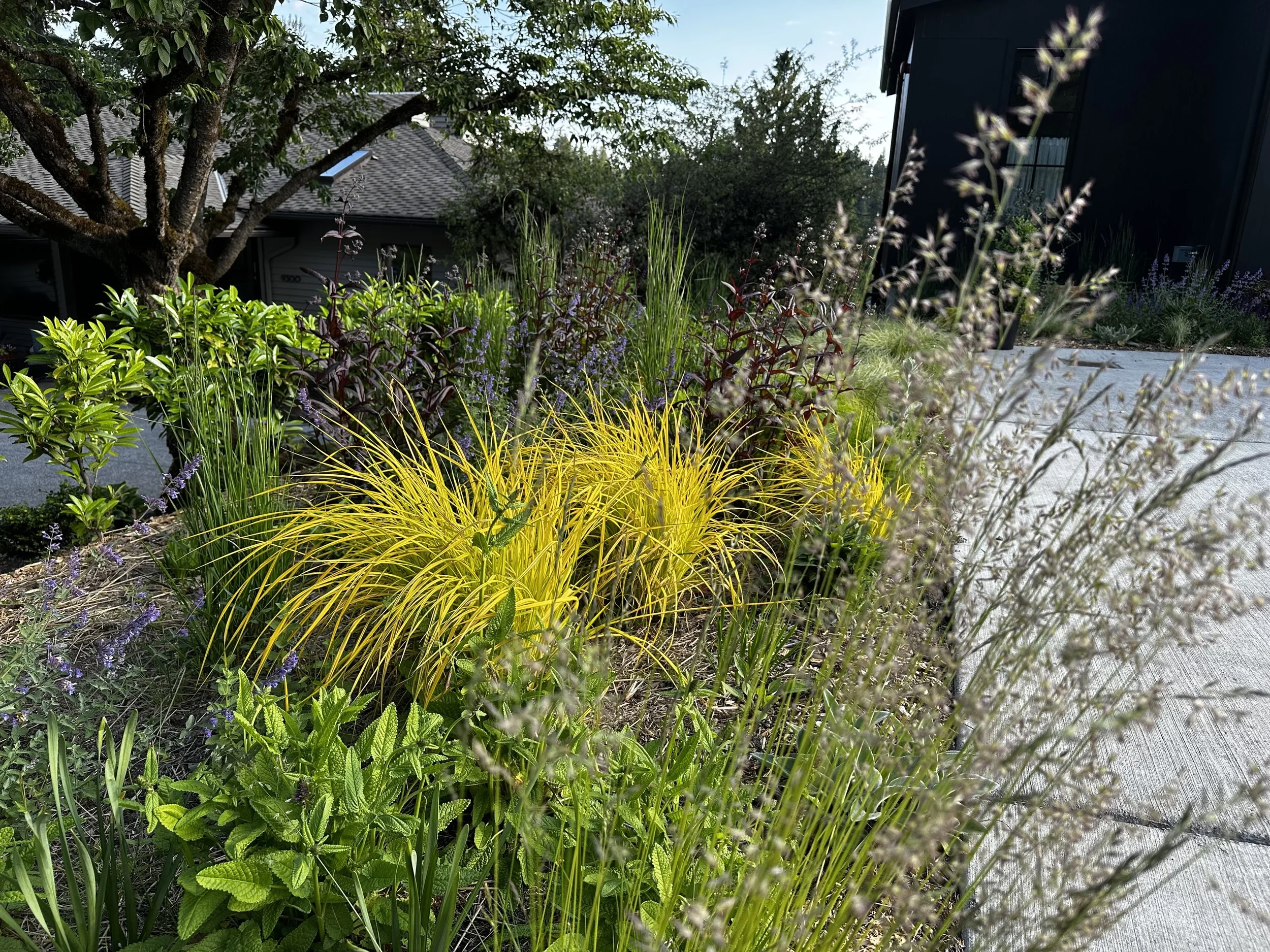
One of the most underrated benefits of planting more is what it does for water flow.
In Seattle, water doesn’t just fall straight down.
It moves — and it takes soil, debris, and gravel with it.
When you have large empty areas (especially lawn or bare beds), rain tends to:
run across surfaces
pool in low spots
wash soil into walkways and driveways
create muddy edges
But when you add plants with real root systems, you get:
✅ improved water absorption
✅ less runoff
✅ fewer muddy zones
✅ cleaner hardscape edges
It’s not just prettier — it’s functional.
Plants are part of your drainage plan.
6. The “Secret” Persuasion Strategy: I Didn’t Sell Plants… I Sold Lifestyle
Here’s what actually worked: I didn’t pitch this as “a garden project.” I pitched it as a better way to live in our yard. Less weekly work. Less constant fixing. Less money dumped into lawn products. More beauty. More calm. More structure. More intentional design. Because when you do it right, the garden feels like a finished outdoor space — not a maintenance burden.
What We Replaced the Lawn With Instead
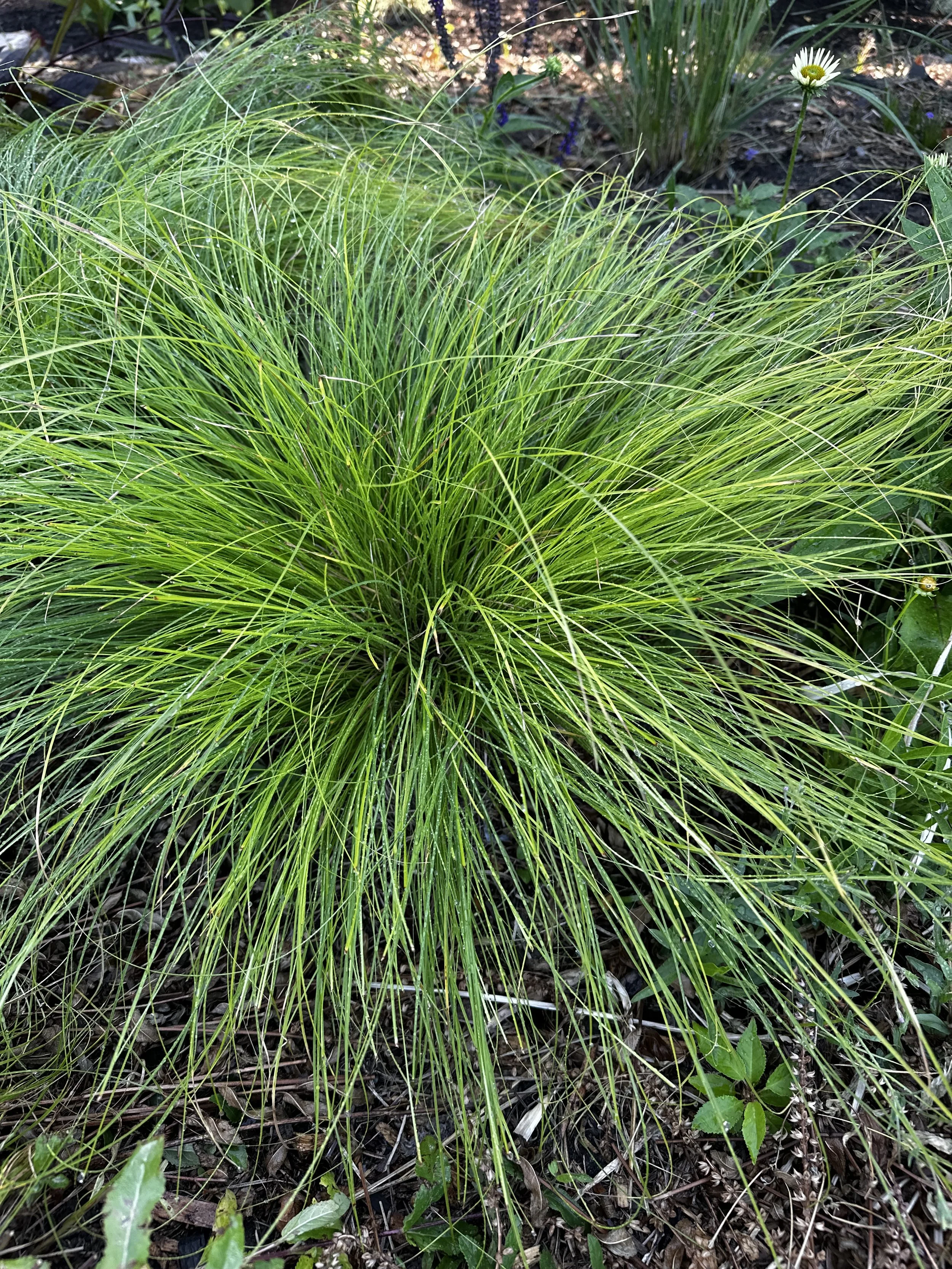
This is the formula I use (for my own yard and for clients):
1) Grasses for structure + movement
Grasses create that “clean” look that lawn lovers still crave.
2) Perennials for long-season interest
Not a million different flowers — but repeat plants in strong drifts so it looks designed.
3) Groundcover layers to block weeds
The goal is to reduce exposed soil, not maintain it forever.
4) A simple mulch strategy
Mulch once to establish, then let plants take over the job over time.
The Real Win: A Garden That Gets Better Every Year
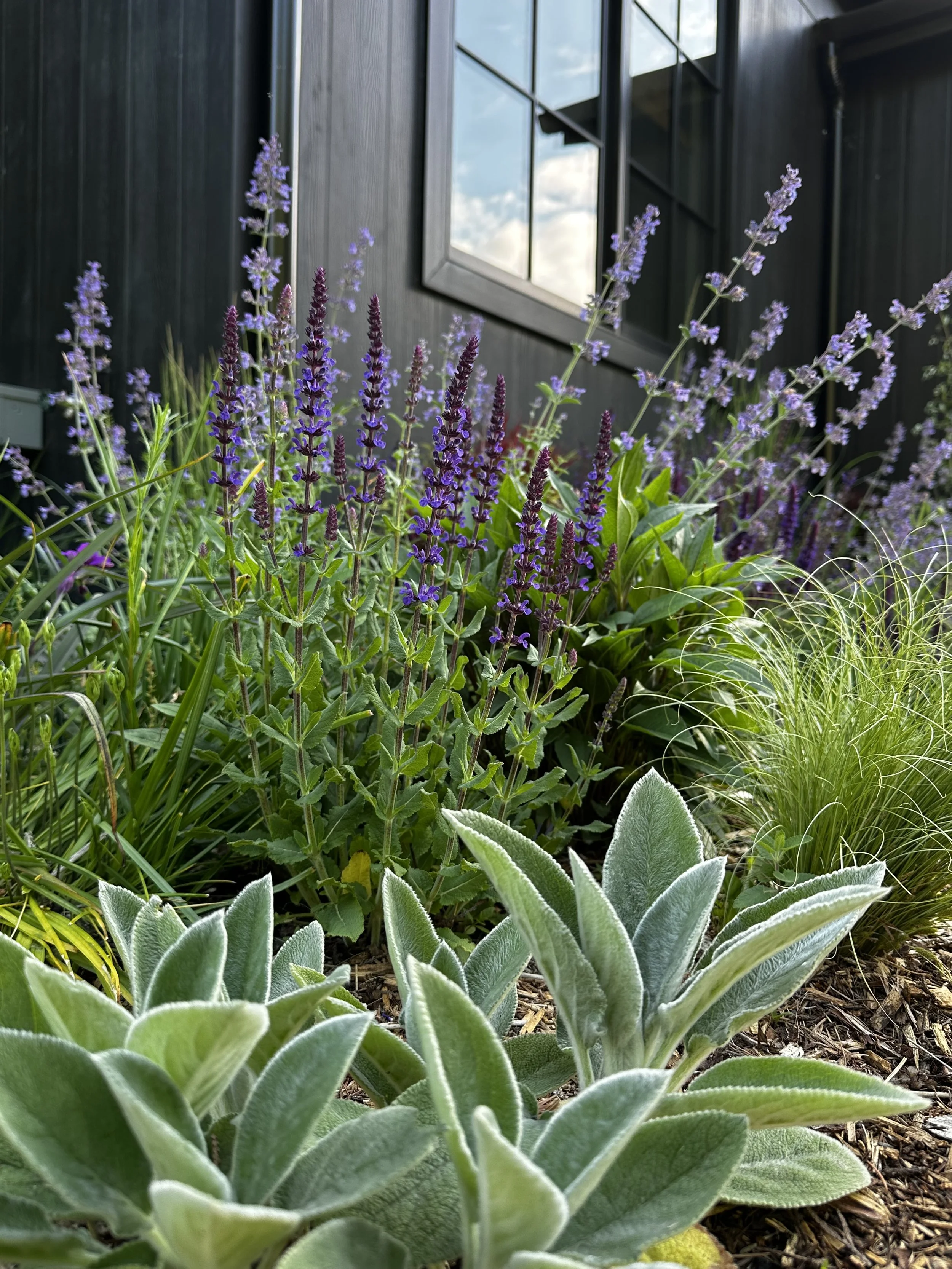
Here’s what I tell every homeowner:
The best gardens aren’t the ones that look perfect on install day.
They’re the ones that get better and better with time.
A lawn stays a lawn.
But a layered garden matures.
It thickens, fills in, creates texture, changes with the seasons, and starts to feel like something you’d see in a professionally designed landscape.
And most importantly?
It becomes easier to maintain, not harder.
If You Want a Low-Maintenance “All These Plants” Garden…
If you’re in the Seattle area and want a front yard or backyard that looks elevated without turning into a full-time job, this is exactly what I design.
A modern, naturalistic, layered garden that:
reduces lawn maintenance
thrives in our climate
looks beautiful year-round
improves drainage
is actually built for real people
If you want help planning yours, send me a message through my site or DM me “PLANTS” on Instagram and I’ll point you in the right direction 🌿