
Let’s be honest about standard suburban privacy: a 6-foot cedar fence sounds great until you actually stand in your backyard and realize every neighboring second-story window still looks straight down onto your patio.
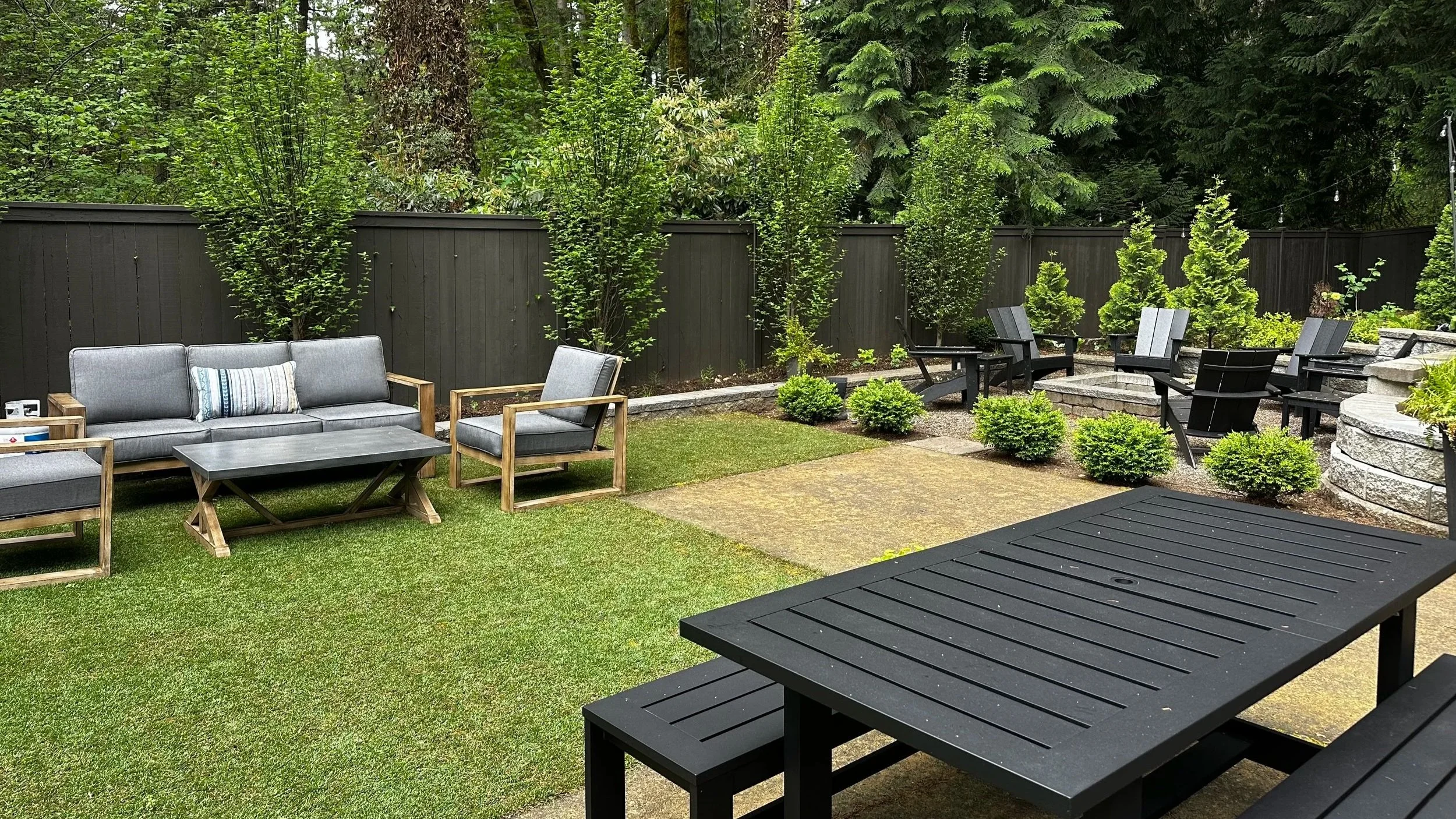
And the default fix most homeowners reach for—a solid wall of 30 green arborvitae crammed two feet apart—usually backfires within five years. One tree dies in an August drought, leaving a giant gap in the middle of the wall, or the whole row turns into a bulky, high-maintenance green box that eats up six feet of your yard and blocks all your winter light.
When I’m designing for lots in Seattle, Bellevue, Kirkland, or Mercer Island, I approach privacy completely differently. Instead of building a sterile green wall, we layer narrow architectural screening trees, airy multi-stem focal specimens, and dense perennial matrices so your yard feels secluded, bright, and intentional 365 days a year.
Why Layered Screening Beats a Solid Wall of Arborvitae
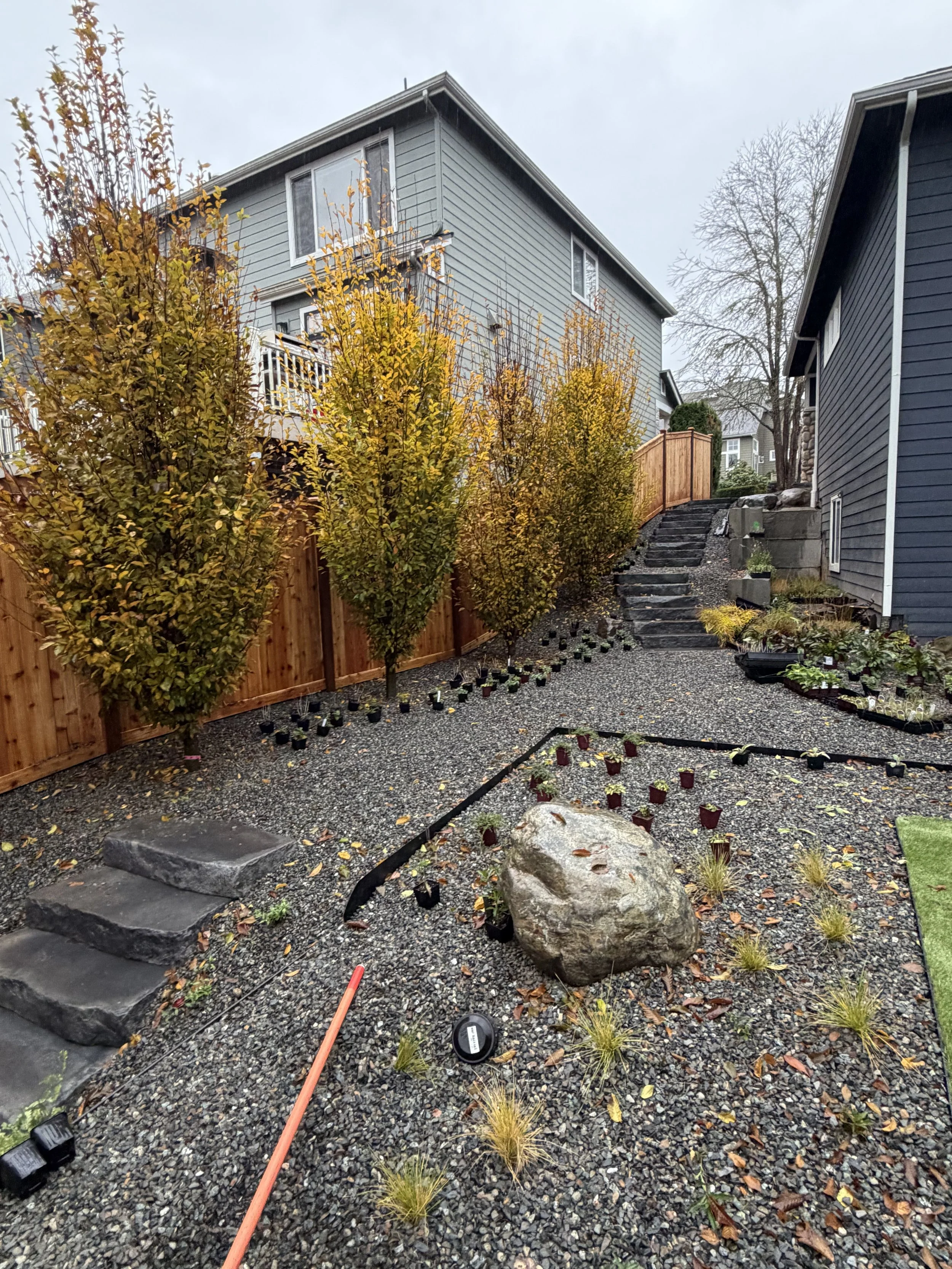
Good privacy isn’t about blocking every square inch of air—it’s about interrupting sightlines where you actually sit, eat, and look out your windows.
When you stagger heights and textures across a bed (instead of lining up identical cones in a straight row), a few huge things happen:
You get real second-story screening: Trees that reach 15 to 25 feet tall block upper-story sightlines that a 6-foot fence never touches.
Your yard feels bigger, not boxed in: Airy multi-stem canopies and narrow columnar trees let dappled light filter through, so your garden feels like a woodland sanctuary rather than a walled compound.
No single point of failure: If a winter storm or summer dry spell stresses one plant in a naturalistic matrix, the surrounding layers weave right in around it.
4 Screening Trees & Shrubs That Actually Work on Tight PNW Lots
You don’t need a massive acreage property to plant real trees—you just need specimens with disciplined footprints that handle our wet winters and dry August summers:
1. Columnar Hornbeam (Carpinus betulus 'Fastigiata')
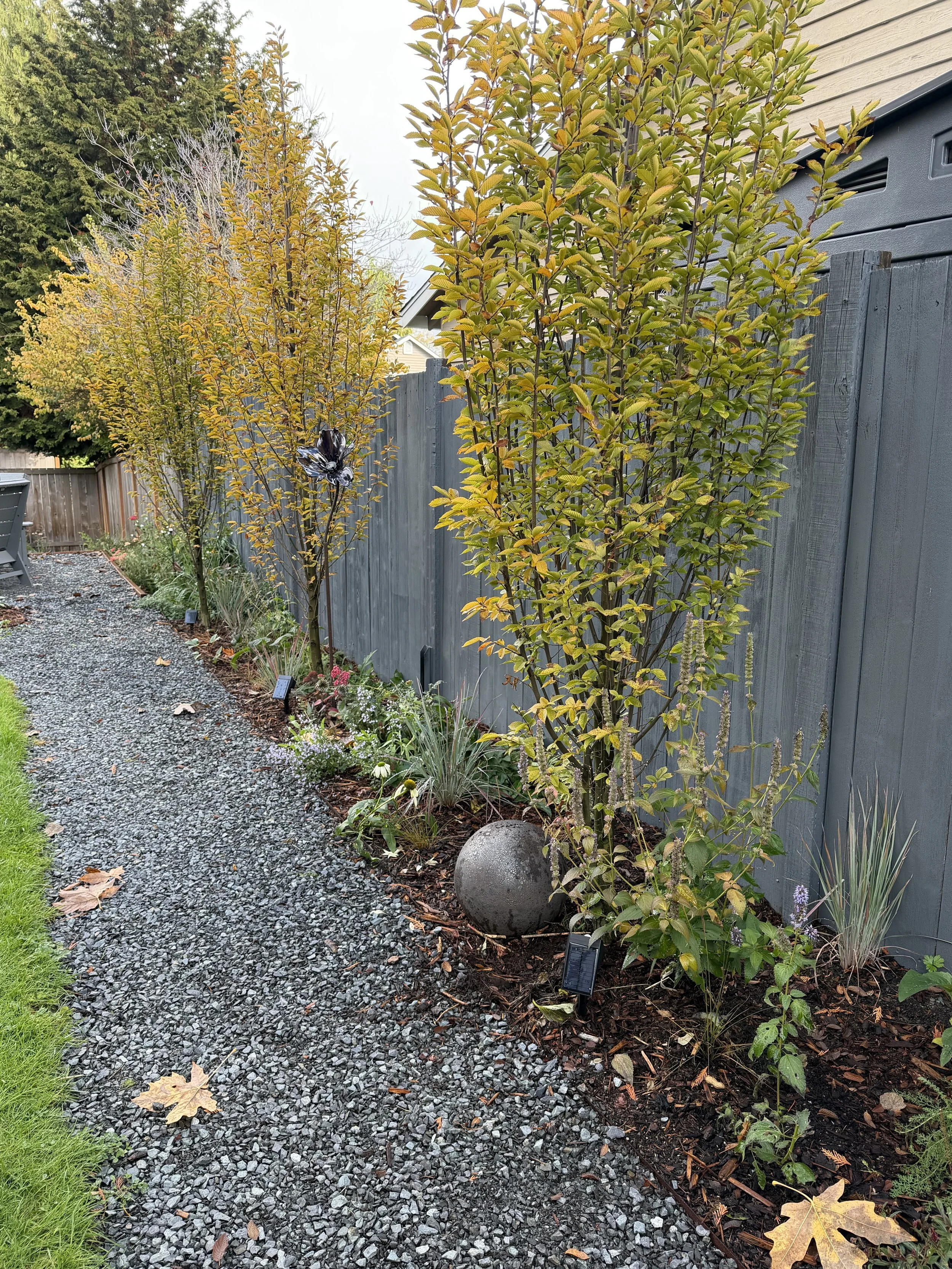
Why it works: If you have a narrow side yard or a tight Eastside property line where you need height without losing lawn or patio width, fastigiate hornbeams are hard to beat. They grow in a crisp, tailored column, handle heavy Pacific Northwest soils and summer heat once established, and turn warm gold in the fall—holding onto their coppery leaves well into winter for year-round screening.
How we use it: Planted in rhythmic drifts along side-yard fences or estate borders—paired with basalt stone steps, mossy boulders, and crushed gravel beds—to create an instant living hallway.
2. Evergreen Southern Magnolia (Magnolia grandiflora)
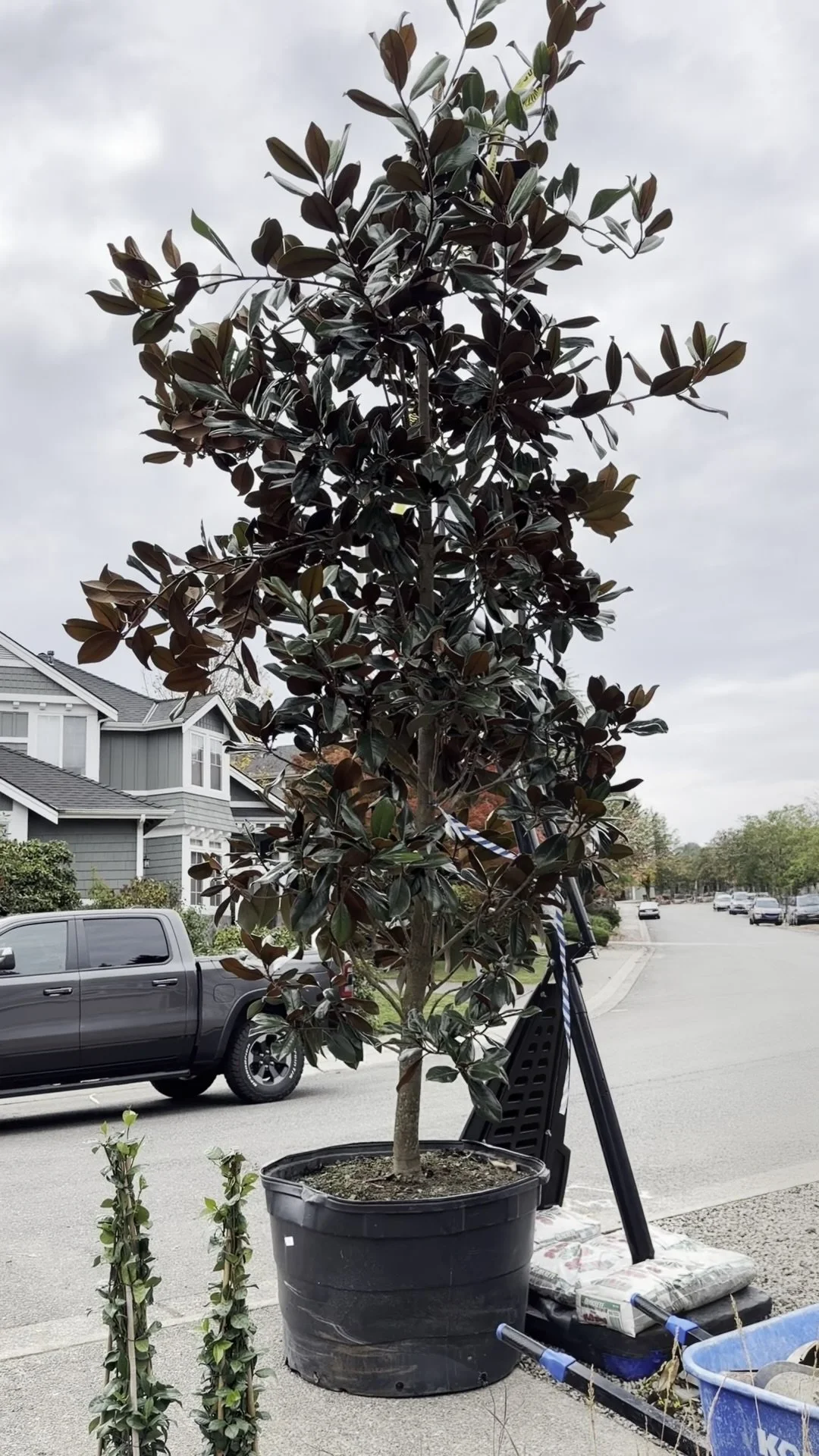
Why it works: When clients want true, 12-month evergreen privacy that looks architectural instead of bulky, mature Southern Magnolias deliver. Their glossy, deep-green leaves have rich copper-bronze undersides that glow in low winter sunlight and look incredible against dark cedar siding and Cor-Ten steel.
How we use it: Sourced at 7 to 8 feet tall from specialty local growers and positioned directly opposite neighboring windows or deck sightlines for immediate, permanent screening.
3. Multi-Stem Serviceberry (Amelanchier) & Kousa Dogwood (Cornus kousa)
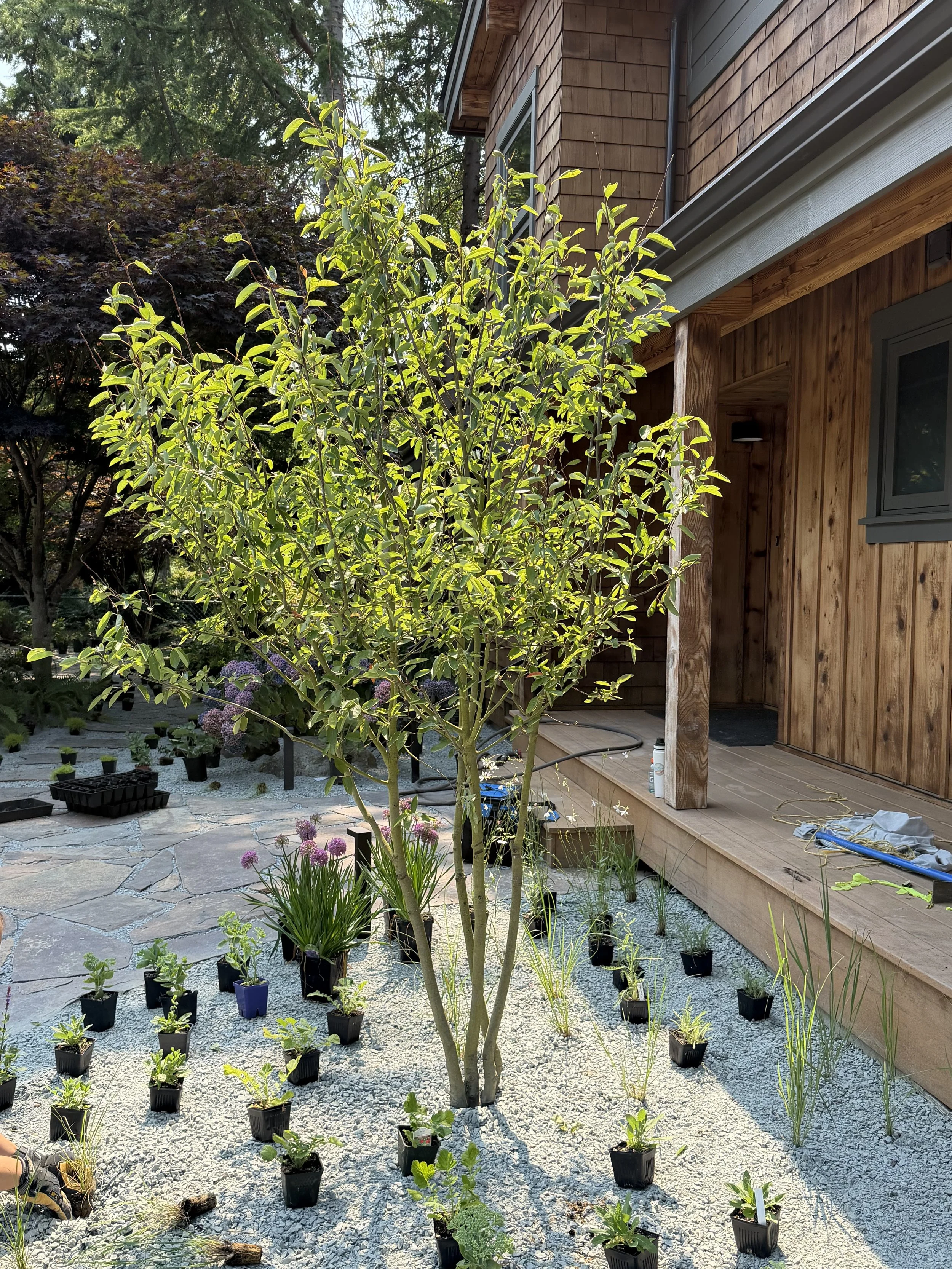
Why they work: Sometimes you don’t want a dense hedge—you want a sculptural umbrella canopy that screens the view from an upper deck while keeping the ground plane open and airy. Both 7-foot multi-stem Serviceberries and 8-foot multi-stem Kousa Dogwoods give you spring blossoms, summer shade, fiery autumn color, and architectural winter bark.
How we use them: Anchored inside steel-edged gravel beds surrounded by ornamental grasses so the multi-stem trunks become living sculpture right outside your kitchen or living room windows.
4. Seven-Son Flower (Heptacodium miconioides)
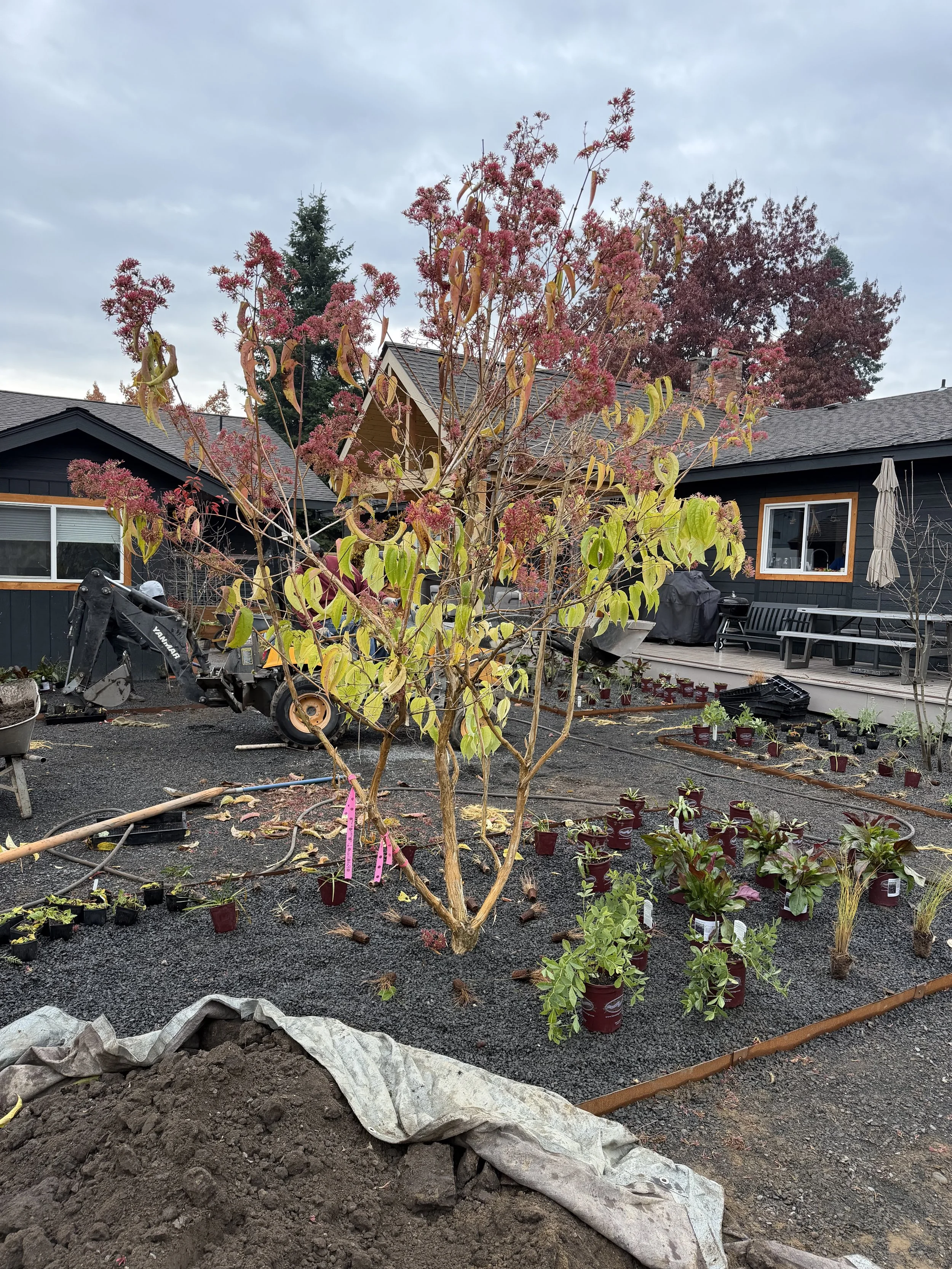
Why it works: This is one of my favorite underused screening specimens for Seattle yards. It grows quickly into a graceful, upright multi-stem small tree, blooms in late summer with fragrant white flowers when almost everything else is winding down, and then shifts into bright rose-pink calyxes in October followed by peeling tan bark all winter.
Don’t Forget the Ground Layer: Why Understory Density Matters
A privacy border looks unfinished if you stick three tall trees in an ocean of bark mulch and call it a day.
In our studio projects—whether it’s a compact Seattle courtyard or a multi-zone Cascade estate—we build out the ground plane underneath those trees with 8-inch Cor-Ten weathering steel edging, a 4- to 5-inch layer of clean crushed basalt gravel, and dense perennial and grass matrices planted at tight 18-inch spacing:
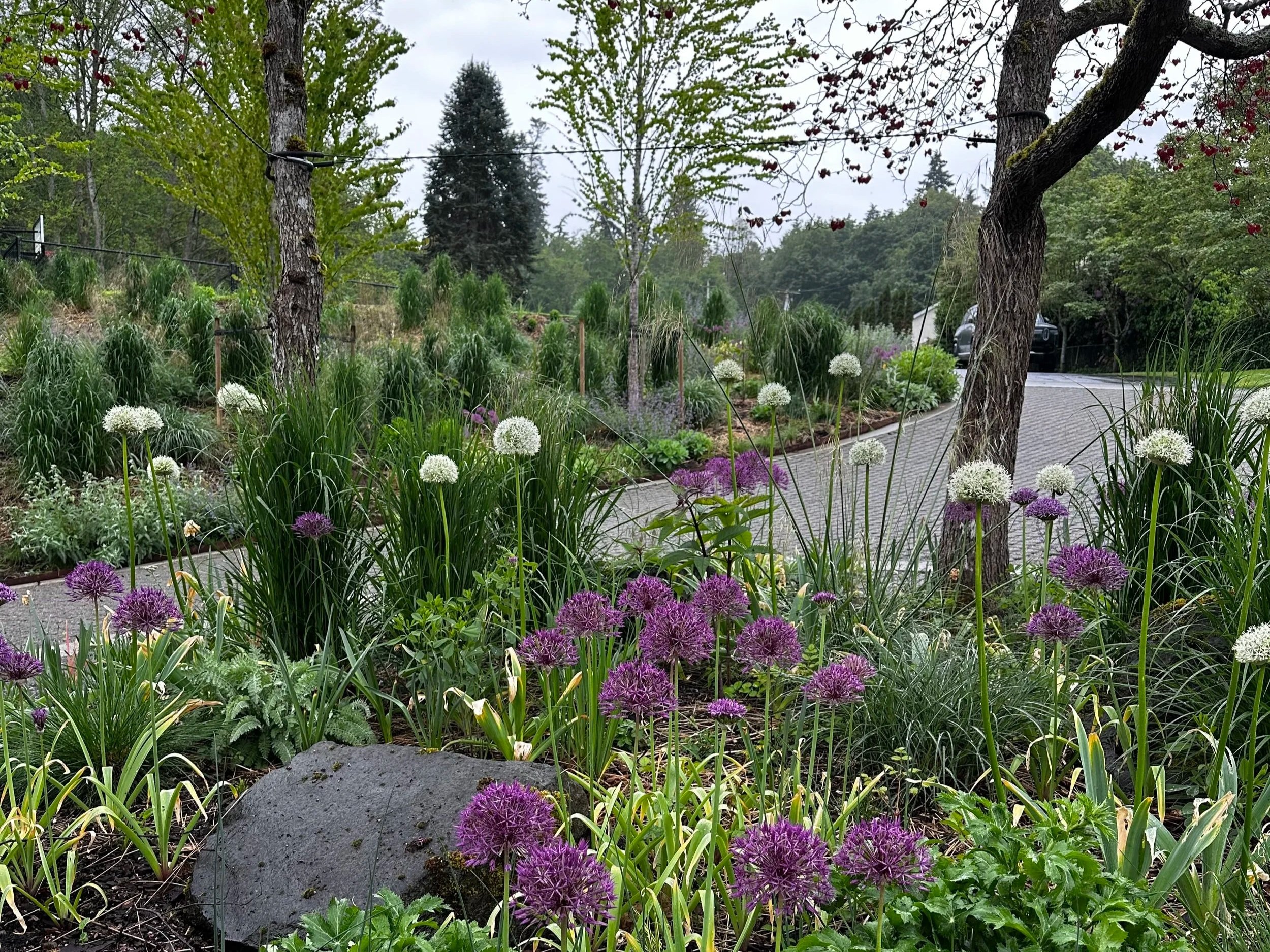
Tall vertical grasses like Calamagrostis 'Karl Foerster' and Panicum 'Northwind' add a soft, moving 5- to 6-foot screen from July straight through February without feeling heavy.
Evergreen ferns and woodland perennials like Blechnum spicant (Deer Fern), Adiantum (Maidenhair Fern), Helleborus, and Hakonechloa (Japanese Forest Grass) knit the base of the trees together so weeds never get a foothold.
What Natural Privacy Typically Costs in Greater Seattle & the Eastside
Because privacy plantings rely on mature, nursery-grown specimen trees—which have often been field-grown and pruned for 5 to 8 years before they ever leave the grower—they are an investment in instant maturity rather than waiting a decade for tiny 1-gallon shrubs to grow:
Site Planning & Curated Privacy Border Packages: Start at $7,500 (typically $7,500 to $15,000+ including a scaled 2D planting blueprint, wholesale specimen tree and perennial sourcing, flatbed delivery, and on-site placement).
Full-Scope Design, Site Prep & Installation: Starts at $25,000 (typically $25,000 to $65,000+ when removing old conifers or lawn, installing Cor-Ten steel edging and crushed basalt gravel, and planting mature specimen trees alongside hundreds of understory perennials).
Ready to Make Your Backyard Feel Like a Private Sanctuary in 2027?
If you’re tired of staring at a bare cedar fence—or waving at your neighbors every time you step onto your patio—we can build a layered, four-season screen that gives you real privacy without sacrificing light or yard space.
I limit my studio calendar to 3 to 4 custom projects per month so every microclimate audit, wholesale nursery order, and on-site tree and plant placement gets my personal attention. Because mature specimen trees get claimed early in the season and spring/late-summer installation slots book 60 to 90 days out, now is the time to get on the calendar for 2027.
👉 Book a design consultation here and tell me a bit about your property and sightlines.
