
What a Seattle Garden Designer Actually Does (And Why It’s More Than Just Picking Plants)

Caption: Mixture of Echinacea Purpurea Pow Wow White/Magnus and Sesleria Autumnalis
When people hear garden designer, they often imagine someone picking out a few plants and calling it done. In Seattle, that approach rarely works.
A Seattle garden designer has to understand our climate, soils, and seasons—and design gardens that look good far beyond a short summer bloom window. My work is about creating naturalistic, layered gardens that evolve over time, require less maintenance, and feel grounded in the Pacific Northwest.
At Shanelle Rabichev Garden Design, every project starts with a long-term vision and a clear plan—so the garden grows better each year instead of needing to be redone.
It Starts With a Real Garden Consultation

Caption: Salvia Caradonna, Nepeta Walker’s Low and Curly Fescue
Most of the gardens I design in Seattle and the surrounding areas begin with a consultation. This is where we slow down and look at what’s actually happening on your site.
During a consult, I’m paying attention to:
Sun patterns throughout the day and year
Drainage issues and Seattle’s heavy clay soils
Existing trees, slopes, and microclimates
How you move through the space
How much maintenance you realistically want
We also talk about naturalistic garden design—gardens that feel loose and organic but are carefully structured underneath. These aren’t wild or messy gardens; they’re intentionally composed plant communities that work together.
Naturalistic Gardens Are Designed in Layers
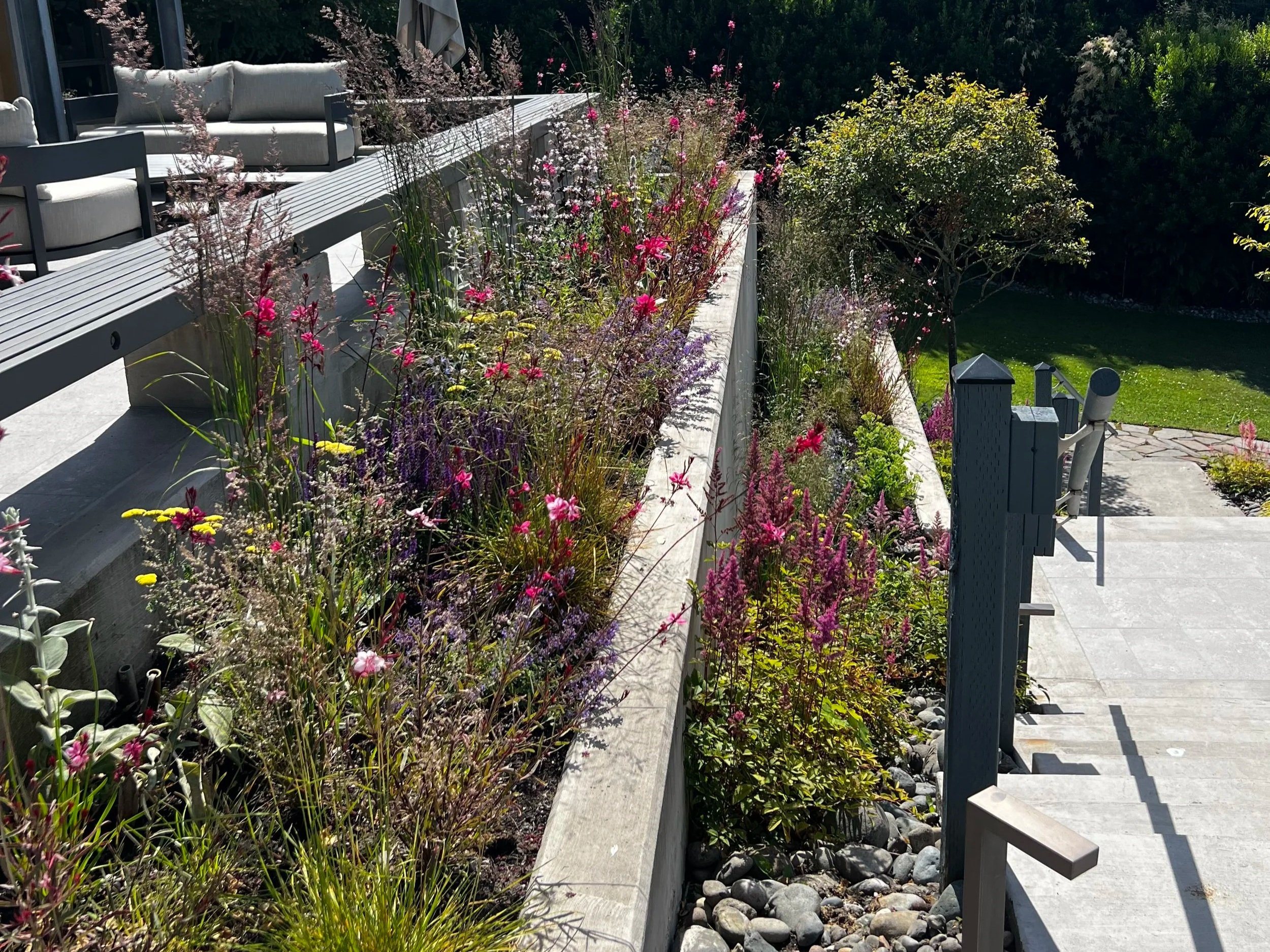
Caption: Even the narrowest of garden beds can include triangles of seasonal perennials and grasses for all-season interest
A big part of my work as a Seattle garden designer is helping clients move away from single-season planting and toward layered, matrix-style gardens.
Instead of isolated plants, I design gardens made up of:
Structural grasses that provide movement and winter interest
Perennials woven together so the garden reads as a whole
Bulbs layered underneath for early spring emergence
Late-season bloomers that carry the garden into fall
This approach creates a garden that looks good from March through November—and still has presence in winter through seed heads, dried grasses, and strong forms.
Structure Comes Before Plants
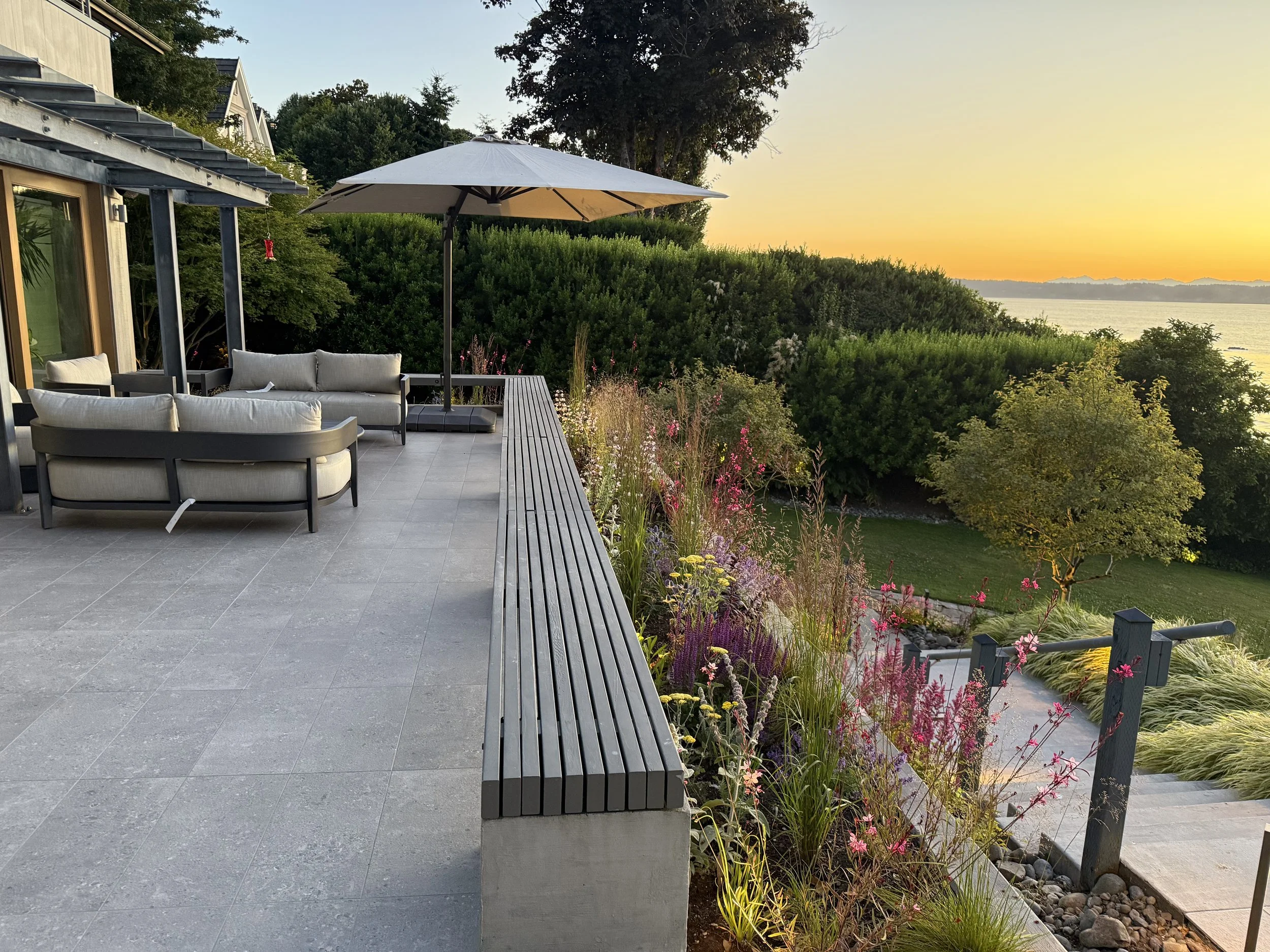
Caption: The garden went through a series of renovations before and after planting - including new hardscape, outdoor lighting and corten steel edging.
One of the biggest mistakes I see in Seattle gardens is planting before the structure is in place.
Before selecting plants, I focus on:
Bed shapes and flow
Path placement and circulation
Edging that holds clean lines through winter
Repetition and rhythm across the space
This is what makes a naturalistic garden feel calm instead of chaotic. Even when plants are dormant, the garden still feels intentional.
Plant Selection That Actually Works in Seattle
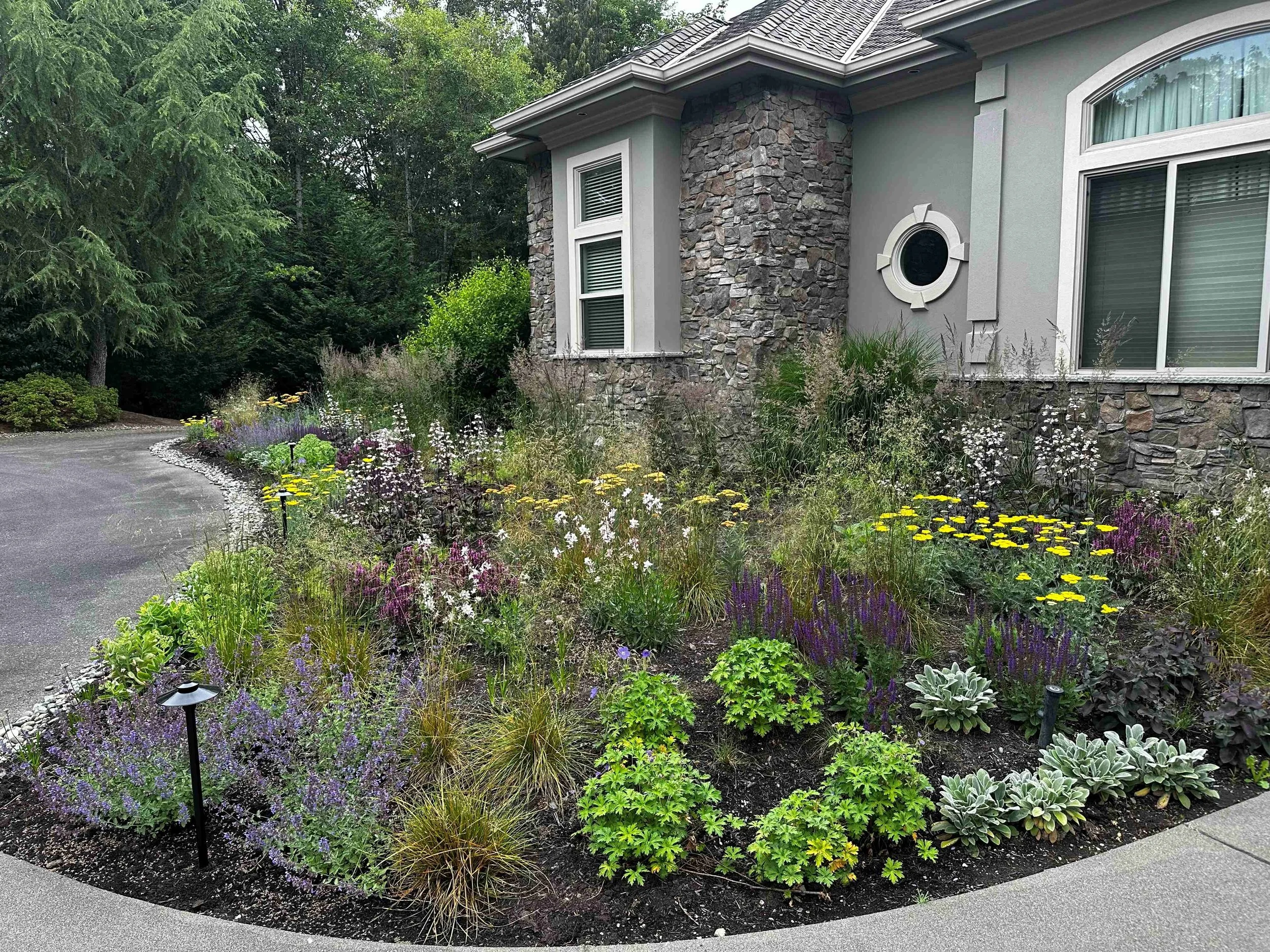
Caption: Freshly planted 2025 garden in the Seattle region. Planted with layers of seasonal blooming perennials, native grasses and bulbs.
Naturalistic gardens only work when plants are chosen carefully.
I select plants that:
Handle wet winters and dry summers
Perform well in Seattle’s soils
Spread and knit together over time
Require less water once established
Offer texture, movement, and long seasonal interest
Rather than short-lived, high-maintenance plantings, I design gardens that settle in, fill out, and improve year after year.
Seattle Gardens Are Built in Phases
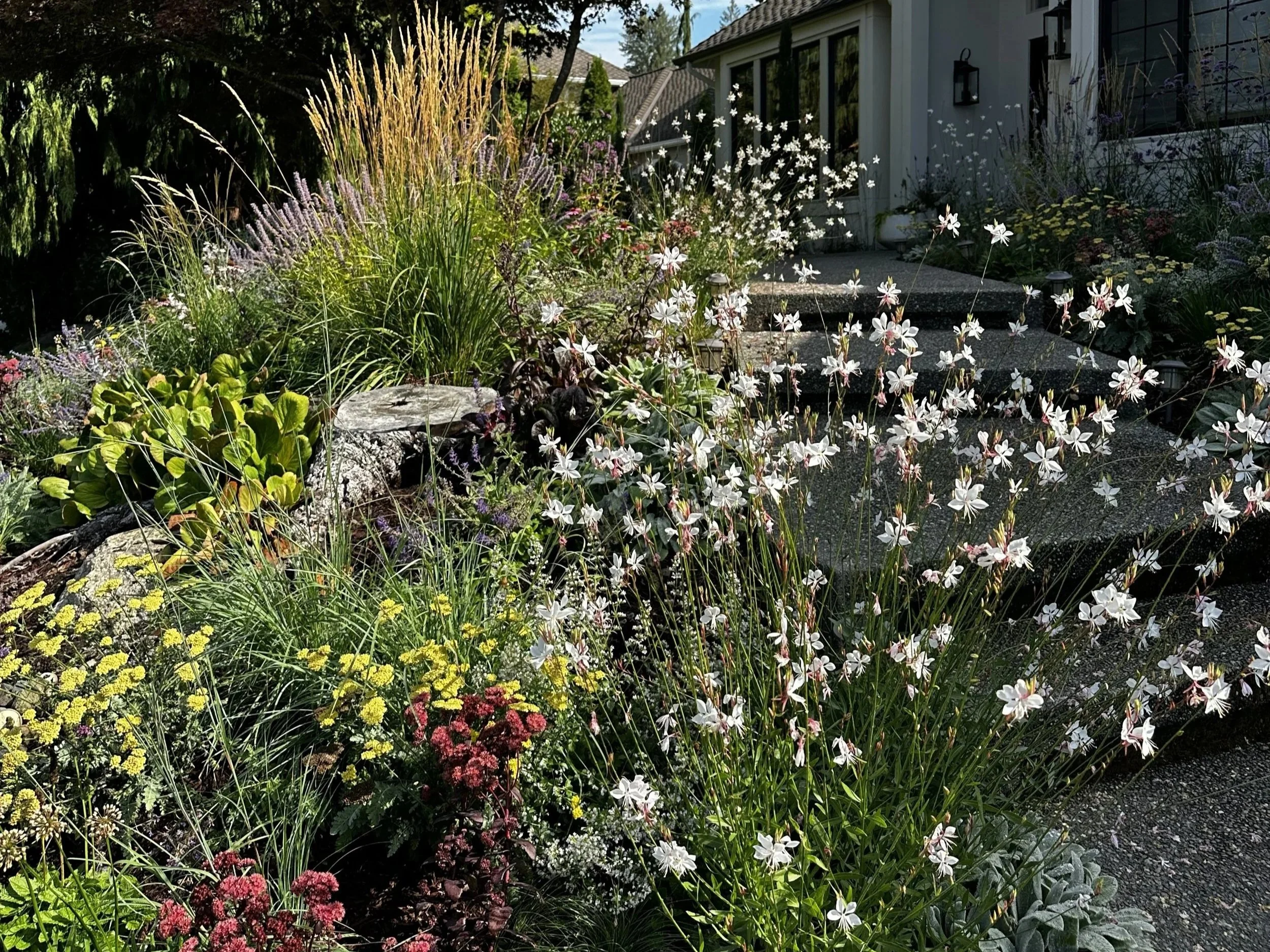
Caption: Newly planted matrix perennial and native grasses front yard in the Seattle area
A well-designed garden doesn’t have to be installed all at once.
I help clients create a phased plan that might look like:
Layout, structure, and bed preparation
Initial planting of grasses and core perennials
Seasonal additions like bulbs and late bloomers
Refinement as the garden matures
This makes the process more manageable and allows the garden to develop naturally—just like landscapes do in nature.
A Garden That Looks Good Beyond Summer
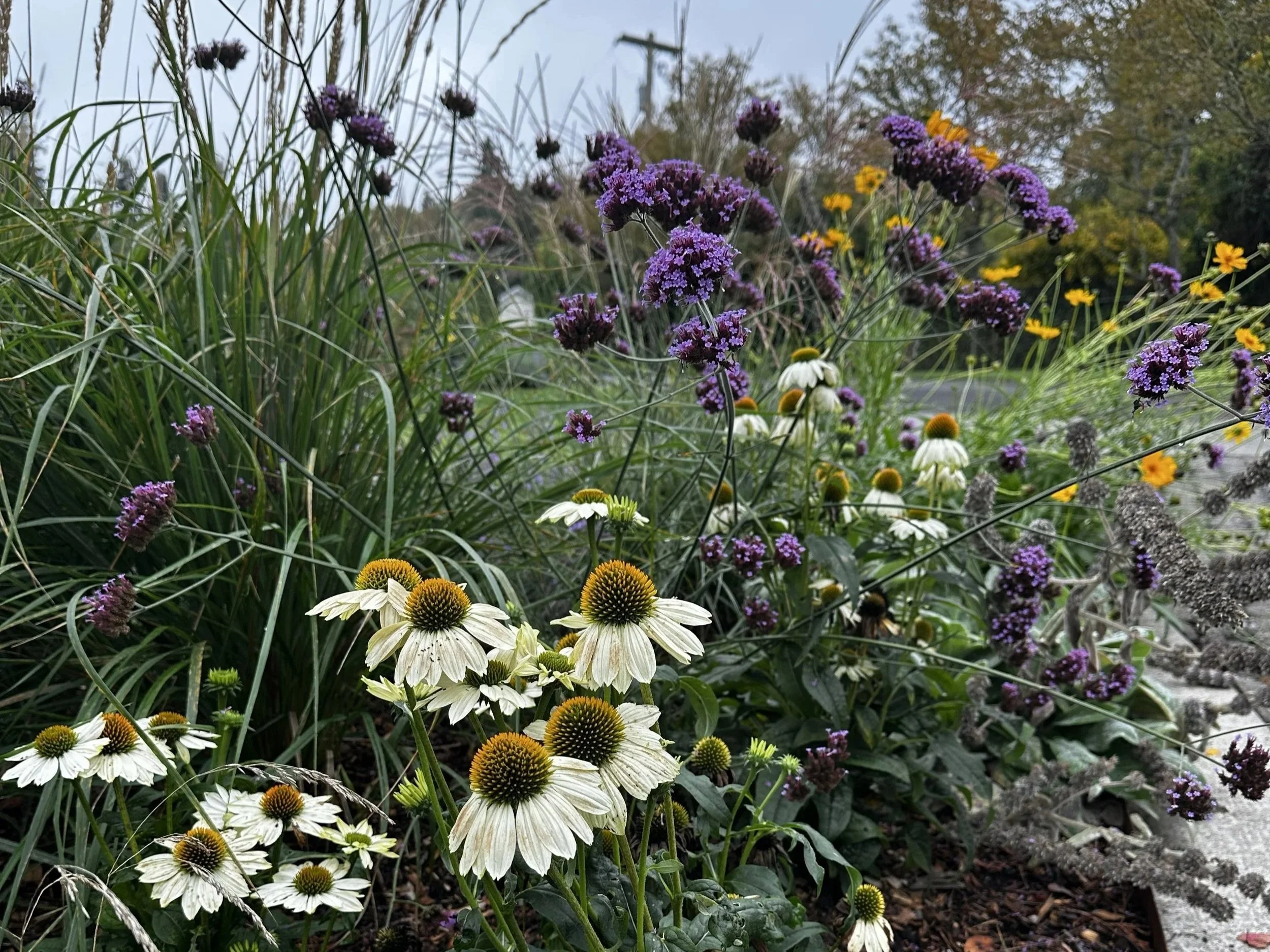
Caption: A garden on the Puget Sound during Mid-November. Seattle Gardens need more late bloomers as our weather stays warmer than most of the northern coastal regions in the US. Without late bloomers, Seattle gardens can look drab before the first frost.
Seattle gardens shouldn’t peak for six weeks and then disappear.
Naturalistic design prioritizes:
Spring emergence
Summer movement and texture
Fall seed heads and color
Winter structure and form
The goal isn’t constant bloom—it’s year-round interest.
Why Hire a Seattle Garden Designer?
A good garden designer helps you:
Avoid costly mistakes
Choose plants that actually thrive
Create a clear plan instead of guessing
Build a garden that improves with time
Most importantly, I help clients create gardens that feel peaceful, grounded, and connected to the landscape of the Pacific Northwest.
Ready to Create a Naturalistic Garden in Seattle?
Most of the gardens I’ve designed started with a simple consultation and grew from there—layer by layer, season by season.
If you’re looking for a Seattle garden designer who specializes in naturalistic, low-maintenance, four-season gardens, you can learn more and book a consult at: https://www.shanellerabichev.com/consultation
